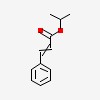
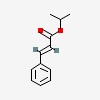
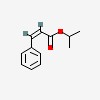
|
Physical Properties:
| Appearance: | colorless to pale yellow clear oily liquid (est) |
| Assay: | 96.00 to 100.00 %
|
| Food Chemicals Codex Listed: | No |
| Specific Gravity: | 0.99500 to 1.04000 @ 25.00 °C.
|
| Pounds per Gallon - (est).: | 8.279 to 8.654
|
| Refractive Index: | 1.52000 to 1.57000 @ 20.00 °C.
|
| Boiling Point: | 269.00 to 270.00 °C. @ 760.00 mm Hg
|
| Acid Value: | 2.00 max. KOH/g
|
| Vapor Pressure: | 0.007000 mm/Hg @ 25.00 °C. (est) |
| Flash Point: | > 212.00 °F. TCC ( > 100.00 °C. )
|
| logP (o/w): | 3.321 (est) |
| Shelf Life: | 12.00 month(s) or longer if stored properly. |
| Storage: | store in cool, dry place in tightly sealed containers, protected from heat and light. |
Organoleptic Properties:
| Odor Type: | balsamic |
| Odor Strength: | medium |
Odor Description:
at 100.00 %. | balsam fruity tropical cinnamyl berry strawberry peach
Luebke, William tgsc, (1986) |
| Odor sample from: | Nickstadt Moeller, Inc. |
| Substantivity: | 252 Hour(s) |
| | |
Cosmetic Information:
Suppliers:
Safety Information:
| Preferred SDS: View |
| European information : |
| Most important hazard(s): | | Xi - Irritant |
R 36/38 - Irritating to skin and eyes.
S 02 - Keep out of the reach of children.
S 24/25 - Avoid contact with skin and eyes.
S 26 - In case of contact with eyes, rinse immediately with plenty of water and seek medical advice.
S 36 - Wear suitable protective clothing.
|
| |
| Hazards identification |
| |
| Classification of the substance or mixture |
| GHS Classification in accordance with 29 CFR 1910 (OSHA HCS) |
Acute toxicity, Oral (Category 4), H302
|
| GHS Label elements, including precautionary statements |
| |
| Pictogram |  |
| |
| Signal word | Warning |
| Hazard statement(s) |
H302 - Harmful if swallowed
|
| Precautionary statement(s) |
P264 - Wash skin thouroughly after handling.
P270 - Do not eat, drink or smoke when using this product.
P301 + P312 - IF SWALLOWED: call a POISON CENTER or doctor/physician IF you feel unwell.
P330 - Rinse mouth.
P501 - Dispose of contents/ container to an approved waste disposal plant.
|
| Human Experience: |
| 6 % solution: no irritation or sensitization. |
| Oral/Parenteral Toxicity: |
oral-rat LD50 > 5000 mg/kg
One group of 10 animals received 5000 mg/kg
(Moreno, 1982h)
oral-guinea pig LD50 2700 ul/kg
SKIN AND APPENDAGES (SKIN): "DERMATITIS, ALLERGIC: AFTER SYSTEMIC EXPOSURE"
Journal of Pharmacology and Experimental Therapeutics. Vol. 93, Pg. 26, 1948.
oral-rat LD50 > 5000 mg/kg
Food and Chemical Toxicology. Vol. 26, Pg. 365, 1988.
|
| Dermal Toxicity: |
skin-rabbit LD50 > 5000 mg/kg
Food and Chemical Toxicology. Vol. 26, Pg. 365, 1988.
skin-guinea pig LD50 > 10 ml/kg
Journal of Pharmacology and Experimental Therapeutics. Vol. 93, Pg. 26, 1948.
|
| Inhalation Toxicity: |
|
Not determined
|
Safety in Use Information:
| Category: | flavor and fragrance agents |
| maximum skin levels for fine fragrances: | | | 0.0100 % and are based on the assumption that the fragrance mixture is used at 20% in a consumer product (IFRA Use Level Survey). (IFRA, 2001)
|
| Recommendation for isopropyl cinnamate usage levels up to: | | | 5.0000 % in the fragrance concentrate.
|
| use level in formulae for use in cosmetics: | | | 0.0300 %
|
| Dermal Systemic Exposure in Cosmetic Products: | | | 0.0008 mg/kg/day (IFRA, 2001)
|
| |
| Maximised Survey-derived Daily Intakes (MSDI-EU): | 16.00 (μg/capita/day) |
| Maximised Survey-derived Daily Intakes (MSDI-USA): | 3.00 (μg/capita/day) |
| Structure Class: | I |
| Use levels for FEMA GRAS flavoring substances on which the FEMA Expert Panel based its judgments that the substances are generally recognized as safe (GRAS). |
| The Expert Panel also publishes separate extensive reviews of scientific information on all FEMA GRAS flavoring substances and can be found at FEMA Flavor Ingredient Library |
| publication number: 3 |
| Click here to view publication 3 |
| | average usual ppm | average maximum ppm |
| baked goods: | - | 2.30000 |
| beverages(nonalcoholic): | - | 0.52000 |
| beverages(alcoholic): | - | - |
| breakfast cereal: | - | - |
| cheese: | - | - |
| chewing gum: | - | - |
| condiments / relishes: | - | - |
| confectionery froastings: | - | - |
| egg products: | - | - |
| fats / oils: | - | - |
| fish products: | - | - |
| frozen dairy: | - | 0.75000 |
| fruit ices: | - | 0.75000 |
| gelatins / puddings: | - | - |
| granulated sugar: | - | - |
| gravies: | - | - |
| hard candy: | - | 1.30000 |
| imitation dairy: | - | - |
| instant coffee / tea: | - | - |
| jams / jellies: | - | - |
| meat products: | - | - |
| milk products: | - | - |
| nut products: | - | - |
| other grains: | - | - |
| poultry: | - | - |
| processed fruits: | - | - |
| processed vegetables: | - | - |
| reconstituted vegetables: | - | - |
| seasonings / flavors: | - | - |
| snack foods: | - | - |
| soft candy: | - | - |
| soups: | - | - |
| sugar substitutes: | - | - |
| sweet sauces: | - | - |
Safety References:
References:
Other Information:
Potential Blenders and core components notePotential Uses:
Natural Occurrence in: noteSynonyms:
| | cinnamic acid isopropyl ester | | 1- | methyl ethyl 3-phenyl propenoate | | 1- | methyl ethyl 3-phenyl-2-propenoate | | 1- | methylethyl 3-phenyl-2-propenoate | | 1- | methylethyl 3-phenylpropenoate | | 3- | phenyl-2-propenoic acid 1-methyl ethyl ester | | 3- | phenyl-2-propenoic acid 1-methylethyl ester | | | propan-2-yl 3-phenylprop-2-enoate | | 2- | propenoic acid, 3-phenyl-, 1-methylethyl ester | | iso | propyl 3-phenyl propenoate | | iso | propyl 3-phenylacrylate |
Articles:
|
|