|
Category: fragrance agents
US / EU / FDA / JECFA / FEMA / FLAVIS / Scholar / Patent Information:
Physical Properties:
| Appearance: | colorless clear liquid (est) |
| Assay: | 96.00 to 100.00 %
|
| Food Chemicals Codex Listed: | No |
| Boiling Point: | 285.00 to 286.00 °C. @ 760.00 mm Hg
|
| Vapor Pressure: | 0.003000 mmHg @ 25.00 °C. (est) |
| Flash Point: | 273.00 °F. TCC ( 133.89 °C. )
|
| logP (o/w): | 4.034 (est) |
| Soluble in: |
| | alcohol | | | water, 7.299 mg/L @ 25 °C (est) |
| Stability: |
| | alcoholic fine fragrances - good | | | antiperspirants - good | | | concentrated fabric softeners - good | | | hypochlorite bleach - poor | | | liquid detergent - good | | | perborate powder detergent - good | | | soaps - good | | | toiletry applications - good |
Organoleptic Properties:
| |
| Odor Type: floral |
| |
| Odor Strength: | medium |
| |
| Substantivity: | 336 hour(s) at 100.00 % |
| |
| | floral muguet lily green tropical oily greasy marine balsamic |
Odor Description:
at 100.00 %. | floral muguet lily green tropical oily greasy marine balsamic
Luebke, William tgsc, (2016) |
| |
| Odor and/or flavor descriptions from others (if found). |
| |
| Givaudan |
| Silvial® |
| Odor Description: | Powerful, Floral, Muguet, Fresh
Silvial is a powerful, vibrant muguet ingredient with a slight citrus undertone and a fresh, aldehydic touch that is used in perfumery in the same way as related muguet products. |
| |
| Takasago |
| Suzaral ® ≥96% |
| Odor Description: | Floral, Green, Aldehydic, Marine
A popular component of flower compositions, particularly lily of the valley and linden types providing a pleasant blossom odor. |
| |
| Pell Wall Perfumes |
| Silvial |
| Odor Description: | Floral-muguet, fresh-marine, aldehydic, green, balsamic
Arctander thought the material had potential for wider use: “The title aldehyde, commercially available for some years, has some of the advantages of Cyclamen aldehyde, and some of those of Lilial (Bucinal), its tertiary-Butyl-isomer. It is undoubtedly more versatile than Cyclamen aldehyde, and the perfumer can enjoy using much higher concentrations of this aldehyde, without producing overly green-vegetable notes, etc” |
| |
| |
Cosmetic Information:
Suppliers:
| BOC Sciences |
| For experimental / research use only. |
| Benzenepropanal, a-methyl-4-(2-methylpropyl)-
|
| Creatingperfume.com |
| Silvial® (Givaudan)
Odor: Powerful, Floral, Muguet, Fresh |
| Givaudan |
| Silvial®
Odor: Powerful, Floral, Muguet, Fresh Use: Silvial is a powerful, vibrant muguet ingredient with a slight citrus undertone and a fresh, aldehydic touch that is used in perfumery in the same way as related muguet products. |
| Lluch Essence |
| SILVIAL
|
| Moellhausen |
| SILVIAL
|
| Pell Wall Perfumes |
| Silvial
Odor: Floral-muguet, fresh-marine, aldehydic, green, balsamic Use: Arctander thought the material had potential for wider use: “The title aldehyde, commercially available for some years, has some of the advantages of Cyclamen aldehyde, and some of those of Lilial (Bucinal), its tertiary-Butyl-isomer. It is undoubtedly more versatile than Cyclamen aldehyde, and the perfumer can enjoy using much higher concentrations of this aldehyde, without producing overly green-vegetable notes, etc” |
| Penta International |
| P-ISOBUTYL-ALPHA-METHYLHYDROCINNAMALDEHYDE
|
| Perfumery Laboratory |
| SILVIAL Givaudan
Odor: Flower (lily), fresh sea, aldehyde, with a tinge of green |
| The Perfumers Apprentice |
| Silvial (G)
Odor: vibrant muguet ingredient with a slightly citrus aspect and a fresh, aldehydic touch |
| Vigon International |
| Silvial
Odor: Powerful, Floral, Muguet, Fresh |
Safety Information:
| |
| Hazards identification |
| |
| Classification of the substance or mixture |
| GHS Classification in accordance with 29 CFR 1910 (OSHA HCS) |
Skin corrosion/irritation (Category 3), H316
Skin sensitisation (Category 1), H317
Reproductive toxicity (Category 2), H361
Acute aquatic toxicity (Category 2), H401
Chronic aquatic toxicity (Category 2), H411
|
| GHS Label elements, including precautionary statements |
| |
| Pictogram |    |
| |
| Signal word | Warning |
| Hazard statement(s) |
H316 - Causes mild skin irritation
H317 - May cause an allergic skin reaction
H361 - Suspected of damaging fertility or the unborn child
H401 - Toxic to aquatic life
H411 - Toxic to aquatic life with long lasting effects
|
| Precautionary statement(s) |
P201 - Obtain special instructions before use.
P202 - Do not handle until all safety precautions have been read and understood.
P261 - Avoid breathing dust/fume/gas/mist/vapours/spray.
P264 - Wash skin thouroughly after handling.
P272 - Contaminated work clothing should not be allowed out of the workplace.
P273 - Avoid release to the environment.
P280 - Wear protective gloves/protective clothing/eye protection/face protection.
P302 + P352 - IF ON SKIN: wash with plenty of soap and water.
P308 + P313 - IF exposed or concerned: Get medical advice/attention.
P333 + P313 - IF SKIN irritation or rash occurs: Get medical advice/attention.
P362 - Take off contaminated clothing and wash before reuse.
P391 - Collect spillage. Hazardous to the aquatic environment
P405 - Store locked up.
P501 - Dispose of contents/ container to an approved waste disposal plant.
|
| Oral/Parenteral Toxicity: |
|
Not determined
|
| Dermal Toxicity: |
|
Not determined
|
| Inhalation Toxicity: |
|
Not determined
|
Safety in Use Information:
| Category: | fragrance agents |
| RIFM Fragrance Material Safety Assessment: Search |
| IFRA Code of Practice Notification of the 49th Amendment to the IFRA Code of Practice |
| IFRA Critical Effect: | Dermal sensitization and systemic toxicity |
| IFRA: | View Standard |
| View IFRA Standards Library for complete information. |
| Please review Amendment 49 IFRA documentation for complete information. |
| IFRA RESTRICTION LIMITS IN THE FINISHED PRODUCT (%): |
| Category 1: Products applied to the lips |
| 0.08 % |
| Category 2: Products applied to the axillae |
| 0.053 % |
| Category 3: Products applied to the face/body using fingertips |
| 0.80 % |
| Category 4: Products related to fine fragrance |
| 0.99 % |
| | Category 5: Products applied to the face and body using the hands (palms), primarily leave-on |
| Category 5A: Body lotion products applied to the body using the hands (palms), primarily leave-on |
| 0.25 % |
| Category 5B: Face moisturizer products applied to the face using the hands (palms), primarily leave-on |
| 0.25 % |
| Category 5C: Hand cream products applied to the hands using the hands (palms), primarily leave-on |
| 0.25 % |
| Category 5D: Baby Creams, baby Oils and baby talc |
| 0.083 % |
| Category 6: Products with oral and lip exposure |
| 0.080 % |
| | Category 7: Products applied to the hair with some hand contact |
| Category 7A: Rinse-off products applied to the hair with some hand contact |
| 0.72 % |
| Category 7B: Leave-on products applied to the hair with some hand contact |
| 0.72 % |
| Category 8: Products with significant anogenital exposure |
| 0.083 % |
| Category 9: Products with body and hand exposure, primarily rinse off |
| 1.90 % |
| | Category 10: Household care products with mostly hand contact |
| Category 10A: Household care excluding aerosol products (excluding aerosol/spray products) |
| 1.90 % |
| Category 10B: Household aerosol/spray products |
| 5.40 % |
| | Category 11: Products with intended skin contact but minimal transfer of fragrance to skin from inert substrate |
| Category 11A: Products with intended skin contact but minimal transfer of fragrance to skin from inert substrate without UV exposure |
| 0.083 % |
| Category 11B: Products with intended skin contact but minimal transfer of fragrance to skin from inert substrate with potential UV exposure |
| 0.083 % |
| Category 12: Products not intended for direct skin contact, minimal or insignificant transfer to skin |
| No Restriction |
| | Notes: |
| IFRA FLAVOR REQUIREMENTS: |
Due to the possible ingestion of small amounts of fragrance ingredients from their use in products in Categories 1 and 6, materials must not only comply with IFRA Standards but must also be recognized as safe as a flavoring ingredient as defined by the IOFI Code of Practice (www.iofi.org). For more details see chapter 1 of the Guidance for the use of IFRA Standards. |
| |
| Recommendation for cyclamen homoaldehyde flavor usage levels up to: |
| | not for flavor use.
|
Safety References:
References:
Other Information:
Potential Blenders and core components notePotential Uses:
Occurrence (nature, food, other): noteSynonyms:
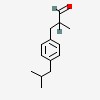
| | benzenepropanal, a-methyl-4-(2-methylpropyl)- | | para-iso | butyl-alpha-methyl hydrocinnamaldehyde | | 3-(4-iso | butylphenyl)-2-methylpropanal | | 3-(p- | cumenyl)-2-methyl propionaldehyde | | 3-(para- | cumenyl)-2-methyl propionaldehyde | | | cyclamen homoaldehyde | | 2- | methyl-3-(4-(2-methyl propyl)phenyl) propanal | | 2- | methyl-3-[4-(2-methylpropyl)phenyl]propanal | | alpha- | methyl-4-(2-methyl propyl) benzene propanal | | a- | methyl-4-(2-methylpropyl)benzenepropanal | | alpha- | methyl-4-(2-methylpropyl)benzenepropanal | | a- | methyl-4-(2-methylpropyl)benzenepropionaldehyde | | | rhodial | | | silvial (Givaudan) | | | suzaral (Takasago) |
Articles:
|






 3D/inchi