Articles:
2-oxo-3-phenylpropionic acid
Notes:
Flavouring ingredient Phenylpyruvic_acid

-
BOC Sciences Best of Chemicals Supplier Quality supplier of research chemicals and biochemicals including inhibitors, building blocks, GMP Products, impurities and metabolites, APIs for Veterinary, Natural Compounds, ADCs, Stem Cell Molecule and chiral compounds. BOC Sciences provides a wide range of services to support the pharmaceutical industry through all stages of drug discovery including Custom Synthesis of those chemicals that are not in stock, Isotope Labeling Service, Chiral Synthesis and Resolution, Bioconjugation, PEGylation services, analytical services. BOC Sciences is a brand of BOCSCI Inc. We leverage our wide spectrum of business in the fields of development, manufacturing, marketing, and distribution to help you make best-informed decisions tailored to your evolving needs for premium chemicals. Our complete suite of CRO services spans the entire molecule development pipeline including contract research for target identification, building blocks, compound synthesis, biochemical and cellular analysis, preclinical animal tests, and clinical studies. Email: Marketing US Email: Marketing Email: Sales US Email: Sales Voice: 1-631-485-4226 Fax: 1-631-614-7828 US Voice: 1-631-485-4226 US Fax: 1-631-614-7828 Europe 44-203-286-1088 Facebook Twitter Linkedin Blog Get the App! Product(s): 156-06-9 Phenylpyruvic Acid
-

-
Penta International Corporation Chemistry innovation At Penta, our products and services help businesses do business better. For over 30 years, Penta Manufacturing Company has played a growing role in worldwide chemistry innovations and applications. As an industry leader, Penta continues to pioneer chemistry-based solutions for practically every area of commerce. Our products and expertise have helped fuel technical advances in dozens of commercial applications including flavoring, coloring, fragrances and chemical processes. US Email: Technical Services US Email: Sales US Voice: (973) 740-2300 US Fax: (973) 740-1839 Product(s): 16-47500 3-PHENYLPYRUVIC ACID
-

-
TCI AMERICA Moving Your Chemistry Forward We continuously strive to advance our technology. With East & West Coast distribution centers, count on TCI to deliver products quickly and reliably. Over 30,000 Reagents available today in benchtop to bulk quantities. We also offer custom synthesis solutions. Sign up for a TCI account today for fast and free shipping! Tokyo Chemical Industry Co., Ltd. (TCI) is a leading worldwide manufacturer of specialty organic chemicals founded in 1946. TCI provides organic laboratory chemicals as well as pharmaceutical, cosmetic and functional materials. More than 70 years of synthesis experience and multi-purpose plants enable TCI to offer more than 30,000 products as well as custom synthesis. US Email: Sales Email: Technical Support Voice: 1-800-423-8616 Fax: 1- 888-520-1075 Facebook Twitter Instagram Linkedin Product(s): P0154 Phenylpyruvic Acid >93.0%(GC)(T)
-
| CAS Number: | 156-06-9 | 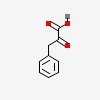 3D/inchi 3D/inchi
|
| ECHA EINECS - REACH Pre-Reg: | 205-847-1 | |
| FDA UNII: | X7CO62M413 | |
| Nikkaji Web: | J11.025F | |
| Beilstein Number: | 2207312 | |
| MDL: | MFCD00002589 | |
| CoE Number: | 8109 | |
| XlogP3-AA: | 1.30 (est) | |
| Molecular Weight: | 164.16036000 | |
| Formula: | C9 H8 O3 | |
| NMR Predictor: | Predict (works with chrome or firefox) | |
Category: flavor and fragrance agents
US / EU / FDA / JECFA / FEMA / FLAVIS / Scholar / Patent Information:
| Google Scholar: | Search |
| Google Books: | Search |
| Google Scholar: with word "volatile" | Search |
| Google Scholar: with word "flavor" | Search |
| Google Scholar: with word "odor" | Search |
| Perfumer and Flavorist: | Search |
| Google Patents: | Search |
| US Patents: | Search |
| EU Patents: | Search |
| Pubchem Patents: | Search |
| PubMed: | Search |
| NCBI: | Search |
| JECFA Food Flavoring: | 1478 2-oxo-3-phenylpropionic acid |
| DG SANTE Food Flavourings: | 08.109 3-phenylpyruvic acid |
| FEMA Number: | 3892 2-oxo-3-phenylpropionic acid |
| FDA: | No longer provide for the use of these seven synthetic flavoring substances |
| FDA Mainterm (SATF): | 156-06-9 ; 2-OXO-3-PHENYLPROPIONIC ACID |
Physical Properties:
| Appearance: | pale yellow powder (est) |
| Assay: | 98.00 to 100.00 % |
| Food Chemicals Codex Listed: | No |
| Melting Point: | 150.00 °C. @ 760.00 mm Hg |
| Boiling Point: | 299.00 to 300.00 °C. @ 760.00 mm Hg |
| Vapor Pressure: | 0.001000 mmHg @ 25.00 °C. (est) |
| Flash Point: | > 212.00 °F. TCC ( > 100.00 °C. ) |
| logP (o/w): | 0.142 (est) |
| Soluble in: | |
| alcohol | |
| propylene glycol | |
| water, 6.522e+004 mg/L @ 25 °C (est) | |
Organoleptic Properties:
| Odor Type: honey | |
| Odor Strength: | medium , recommend smelling in a 10.00 % solution or less |
| Substantivity: | 146 hour(s) at 1.00 % in propylene glycol |
| sweet acidic honey almond weedy phenolic green | |
| Odor Description: at 100.00 %. | sweet acidic honey almond weedy phenolic green Luebke, William tgsc, (2006) |
| Flavor Type: phenolic | |
| sweet phenolic grassy honey vegetable | |
| Taste Description: at 80.00 ppm in water. | sweet phenolic grassy honey vegetable Luebke, William tgsc, (2006) |
| Odor and/or flavor descriptions from others (if found). | |
Cosmetic Information:
| None found |
Suppliers:
| Alfa Biotechnology |
| For experimental / research use only. |
| 3-Phenylpyruvic acid 98% |
| BOC Sciences |
| For experimental / research use only. |
| Phenylpyruvic Acid |
| Parchem |
| phenyl pyruvic acid |
| Penta International |
| 3-PHENYLPYRUVIC ACID |
| Sigma-Aldrich: Aldrich |
| For experimental / research use only. |
| Phenylpyruvic Acid 98% |
| TCI AMERICA |
| For experimental / research use only. |
| Phenylpyruvic Acid >93.0%(GC)(T) |
Safety Information:
| Preferred SDS: View | |
| European information : | |
| Most important hazard(s): | |
| None - None found. | |
|
S 02 - Keep out of the reach of children. S 22 - Do not breath dust. S 24/25 - Avoid contact with skin and eyes. | |
| Hazards identification | |
| Classification of the substance or mixture | |
| GHS Classification in accordance with 29 CFR 1910 (OSHA HCS) | |
| None found. | |
| GHS Label elements, including precautionary statements | |
| Pictogram | |
| Hazard statement(s) | |
| None found. | |
| Precautionary statement(s) | |
| None found. | |
| Oral/Parenteral Toxicity: | |
| Not determined | |
| Dermal Toxicity: | |
| Not determined | |
| Inhalation Toxicity: | |
| Not determined | |
Safety in Use Information:
| Category: | flavor and fragrance agents | ||
| RIFM Fragrance Material Safety Assessment: Search | |||
| IFRA Code of Practice Notification of the 49th Amendment to the IFRA Code of Practice | |||
| Recommendation for phenyl pyruvic acid usage levels up to: | |||
| 0.5000 % in the fragrance concentrate. | |||
| Maximised Survey-derived Daily Intakes (MSDI-EU): | ND (μg/capita/day) | ||
| Maximised Survey-derived Daily Intakes (MSDI-USA): | 0.09 (μg/capita/day) | ||
| Use levels for FEMA GRAS flavoring substances on which the FEMA Expert Panel based its judgments that the substances are generally recognized as safe (GRAS). | |||
| The Expert Panel also publishes separate extensive reviews of scientific information on all FEMA GRAS flavoring substances and can be found at FEMA Flavor Ingredient Library | |||
| publication number: 18 | |||
| Click here to view publication 18 | |||
| average usual ppm | average maximum ppm | ||
| baked goods: | - | - | |
| beverages(nonalcoholic): | 0.50000 | 10.00000 | |
| beverages(alcoholic): | - | - | |
| breakfast cereal: | 1.00000 | 5.00000 | |
| cheese: | 0.50000 | 5.00000 | |
| chewing gum: | 1.00000 | 5.00000 | |
| condiments / relishes: | - | - | |
| confectionery froastings: | 1.00000 | 5.00000 | |
| egg products: | - | - | |
| fats / oils: | - | - | |
| fish products: | - | - | |
| frozen dairy: | - | - | |
| fruit ices: | 0.50000 | 5.00000 | |
| gelatins / puddings: | 0.50000 | 5.00000 | |
| granulated sugar: | - | - | |
| gravies: | - | - | |
| hard candy: | 1.00000 | 5.00000 | |
| imitation dairy: | - | - | |
| instant coffee / tea: | - | - | |
| jams / jellies: | - | - | |
| meat products: | - | - | |
| milk products: | 0.50000 | 5.00000 | |
| nut products: | - | - | |
| other grains: | 1.00000 | 5.00000 | |
| poultry: | - | - | |
| processed fruits: | 0.10000 | 1.00000 | |
| processed vegetables: | - | - | |
| reconstituted vegetables: | - | - | |
| seasonings / flavors: | 50.00000 | 100.00000 | |
| snack foods: | - | - | |
| soft candy: | 1.00000 | 5.00000 | |
| soups: | - | - | |
| sugar substitutes: | 0.50000 | 5.00000 | |
| sweet sauces: | 1.00000 | 5.00000 | |
Safety References:
| European Food Safety Athority(EFSA): | Flavor usage levels; Subacute, Subchronic, Chronic and Carcinogenicity Studies; Developmental / Reproductive Toxicity Studies; Genotoxicity Studies... |
| European Food Safety Authority (EFSA) reference(s): | |
| Flavouring Group Evaluation 55 (FGE.55): Consideration of phenyl-substituted aliphatic alcohols and related aldehydes and esters evaluated by JECFA (63rd meeting) structurally related to phenethyl alcohol, aldehyde, esters and related phenylacetic acid esters evaluated by EFSA in FGE.14 (2005) and aryl-substituted saturated and unsaturated primary alcohol/aldehyde/acid/ester derivatives evaluated by EFSA in FGE.15 (2005) (Commission Regulation (EC) No 1565/2000 of 18 July 2000) - Opinion of the Scientific Panel on Food Additives, Flavourings, Processing Aids and Materials in contact with Food (AFC) View page or View pdf | |
| EPI System: | View |
| AIDS Citations: | Search |
| Cancer Citations: | Search |
| Toxicology Citations: | Search |
| EPA Substance Registry Services (TSCA): | 156-06-9 |
| EPA ACToR: | Toxicology Data |
| EPA Substance Registry Services (SRS): | Registry |
| Laboratory Chemical Safety Summary : | 997 |
| National Institute of Allergy and Infectious Diseases: | Data |
| WGK Germany: | 3 |
| 2-oxo-3-phenylpropanoic acid | |
| Chemidplus: | 0000156069 |
References:
| 2-oxo-3-phenylpropanoic acid | |
| NIST Chemistry WebBook: | Search Inchi |
| Pubchem (cid): | 997 |
| Pubchem (sid): | 134974264 |
| Pherobase: | View |
Other Information:
| (IUPAC): | Atomic Weights of the Elements 2011 (pdf) |
| Videos: | The Periodic Table of Videos |
| tgsc: | Atomic Weights use for this web site |
| (IUPAC): | Periodic Table of the Elements |
| FDA Substances Added to Food (formerly EAFUS): | View |
| CHEBI: | View |
| CHEMBL: | View |
| Golm Metabolome Database: | Search |
| KEGG (GenomeNet): | C00166 |
| HMDB (The Human Metabolome Database): | HMDB00205 |
| FooDB: | FDB008272 |
| YMDB (Yeast Metabolome Database): | YMDB00786 |
| Export Tariff Code: | 2918.30.3000 |
| VCF-Online: | VCF Volatile Compounds in Food |
| ChemSpider: | View |
| Wikipedia: | View |
Potential Blenders and core components note
Potential Uses:
| floral | FR | |
| flower shop | FR | |
| grass | ||
| honey | FR | |
| tobacco | FR | |
| vegetable | FL |
Occurrence (nature, food, other): note
| found in nature |
Synonyms:
| alpha-oxo- | benzene propanoic acid |
| alpha-oxo- | benzenepropanoic acid |
| 2-oxo-3- | phenyl propanoic acid |
| 3- | phenyl-2-oxopropanoic acid |
| 2-oxo-3- | phenylpropanic acid |
| 2-oxo-3- | phenylpropanoic acid |
| 2-oxo-3- | phenylpropionic acid |
| phenylpyruvic acid | |
| 3- | phenylpyruvic acid |
| b- | phenylpyruvic acid |
| 3- | phenylpyruvicacid |