Articles:
ethyl propyl carbinol
Notes:
3-Hexanol occurs naturally in the flavor and aroma of plants such as pineapple and is used as a food additive to add flavor. (Wikipedia)

-
Alfrebro LLC/ Archer Daniels Midland Company Let's get reacquainted Building great taste with aroma chemicals, extracts, and distillates The Alfrebro brand was established in the early 1900s by Alex Fries & Brothers, a Cincinnati Flavor Company. In 1980, the brand was re-launched as an aroma chemical manufacturer. Since its inception, Alfrebro’s primary focus has been to provide quality natural and high value synthetic chemicals. Email: Sarah Forbis Email: Sales Voice: 513-539-3021 Fax: 513-539-7372 US Voice: 513-539-7373 Newsroom Product(s): 3-HEXANOL NATURAL
-

-
Beijing Lys Chemicals Co, LTD. From Grams to Tons Fine chemical high-tech company which contains R&D, production, and sales. BEIJING LYS CHEMICALS CO, LTD, established in 2004, is a fine chemical high-tech company which contains R&D, production, and sales. We mainly engaged in export and technology development of flavor and fragrance materials and pharmaceutical intermediates. We have nearly 500 kinds of products, from grams to tons, exported to USA, Europe, South Asia and etc. And we custom manufacture new products according to customers’ needs, and serve good quality products and service. Our goal is to become a fine chemical enterprise which could provide special products and services. Email: Mr. Jia Email: Mr. Guo Voice: 86-10-68418738 Fax: 86-10-68418739 Mr. Guo 86-10-68483445 Mr. Guo 86-10-68418739 News Product(s): 10155 3-Hexanol
-

-
CJ Latta & Associates, LLC Extensive Line Aromatic Chemicals and Organic Acids. CJ Latta & Associates is a distributor of specialty aromatics and organic acids used in the formulation of flavors and fragrance manufactured worldwide. We pride ourselves on our reputation for, fair pricing, quality and reliability. We’ve built our business on successfully sourcing and developing many challenging specialty chemicals and fine ingredients for our clients. Email: Info US Email: Chip Latta Email: Sales US Email: Chip Latta Voice: (630) 240-8079 Product(s): 3-HEXANOL
-

-
Glentham Life Sciences Ltd The Chemical, Biochemical & Research Essentials Supplier Glentham Life Sciences is a supplier of fine chemicals and raw materials with warehousing, laboratories and packaging facilities in the UK. With a Glentham Life Sciences account you can view more product details, request quotes and order products online. Email: Info Email: Sales Email: Tech Support Voice: +44 (0) 1225 667798 Fax: +44 (0) 2033 978909 Facebook Twitter Linkedin Google+ News Distribution Products List: View Product(s): GK1049 3-Hexanol
-

-
M&U International LLC Steady supply & demand Meeting customers increasing demands at home as well as abroad. M&U dedicates itself to the development and production of new products as well as continuously promoting those new products. We’ve maintained a steady supply&demand relationship with a large number of manufacturers at home and abroad. We’ve developed an extensive network and because of our relationships with these manufacturers, we’re able to provide a stable supply of great quality materials. We’re located in China’s largest communications hub, Shanghai and in the U.S. near one of the largest sea ports on the East Coast. The strategic locations of our facilities ensure convenient, prompt and secure delivery of our products to our customers. Email: Sales US Email: Sales Voice: +86-21-32515501 60762991 60762992 Fax: +86-21-32515502 64204960 US Voice: 908-359-9000 US Fax: 908-359-9002 News Product(s): A0314 3-HEXANOL, Kosher
-

-
Penta International Corporation Chemistry innovation At Penta, our products and services help businesses do business better. For over 30 years, Penta Manufacturing Company has played a growing role in worldwide chemistry innovations and applications. As an industry leader, Penta continues to pioneer chemistry-based solutions for practically every area of commerce. Our products and expertise have helped fuel technical advances in dozens of commercial applications including flavoring, coloring, fragrances and chemical processes. US Email: Technical Services US Email: Sales US Voice: (973) 740-2300 US Fax: (973) 740-1839 Product(s): 08-25000 3-HEXANOL
-
-
Sigma-Aldrich Complete Supply Chain The perfect blend of products and services that bring your creativity to life. Sigma-Aldrich is a leading Life Science and High Technology company dedicated to providing high-quality, safe and certified flavor ingredients with transparent and easily accessible documentation to customers around the globe. Sigma-Aldrich also provides a suite of analytical tools that allow food analysts to simplify sample preparation, cleanup and analysis steps, while increasing sensitivity to trace ingredients and harmful substances to meet regulations and quality standards. Email: Information US Email: Sales US Voice: 800-244-1173 US Fax: 800-368-4661 Facebook Twitter Instagram Linkedin Flavors and Fragrances Analysis FandF Newsletter Subscription Flavors and Fragrances Learning Center Certified Food Grade Products Product(s): W335118 3-Hexanol, ≥97% SDS
-

-
Synerzine, Inc. Innovation. Customization. Aroma Ingredients. Synerzine is a leading supplier of flavor and fragrance ingredients. Synerzine expresses what we have grown to embody as an organization - the synergy and connection between raw ingredients, science, technology, and the final product. Our experienced team is passionate about bringing our customers high-quality innovative ingredients that they can trust. Building upon our 44 year history, the Synerzine team provides customers around the globe with convenient access to over 1200 high-quality aroma ingredients. We actively engage with customers to add a wide array of new products and services on a regular basis. Our aim is to delight every customer with our exceptional services, large product selection, customization and the highest quality and safety standards. We provide our customers with true value designed to help them bring their products to market faster. US Email: Customer Service US Email: Sales US Voice: (404) 524-6744 US Fax: (404) 577-1651 Inquiry Products List: View Product(s): W01716 3-Hexanol
-

-
TCI AMERICA Moving Your Chemistry Forward We continuously strive to advance our technology. With East & West Coast distribution centers, count on TCI to deliver products quickly and reliably. Over 30,000 Reagents available today in benchtop to bulk quantities. We also offer custom synthesis solutions. Sign up for a TCI account today for fast and free shipping! Tokyo Chemical Industry Co., Ltd. (TCI) is a leading worldwide manufacturer of specialty organic chemicals founded in 1946. TCI provides organic laboratory chemicals as well as pharmaceutical, cosmetic and functional materials. More than 70 years of synthesis experience and multi-purpose plants enable TCI to offer more than 30,000 products as well as custom synthesis. US Email: Sales Email: Technical Support Voice: 1-800-423-8616 Fax: 1- 888-520-1075 Facebook Twitter Instagram Linkedin Product(s): H0132 3-Hexanol >98.0%(GC)
-

-
WholeChem, LLC Connecting Innovators To the Building Blocks Of the Universe Custom manufacturer and distributor of specialty ingredients. We make global local. SQF-Certified Supplier We owe our success to our integrity, our dedication to the industry, and our commitment to our clients. We invite your inquiries regarding our current product list and any other products you may be having trouble sourcing. Email: Info Email: Orders Voice: +1 (262) 995.8668 Certification Our Services Products List: View Product(s): 3-Hexanol
-
| CAS Number: | 623-37-0 | 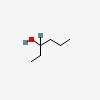 3D/inchi 3D/inchi
|
| Other(deleted CASRN): | 17015-11-1 | |
| ECHA EINECS - REACH Pre-Reg: | 210-790-0 | |
| FDA UNII: | I1ZTO95J84 | |
| Nikkaji Web: | J94.874H | |
| Beilstein Number: | 1718964 | |
| MDL: | MFCD00004582 | |
| CoE Number: | 11775 | |
| XlogP3: | 1.70 (est) | |
| Molecular Weight: | 102.17678000 | |
| Formula: | C6 H14 O | |
| NMR Predictor: | Predict (works with chrome or firefox) | |
| EFSA/JECFA Comments: | JECFA evaluated 3-hexanol (CASrn as in Register). (R)- or (S)- enantiomer not specified by CASrn in Register. | |
Category: flavor and fragrance agents
US / EU / FDA / JECFA / FEMA / FLAVIS / Scholar / Patent Information:
| Google Scholar: | Search |
| Google Books: | Search |
| Google Scholar: with word "volatile" | Search |
| Google Scholar: with word "flavor" | Search |
| Google Scholar: with word "odor" | Search |
| Perfumer and Flavorist: | Search |
| Google Patents: | Search |
| US Patents: | Search |
| EU Patents: | Search |
| Pubchem Patents: | Search |
| PubMed: | Search |
| NCBI: | Search |
| JECFA Food Flavoring: | 282 3-hexanol |
| DG SANTE Food Flavourings: | 02.089 hexan-3-ol |
| FEMA Number: | 3351 3-hexanol |
| FDA: | No longer provide for the use of these seven synthetic flavoring substances |
| FDA Mainterm (SATF): | 623-37-0 ; 3-HEXANOL |
Physical Properties:
| Appearance: | colorless clear liquid (est) |
| Assay: | 97.00 to 100.00 % |
| Food Chemicals Codex Listed: | No |
| Specific Gravity: | 0.81800 to 0.82200 @ 20.00 °C. |
| Pounds per Gallon - (est).: | 6.815 to 6.848 |
| Refractive Index: | 1.41400 to 1.41800 @ 20.00 °C. |
| Boiling Point: | 133.00 to 135.00 °C. @ 760.00 mm Hg |
| Vapor Pressure: | 3.393000 mmHg @ 25.00 °C. (est) |
| Flash Point: | 107.00 °F. TCC ( 41.67 °C. ) |
| logP (o/w): | 1.650 |
| Soluble in: | |
| alcohol | |
| water, 1.453e+004 mg/L @ 25 °C (est) | |
| water, 1.61E+04 mg/L @ 25 °C (exp) | |
Organoleptic Properties:
| Odor Type: alcoholic | |
| alcoholic medicinal ethereal | |
| Odor Description: at 1.00 % in dipropylene glycol. | alcoholic medicinal ethereal |
| fusel green solvent alcoholic fruit tropical fruit pineapple apple cider rummy | |
| Odor Description: at 1.00 %. | fusel, green, solventy alcoholic, with nuances of tropical fruits, pineapple, apple and cider and rum Mosciano, Gerard, (2009) |
| Flavor Type: alcoholic | |
| alcoholic solvent fusel rummy egg nog whiskey green fruity guava apple | |
| Taste Description: at 20.00 ppm. | alcoholic solvent like, fusel notes of rum, egg nogg and whiskey, green fruity nuances of guava and apple Mosciano, Gerard, (2009) |
| Odor and/or flavor descriptions from others (if found). | |
Cosmetic Information:
| None found |
Suppliers:
| Alfrebro |
| 3-HEXANOL NATURAL
Odor: Alcoholic, Ethereal, Medicinal |
| Beijing Lys Chemicals |
| 3-Hexanol |
| CJ Latta & Associates |
| 3-HEXANOL |
| DeLong Chemicals America |
| 3-Hexanol |
| Glentham Life Sciences |
| 3-Hexanol |
| M&U International |
| 3-HEXANOL, Kosher |
| Nagar Haveli Perfumes & Aromatics |
| 3 - Hexanol
Odor: fusel, green, solventy alcoholic, with nuances of tropical fruits, pineapple, apple and cider and rum |
| Penta International |
| 3-HEXANOL |
| Reincke & Fichtner |
| 3-Hexanol |
| Santa Cruz Biotechnology |
| For experimental / research use only. |
| 3-Hexanol |
| Sigma-Aldrich |
| 3-Hexanol, ≥97%
Odor: alcohol; medicinal; ethereal |
| Certified Food Grade Products |
| Synerzine |
| 3-Hexanol |
| TCI AMERICA |
| For experimental / research use only. |
| 3-Hexanol >98.0%(GC) |
| WholeChem |
| 3-Hexanol |
Safety Information:
| Preferred SDS: View | |
| European information : | |
| Most important hazard(s): | |
| Xi - Irritant | |
|
R 10 - Flammable. R 36 - Irritating to eyes. S 02 - Keep out of the reach of children. S 16 - Keep away from sources of ignition - No Smoking. S 24/25 - Avoid contact with skin and eyes. S 26 - In case of contact with eyes, rinse immediately with plenty of water and seek medical advice. S 36 - Wear suitable protective clothing. | |
| Hazards identification | |
| Classification of the substance or mixture | |
| GHS Classification in accordance with 29 CFR 1910 (OSHA HCS) | |
| None found. | |
| GHS Label elements, including precautionary statements | |
| Pictogram | |
| Hazard statement(s) | |
| None found. | |
| Precautionary statement(s) | |
| None found. | |
| Oral/Parenteral Toxicity: | |
| Not determined | |
| Dermal Toxicity: | |
| Not determined | |
| Inhalation Toxicity: | |
| Not determined | |
Safety in Use Information:
| Category: | flavor and fragrance agents | ||
| RIFM Fragrance Material Safety Assessment: Search | |||
| IFRA Code of Practice Notification of the 49th Amendment to the IFRA Code of Practice | |||
| Recommendation for 3-hexanol usage levels up to: | |||
| 0.6000 % in the fragrance concentrate. | |||
| Maximised Survey-derived Daily Intakes (MSDI-EU): | 11.00 (μg/capita/day) | ||
| Structure Class: | II | ||
| Use levels for FEMA GRAS flavoring substances on which the FEMA Expert Panel based its judgments that the substances are generally recognized as safe (GRAS). | |||
| The Expert Panel also publishes separate extensive reviews of scientific information on all FEMA GRAS flavoring substances and can be found at FEMA Flavor Ingredient Library | |||
| publication number: 6 | |||
| Click here to view publication 6 | |||
| average usual ppm | average maximum ppm | ||
| baked goods: | - | 2.00000 | |
| beverages(nonalcoholic): | - | 1.00000 | |
| beverages(alcoholic): | - | - | |
| breakfast cereal: | - | - | |
| cheese: | - | - | |
| chewing gum: | - | - | |
| condiments / relishes: | - | - | |
| confectionery froastings: | - | - | |
| egg products: | - | - | |
| fats / oils: | - | - | |
| fish products: | - | - | |
| frozen dairy: | - | 1.00000 | |
| fruit ices: | - | 1.00000 | |
| gelatins / puddings: | - | 1.00000 | |
| granulated sugar: | - | - | |
| gravies: | - | - | |
| hard candy: | - | 2.00000 | |
| imitation dairy: | - | - | |
| instant coffee / tea: | - | - | |
| jams / jellies: | - | 1.00000 | |
| meat products: | - | - | |
| milk products: | - | - | |
| nut products: | - | - | |
| other grains: | - | - | |
| poultry: | - | - | |
| processed fruits: | - | - | |
| processed vegetables: | - | - | |
| reconstituted vegetables: | - | - | |
| seasonings / flavors: | - | - | |
| snack foods: | - | - | |
| soft candy: | - | - | |
| soups: | - | - | |
| sugar substitutes: | - | - | |
| sweet sauces: | - | - | |
Safety References:
| European Food Safety Athority(EFSA): | Flavor usage levels; Subacute, Subchronic, Chronic and Carcinogenicity Studies; Developmental / Reproductive Toxicity Studies; Genotoxicity Studies... |
| European Food Safety Authority (EFSA) reference(s): | |
| Opinion of the Scientific Panel on food additives, flavourings, processing aids and materials in contact with food (AFC) related to Flavouring Group Evaluation 7 (FGE.07): Saturated and unsaturated aliphatic secondary alcohols, ketones and esters of secondary alcohols and saturated linear or branched-chain carboxylic acids from chemical group 5 View page or View pdf | |
| Flavouring Group Evaluation 7, Revision 1 (FGE.07Rev1): Saturated and unsaturated aliphatic secondary alcohols, ketones and esters of secondary alcohols and saturated linear or branched-chain carboxylic acids from chemical group 5 (Commission Regulation (EC) No 1565/2000 of 18 July 2000) - Scientific opinion of the Panel on Food Additives, Flavourings, Processing Aids and Materials in contact with Food (AFC) on a request from the Commission View page or View pdf | |
| Flavouring Group Evaluation 7, Revision 2 (FGE.07Rev2) : Saturated and unsaturated aliphatic secondary alcohols, ketones and esters of secondary alcohols and saturated linear or branched-chain carboxylic acids from chemical group 5 View page or View pdf | |
| Safety and efficacy of saturated and unsaturated aliphatic secondary alcohols, ketones and esters with esters containing secondary alcohols belonging to chemical group 5 when used as flavourings for all animal species View page or View pdf | |
| EPI System: | View |
| AIDS Citations: | Search |
| Cancer Citations: | Search |
| Toxicology Citations: | Search |
| EPA Substance Registry Services (TSCA): | 623-37-0 |
| EPA ACToR: | Toxicology Data |
| EPA Substance Registry Services (SRS): | Registry |
| Laboratory Chemical Safety Summary : | 12178 |
| National Institute of Allergy and Infectious Diseases: | Data |
| WISER: | UN 2282 |
| WGK Germany: | 1 |
| hexan-3-ol | |
| Chemidplus: | 0000623370 |
| RTECS: | MIO857000 for cas# 623-37-0 |
References:
| hexan-3-ol | |
| NIST Chemistry WebBook: | Search Inchi |
| Canada Domestic Sub. List: | 623-37-0 |
| Pubchem (cid): | 12178 |
| Pubchem (sid): | 134976948 |
| Pherobase: | View |
Other Information:
| (IUPAC): | Atomic Weights of the Elements 2011 (pdf) |
| Videos: | The Periodic Table of Videos |
| tgsc: | Atomic Weights use for this web site |
| (IUPAC): | Periodic Table of the Elements |
| FDA Substances Added to Food (formerly EAFUS): | View |
| CHEMBL: | View |
| HMDB (The Human Metabolome Database): | HMDB31493 |
| FooDB: | FDB008073 |
| Export Tariff Code: | 2905.19.9090 |
| Typical G.C. | |
| VCF-Online: | VCF Volatile Compounds in Food |
| ChemSpider: | View |
Potential Blenders and core components note
| For Odor | ||
| amber | ||
| amber | ||
| acetoxymethyl isolongifolene | FR | |
| formoxymethyl isolongifolene | FR | |
| hydroxymethyl isolongifolene 50% in dpg | FR | |
| balsamic | ||
| sclareol | FL/FR | |
| cocoa | ||
| 2- | methyl butyraldehyde | FL/FR |
| floral | ||
| petitgrain oil paraguay | FL/FR | |
| fruity | ||
| ethyl isobutyrate | FL/FR | |
| green | ||
| magnolia flower oil | FL/FR | |
| herbal | ||
| bergamot mint herb oil | FR | |
| clary acetate | FR | |
| clary propyl acetate | FR | |
| clary sage resin america | FR | |
| costmary oil (chrysanthemum balsamita) | FR | |
| herbal carene | FR | |
| ocimene oxirane | FR | |
| woody | ||
| sclarene | ||
| For Flavor | ||
| No flavor group found for these | ||
| ethanol | FL | |
| magnolia flower oil | FL/FR | |
| sclarene | ||
| ethereal | ||
| ethyl isobutyrate | FL/FR | |
| fusel | ||
| 2- | methyl butyraldehyde | FL/FR |
| petitgrain oil paraguay | FL/FR | |
| woody | ||
| sclareol | FL/FR | |
Potential Uses:
| floral | FR | |
| fruit tropical fruit | FL | |
| herbal | FR | |
| hyacinth | FR |
Occurrence (nature, food, other): note
| apricot fruit Search Trop Picture | |
| banana fruit Search Trop Picture | |
| cheese parmesan cheese Search PMC Picture | |
| chicken cooked chicken Search PMC Picture | |
| clary sage oil greece @ 0.15% Data GC Search Trop Picture | |
| cognac Search PMC Picture | |
| cranberry fruit Search Trop Picture | |
| currant black currant fruit Search Trop Picture | |
| grapefruit juice Search Trop Picture | |
| papaya fruit Search Trop Picture | |
| pepper bell pepper fruit Search Trop Picture | |
| pineapple fruit Search Trop Picture | |
| safflower flower Search Trop Picture |
Synonyms:
| ethyl N-propyl carbinol | |
| ethyl propyl carbinol | |
| hexan-3-ol | |
| 3- | hexyl alcohol |