Articles:
benzene, 1-(1,1-dimethylethyl)-3,5-dimethyl-2,4,6-trinitro-
Notes:
None found

-
Associate Allied Chemicals Quality, Service and Values Our aim is to become a reliable one-stop shop for our customers. Distributor and Agents of high quality raw materials for the fragrance, flavour and cosmetic industry. Partnering and sourcing raw materials directly from some of the best recognised names to provide consistent quality to our esteemed customers. Email: Info Email: Sachin Gandhi Voice: +91 22 2419 8800 Fax: +91 22 2413 5786 About Product(s): Musk Xylol
-

-
Berje Inc. Where the world comes to its senses Where the world comes to its senses - Berjé is a global distributor of Essential Oils and Aromatic Chemicals. Berjé is a family-owned business that has been in operation for six decades. The company's origins and strength lie in a profound understanding of the supply and the quality of the diverse raw materials consumed by the flavor and fragrance industries. This base was expanded upon more than two decades ago to include fragrance production. The company's unparalleled raw material expertise is focused on the supply of essential oils and aromatic chemicals. This is supported by our long-standing relationships with a worldwide fabric of producers ensuring the greatest prospects for uninterrupted supply in markets that are often volatile and unpredictable. Email: For Information Email: For Sales Voice: 973-748-8980 Fax: 973-680-9618 Instagram Linkedin Flavor Ingredients Fragrance Ingredients Functional Ingredients Media Products List: View Product(s): Musk Xylol
-
-
Fleurchem, Inc. Have A Flavorful Day A leading global manufacturer and supplier of ingredients for Flavors, Fragrances, AromaTherapy, Foods, Beverages, Personal Care Products, and other uses. Operating out of the 200,000 sq. ft., former Hercules/PFW facility in Middletown, NY; Fleurchem produces a full range of natural isolates, synthetic chemicals & specialities, essential oils and flavors. Additionally, the company performs toll manufacturing, as well as custom chemical synthesis for a wide range of clients. Email: Information US Voice: 845-341-2100 US Fax: 845-341-2121 Product(s): musk xylol
-

-
Global Essence Inc. Preferred Partner Accommodate each customers unique needs. Global Essence was founded in 1993 as a two person operation servicing regional customers in the New York/ New Jersey area. In the twenty years since, it has grown into a multinational operation with offices in the US, UK, and Singapore. These offices allow Global to provide regional support to its customers worldwide. As the world continues become more connected, this approach positions Global to continue to offer the highest quality products and experience to all of its customers. Email: Info US Email: Info Voice: +44 (0) 1279 876666 Fax: +44 (0)1279 876646 US Voice: 001 732 677 1100 US Fax: 001 732 677 1107 Blog Press Release News Product(s): Musk Xylol
-

-
Jiangyin Healthway International Trade Co., Ltd Independent Ingredients Supplier We provide custom synthesis and contract manufacturing from milligrams to metric tonnes. Jiangyin Healthway International Trade Co., Ltd is a professional company, main engaged in manufacturing and exporting aroma chemicals ,food additives , cosmetic ingredient ,pharmaceutical intermediates & other fine chemicals; especially on aroma chemicals , as the major manufacturer of heterocyclic and sulphur aroma compounds , we are the leading independent ingredients supplier to the flavour and fragrance industries in China, can offer hundreds of different high quality aroma chemicals. Email: Info Email: Sales Voice: 86-510-86023169 Fax: 86-510-86023170 Mobile 0086-13093133011 Services Biochemical Natural Food Colour New functional food ingredients Product(s): HLW-FC047 Musk xylene
-

-
Lluch Essence S.L. A family company dedicated to sales and distribution Flexibility, availability, price and quality. Flexibility, availability, price and quality make LLUCH ESSENCE S.L. one of Europe’s references when it comes to essential oils and aroma chemicals, and it is now well known all around the world. Email: Info Voice: 34 93 379 38 49 Fax: 34 93 370 65 04 Linkedin Product(s): MUSK XYLOL
-

-
Penta International Corporation Chemistry innovation At Penta, our products and services help businesses do business better. For over 30 years, Penta Manufacturing Company has played a growing role in worldwide chemistry innovations and applications. As an industry leader, Penta continues to pioneer chemistry-based solutions for practically every area of commerce. Our products and expertise have helped fuel technical advances in dozens of commercial applications including flavoring, coloring, fragrances and chemical processes. US Email: Technical Services US Email: Sales US Voice: (973) 740-2300 US Fax: (973) 740-1839 Product(s): 13-83600 MUSK XYLOL
-

-
PerfumersWorld Ltd. feeeel... the smell! The one-stop resource for the creative perfumer. No minimum orders. Aroma chemicals, essential oils, isolates, pheremones, absolutes, resinoids, FleuressenceTM key bases, PWx FactorTM, solubilizers, kits, creation systems, workshops, training, distance learning, The PerfumersWorld Perfumer's Studio, The Perfumer’s Formulation Bulletin, perfumery software, bespoke creation, analysis, consultancy, project counselling, trouble-shooting, unperfumed product bases, bottles, smelling strips, scales, distillation, equipment and inspiration! Email: Enquiries Email: Sales Voice: +66(0)2-99-800-80 Fax: +66(0)2-99-800-80 PerfumersWorld 

Facebook Twitter Google+ Youtube Resources Software: Perfumer's Workbook Product(s): 1XU00311 Musk Xylol Blends-well-with - +Civet +Lavandin +Labdanum +Costus Root +Copaiba Animal-notes 5XU09238 Musk xylol 10% in DPG
-
-
The John D. Walsh Company, Inc Suppliers Since 1942 Supplying the fragrance and flavor industry with high quality products. The John D. Walsh Company, Inc. has evolved from its beginnings as an agent/broker into a distributor of essential oils, aroma chemicals, concretes and absolutes. We currently represent the following companies, as their North American distributor: Destilerias Munoz Galvez, S.A. International Flavors & Fragrances PFW Aroma Chemicals B.V. Innospec Widnes Limited Hydrodiffusion de Guatemala, S. A. DSM Nutritional Products The John D. Walsh Company, Inc. is proud to be a founding member of IFEAT, an active member of IFRA, North America, and a corporate sponsor of the WFFC. Email: Information Email: Sales Email: Firmenich Flavor inquiries Voice: 973-962-1400 Fax: 973-962-1557 Firmenich Flavor Phone: 973-962-1888 Firmenich Flavor Fax: 973-962-1898 History Product(s): Musk Xylol SDS
-

-
R C Treatt and Co Ltd Innovative ingredient solutions World-leading innovative ingredient solutions provider for the flavour, fragrance and FMCG industries. We offer innovative and trend-setting product concepts for our customers, collaborating with them to create true value for their products. Email: Enquiries US Email: Enquiries Voice: +44 (0) 1284 702500 Fax: +44 (0) 1284 703809 US Voice: +1 863 668 9500 US Fax: +1 863 668 3388 Twitter Linkedin Youtube News Product(s): Musk Xylene
-

-
Ernesto Ventós S.A. Leaders in essence We employ our five senses to do our job well. Ventos has specialized in the distribution of raw materials for the flavour and fragrance industry. With more than 1700 references permanently available from stock, we offer a just-in-time response to our customer needs, being able to deliver from 1kg to several tonnes all over the world. Email: Information US Email: Information USA Email: Gemma Parramon (Europe) US Email: Gemma Parramon (Europe) Email: Jorge Sos (Asia) Email: Ramon Rubau (America) Voice: +34 934706210 Fax: +34 934733010 US Voice: +1 856 226 7501 Instagram Linkedin Youtube Press Ads Videos Product(s): MUSK XYLOL
-
| Fragrance Demo Formulas | ||
| CAS Number: | 81-15-2 | 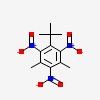 3D/inchi 3D/inchi
|
| ECHA EINECS - REACH Pre-Reg: | 201-329-4 | |
| FDA UNII: | 1ZAO16GU5K | |
| Nikkaji Web: | J11.689K | |
| Beilstein Number: | 2015910 | |
| MDL: | MFCD00024270 | |
| XlogP3-AA: | 3.80 (est) | |
| Molecular Weight: | 297.26775000 | |
| Formula: | C12 H15 N3 O6 | |
| BioActivity Summary: | listing | |
| NMR Predictor: | Predict (works with chrome, Edge or firefox) | |
Category: information only not used for fragrances or flavors
US / EU / FDA / JECFA / FEMA / FLAVIS / Scholar / Patent Information:
| Google Scholar: | Search |
| Google Books: | Search |
| Google Scholar: with word "volatile" | Search |
| Google Scholar: with word "flavor" | Search |
| Google Scholar: with word "odor" | Search |
| Perfumer and Flavorist: | Search |
| Google Patents: | Search |
| US Patents: | Search |
| EU Patents: | Search |
| Pubchem Patents: | Search |
| PubMed: | Search |
| NCBI: | Search |
Physical Properties:
| Appearance: | pale yellow crystals (est) |
| Assay: | 99.00 to 100.00 % |
| Food Chemicals Codex Listed: | No |
| Melting Point: | 235.40 °C. @ 0.00 mm Hg |
| Boiling Point: | 392.31 °C. @ 760.00 mm Hg (est) |
| Vapor Pressure: | 0.000005 mmHg @ 25.00 °C. (est) |
| Flash Point: | 200.00 °F. TCC ( 93.33 °C. ) |
| logP (o/w): | 4.369 (est) |
| Shelf Life: | 36.00 month(s) or longer if stored properly. |
| Soluble in: | |
| ethyl alcohol, slightly | |
| paraffin oil | |
| water, 0.8214 mg/L @ 25 °C (est) | |
| 5.5 gms to 100 gms methyl carbitol | |
| 25.2 gms to 100 gms benzyl benzoate | |
| 14.4 gms to 100 gms diethyl phthalate | |
| 16.8 gms to 100 gms dimethyl phthalate | |
| 0.88 gms to 100 gms alcohol (95%) | |
Organoleptic Properties:
| Odor Type: musk | |
| Odor Strength: | medium |
| Substantivity: | 400 hour(s) at 20.00 % in dipropylene glycol |
| fatty dry sweet soapy musk | |
| Odor Description: at 10.00 % in benzyl benzoate. | fatty dry sweet soapy musk Luebke, William tgsc, (1984) |
| Odor and/or flavor descriptions from others (if found). | |
Cosmetic Information:
| CosIng: | cosmetic data |
| Cosmetic Uses: |
fragrance perfuming agents |
Suppliers:
| Anhui Haibei |
| Musk Xylol
Odor: Fatty dry sweet musk |
| Associate Allied Chemicals |
| Musk Xylol |
| About |
| Berjé |
| Musk Xylol |
| Media |
| Ernesto Ventós |
| MUSK XYLOL |
| Fleurchem |
| musk xylol |
| Fuzhou Farwell |
| Musk Xylol |
| Global Essence |
| Musk Xylol |
| Indenta Group |
| Musk Xylol |
| Jiangyin Healthway |
| Musk xylene |
| New functional food ingredients |
| John Kellys (London) |
| Musk Xylol |
| K.L. Koh Enterprise |
| MUSK XYLOL |
| Lluch Essence |
| MUSK XYLOL |
| Pearlchem Corporation |
| Musk Xylene |
| Penta International |
| MUSK XYLOL |
| PerfumersWorld |
| Musk xylol 10% in DPG |
| PerfumersWorld |
| Musk Xylol
Odor: fatty dry sweet musk slightly fatty nitro-musk Sweet-musky Use: Blends-well-with - +Civet +Lavandin +Labdanum +Costus Root +Copaiba Animal-notes |
| Perfumery Laboratory |
| MUSKUS XYLOL
Odor: Sweet, with a warm oily note musky |
| R C Treatt & Co Ltd |
| Musk Xylene |
| Reincke & Fichtner |
| Musk Xylol |
| The John D. Walsh Company |
| Musk Xylol |
Safety Information:
| European information : | |
| Most important hazard(s): | |
| Xn N - Harmful, Dangerous for the environment. | |
|
R 02 - Risk of explosion by shock, friction, fire or other sources of ignition. R 40 - Possible risks of irreversable effects. R 52/53 - Harmful to qauatic organisms, may cause long-term adverse effects in the aquatic environment. S 02 - Keep out of the reach of children. S 36/37 - Wear suitable protective clothing and gloves. S 46 - If swallowed, seek medical advice immediately and show this container or label. S 60 - This material and its container must be disposed of as hazardous waste. S 61 - Avoid release to the environment. Refer to special instructions/safety data sheet. | |
| Hazards identification | |
| Classification of the substance or mixture | |
| GHS Classification in accordance with 29 CFR 1910 (OSHA HCS) | |
| Carcinogenicity (Category 2), H351 Chronic aquatic toxicity (Category 1), H410 | |
| GHS Label elements, including precautionary statements | |
| Pictogram |   |
| Signal word | Warning |
| Hazard statement(s) | |
| H351 - Suspected of causing cancer H410 - Very toxic to aquatic life with long lasting effects | |
| Precautionary statement(s) | |
| P201 - Obtain special instructions before use. P202 - Do not handle until all safety precautions have been read and understood. P273 - Avoid release to the environment. P281 - Use personal protective equipment as required. P308 + P313 - IF exposed or concerned: Get medical advice/attention. P391 - Collect spillage. Hazardous to the aquatic environment P405 - Store locked up. P501 - Dispose of contents/ container to an approved waste disposal plant. | |
| Oral/Parenteral Toxicity: | |
|
oral-rat LD50 > 10000 mg/kg Bulletin of Environmental Contamination and Toxicology. Vol. 26, Pg. 656, 1981. oral-mouse LD50 > 4000 mg/kg Food and Chemical Toxicology. Vol. 28, Pg. 581, 1990. | |
| Dermal Toxicity: | |
|
skin-rabbit LD50 > 15000 mg/kg Bulletin of Environmental Contamination and Toxicology. Vol. 26, Pg. 656, 1981. | |
| Inhalation Toxicity: | |
| Not determined | |
Safety in Use Information:
| Category: | information only not used for fragrances or flavors | ||
| IFRA fragrance material specification: | |||
| Ongoing research on the fragrance ingredient musk xylene has provided evidence over time that it fulfills the criteria for being classified vPvB (Environmental half-life >180 days; BCF>5000). | |||
| IFRA: | View Standard | ||
| Recommendation for musk xylol usage levels up to: | |||
| PROHIBITED: Should not be used as a fragrance ingredient. | |||
| Recommendation for musk xylol flavor usage levels up to: | |||
| not for flavor use. | |||
Safety References:
| EPI System: | View |
| Chemical Carcinogenesis Research Information System: | Search |
| AIDS Citations: | Search |
| Cancer Citations: | Search |
| Toxicology Citations: | Search |
| Carcinogenic Potency Database: | Search |
| EPA Substance Registry Services (TSCA): | 81-15-2 |
| EPA ACToR: | Toxicology Data |
| EPA Substance Registry Services (SRS): | Registry |
| Laboratory Chemical Safety Summary : | 62329 |
| National Institute of Allergy and Infectious Diseases: | Data |
| SCCNFP: | opinion |
| WISER: | UN 2956 |
| WGK Germany: | 3 |
| 1-tert-butyl-3,5-dimethyl-2,4,6-trinitrobenzene | |
| Chemidplus: | 0000081152 |
| EPA/NOAA CAMEO: | hazardous materials |
References:
| 1-tert-butyl-3,5-dimethyl-2,4,6-trinitrobenzene | |
| NIST Chemistry WebBook: | Search Inchi |
| Canada Domestic Sub. List: | 81-15-2 |
| Pubchem (cid): | 62329 |
| Pubchem (sid): | 135019593 |
Other Information:
| (IUPAC): | Atomic Weights of the Elements 2011 (pdf) |
| Videos: | The Periodic Table of Videos |
| tgsc: | Atomic Weights use for this web site |
| (IUPAC): | Periodic Table of the Elements |
| CHEBI: | View |
| CHEMBL: | View |
| KEGG (GenomeNet): | C19462 |
| HMDB (The Human Metabolome Database): | Search |
| Export Tariff Code: | 2904.20.30.00.3 |
| ChemSpider: | View |
| Wikipedia: | View |
Potential Blenders and core components note
| For Odor | ||
| No odor group found for these | ||
| atractylis absolute | FR | |
| amber | ||
| cistus ladaniferus resinoid | FL/FR | |
| animal | ||
| civet absolute | FL/FR | |
| balsamic | ||
| abies alba needle oil | FL/FR | |
| copaiba balsam oil | FL/FR | |
| fir needle oil siberia | FL/FR | |
| floral | ||
| iso | butyl salicylate | FL/FR |
| herbal | ||
| acorus calamus root oil | FR | |
| clary sage oil france | FL/FR | |
| abrialis | lavandin oil | FL/FR |
| tonka | ||
| coumarin | FR | |
| woody | ||
| cedarwood oil virginia | FR | |
| iso | longifolene epoxide | FR |
| For Flavor | ||
| No flavor group found for these | ||
| cistus ladaniferus resinoid | FL/FR | |
| animal | ||
| civet absolute | FL/FR | |
| balsamic | ||
| copaiba balsam oil | FL/FR | |
| fir needle oil siberia | FL/FR | |
| cooling | ||
| iso | butyl salicylate | FL/FR |
| herbal | ||
| clary sage oil france | FL/FR | |
| abrialis | lavandin oil | FL/FR |
| orris | ||
| costus root oil | FL | |
| terpenic | ||
| abies alba needle oil | FL/FR | |
Potential Uses:
| acacia | FR | |
| aldehydic | FR | |
| almond | FR | |
| alpine bouquet | FR | |
| amber | FR | |
| ambrene | FR | |
| amour-amour | ||
| anais anais | ||
| baby powder | FR | |
| balsam | FR | |
| bluebell | FR | |
| bouquet | FR | |
| carnation | FR | |
| charlie | ||
| cherry blossom | FR | |
| chloe | ||
| christmas | FR | |
| chypre | FR | |
| coconut | FR | |
| cologne | FR | |
| estee | ||
| evergreen | FR | |
| fern | FR | |
| fidji | ||
| floral | FR | |
| gardenia | FR | |
| ginger white ginger | FR | |
| hay new mown hay | FR | |
| heather | FR | |
| herbal | FR | |
| honeysuckle | FR | |
| jasmin | FR | |
| jockey club | ||
| l'air du temps | ||
| lavender | FR | |
| lux beauty shower soap | ||
| millefleurs | FR | |
| mint | FR | |
| moss | FR | |
| musk | FR | |
| norell | ||
| orange blossom | FR | |
| oriental | FR | |
| paris | ||
| patchouli | FR | |
| pine | FR | |
| pine forest | FR | |
| rain | FR | |
| rose | FR | |
| rose moss rose | FR | |
| sandalwood | FR | |
| sassafras | FR | |
| sherry | FR | |
| sweet grass | FR | |
| vanilla | FR | |
| violet | FR | |
| wine | FR | |
| ylang ylang | FR |
Occurrence (nature, food, other): note
| not found in nature |
Synonyms:
| benzene, 1-(1,1-dimethylethyl)-3,5-dimethyl-2,4,6-trinitro- | |
| benzene, 1-tert-butyl-3,5-dimethyl-2,4,6-trinitro- | |
| 5-tert- | butyl-2,4,6-trinitro-m-xylene |
| 5-tert- | butyl-2,4,6-trinitro-meta-xylene |
| 5-tert- | butyl-2,4,6-trinitroxylene |
| 1-tert- | butyl-3,5-dimethyl-2,4,6-trinitrobenzene |
| 1-tert- | butyl-3,5-dimethyl-2,4,6-trinitrobenzol |
| 1-(1,1- | dimethyl ethyl)-3,5-dimethyl-2,4,6-trinitrobenzene |
| ( | dimethyl-1,1-ethyl)-1-dimethyl-3,5-trinitro-2,4,6-benzene |
| 1,3- | dimethyl-5-(2-methyl-2-propanyl)-2,4,6-trinitrobenzene |
| 1-(1,1- | dimethylethyl)-3,5-dimethyl-2,4,6-trinitrobenzene |
| musk xylene | |
| musk xylol | |
| musk zylene | |
| 2,4,6- | trinitro-1,3-dimethyl-5-tert-butylbenzene |
| 2,4,6- | trinitro-3,5-dimethyl-1-tert-butylbenzene |
| m- | xylene, 5-tert-butyl-2,4,6-trinitro- |