Articles:
hydroxybenzene
Notes:
an antiseptic and disinfectant. it is active against a wide range of micro-organisms including some fungi and viruses, but is only slowly effective against spores. it has been used to disinfect skin and to relieve itching. (from martindale, the extra pharmacopoeia, 30th ed, p801) Used as a flavouring agent in a few foods, at maximum levels below 10 ppm
Phenol, also known as carbolic acid, is an organic compound with the chemical formula C6H5OH. It is a white crystalline solid. The molecule consists of a phenyl (-C6H5), bonded to a hydroxyl (-OH) group. It is produced on a large scale (about 7 billion kg/year) as a precursor to many materials and useful compounds. (Wikipedia)

-
Advanced Biotech. Inc. Inspired by Nature A diverse range of products, all meeting our stringent commitment to quality. Advanced Biotech is a leading manufacturer and supplier of high-quality Natural flavoring ingredients & botanical extracts for the food/beverage, cosmetic and personal care industries. With over 25 years of experience working with Fermentation processing & botanical extracts, we can help develop new innovative and functional products for today’s competitive marketplace. Our company prides itself in the ability to cater to our customer’s specific needs while maintaining our focus on integrity, honesty and the commitment to high quality product standards. We proudly offer our quality Natural ingredients to companies around the world. US Email: Info US Email: Quotes and Orders US Voice: 973-339-6242 US Fax: 973-256-4101 Facebook Twitter Instagram Linkedin Pinterest Upcoming Events Blog Vimeo Product(s): 1541 PHENOL NATURAL SDS
-

-
American International Chemical, Inc. Consistent sources North American supplier for globally sourced ingredients. AIC is a Westborough, MA based ISO Certified sales and marketing company serving the food, pharmaceutical, nutritional, personal care, biotech, and industrial markets of North America since 1972. Our success is a result of a company culture built on customer needs, along with partnerships with global manufacturers committed to the rigors and demands of the North American market. Our team of Sales Representatives, along with our network of strategically located warehouses are ready to supply product when and where you need it. Email: Info Voice: (800) 238-0001 Facebook Twitter Linkedin Products List: View Product(s): PHENDD Phenol, Loose Crystals
-

-
Charkit Chemical Corporation The Specialty Chemical Specialists Explore this website to discover the products and services that Charkit provides for your industry and please contact us directly to find out how we can be of service to you. about: Since 1982, Charkit has been committed to expanding the markets we serve as our roster of products and services continues to grow with us. Our substantial portfolio of personal care ingredients now include a wide array of luxury and exotic components to compliment the key products we have always offered. We have expanded our offerings to the nutraceutical, industrial, and resin markets with a growing roster of versatile and unique ingredients. We continue to lead the way in our traditional markets such as Metal and Water Treatment, Imaging, Flavor & Fragrance, Aroma and Food. Our Pharmaceutical offerings continue to expand, still anchored by the Boronic Derivatives that meet the demands of Suzuki coupling reactions. Please contact us to learn how we can help you reach your goals. Email: Sales Voice: 203-299-3220 Fax: 203-299-1355 Facebook Twitter Linkedin Latest News Events Blog Products List: View Product(s): PHENOL, 85% LIQUIFIED PHENOL LOOSE CRYSTALS PHENOL LOOSE CRYSTALS, ACS
-

-
Glentham Life Sciences Ltd The Chemical, Biochemical & Research Essentials Supplier Glentham Life Sciences is a supplier of fine chemicals and raw materials with warehousing, laboratories and packaging facilities in the UK. With a Glentham Life Sciences account you can view more product details, request quotes and order products online. Email: Info Email: Sales Email: Tech Support Voice: +44 (0) 1225 667798 Fax: +44 (0) 2033 978909 Facebook Twitter Linkedin Google+ News Distribution Products List: View Product(s): GK6990 Phenol, 99% GK0672 Phenol, 99.5%, detached crystals, BP, Ph. Eur., USP grade
-

-
Indukern, S.A. F&F Ingredients Division Commitment to quality Idukern F&F Ingredients is your partner for the fragrance and flavor ingredients. Indukern F&F focuses in particular on the service it offers its clients in terms of quality, speed and direct consultancy with more than 1600 different products in stock ready for prompt shipment: Aromachemicals, Essential Oils and Natural Isolates. Email: Info Email: Luciana Soares (Brazil) Email: Gabriela Garcia (Mexico) Email: Jorge Eduardo Clavijo (Colombia) Voice: +34 93 506 91 00 Fax: +34 93 506 91 95 Services Quality Facilities Products List: View Product(s): PHENOL NATURAL
-

-
Lluch Essence S.L. A family company dedicated to sales and distribution Flexibility, availability, price and quality. Flexibility, availability, price and quality make LLUCH ESSENCE S.L. one of Europe’s references when it comes to essential oils and aroma chemicals, and it is now well known all around the world. Email: Info Voice: 34 93 379 38 49 Fax: 34 93 370 65 04 Linkedin Product(s): PHENOL CRYST.
-

-
M&U International LLC Steady supply & demand Meeting customers increasing demands at home as well as abroad. M&U dedicates itself to the development and production of new products as well as continuously promoting those new products. We’ve maintained a steady supply&demand relationship with a large number of manufacturers at home and abroad. We’ve developed an extensive network and because of our relationships with these manufacturers, we’re able to provide a stable supply of great quality materials. We’re located in China’s largest communications hub, Shanghai and in the U.S. near one of the largest sea ports on the East Coast. The strategic locations of our facilities ensure convenient, prompt and secure delivery of our products to our customers. Email: Sales US Email: Sales Voice: +86-21-32515501 60762991 60762992 Fax: +86-21-32515502 64204960 US Voice: 908-359-9000 US Fax: 908-359-9002 News Product(s): N0121 NAT.PHENOL, Kosher
-

-
Myrazine LLC EU Natural Ingredients from Fermentation All the materials are sourced from fermentation. Myrazine LLC,formerly known as Cheng Smith LLC, and Abioco, started its search for Natural materials in 2000, when we started to import natural alcohols from China. China's liquor fermentation technology is as old as the country. Chinese liquor is? unique, because it is fermented from grains, such as rice, wheat, sorghum, and barleys. With bacteria or microorganism present in the fermentaiton, Chinese liquor is rich in flavours. It is reported that there are over 100 flavour materials in the liquor fermentation broth. During the production, the "good" liquor is distilled out, and the "bad" alcohols are dumped as "wastes" before 1980s. Fusel oil is regarded and dumped as the "bad" one during the production. Today, every single ton of the liquor fermentation "wastes" --- fusel oil, has been physically distilled. Alcohols from these distillations are methyl alcohol, ethanol, propanol, butanol, iso-butanol, iso-amyl alcohol, etc. Most of the alcohols are used by the flavour and fragrances industry as raw materials, which eventually go into the beverages, food, and some daily products. According to the US and EU regulations about natural ingredients, materials from fermentation are regarded as "natural". Email: Info Email: Sales Voice: +1.623 565 7047 Product(s): Phenol
-

-
Penta International Corporation Chemistry innovation At Penta, our products and services help businesses do business better. For over 30 years, Penta Manufacturing Company has played a growing role in worldwide chemistry innovations and applications. As an industry leader, Penta continues to pioneer chemistry-based solutions for practically every area of commerce. Our products and expertise have helped fuel technical advances in dozens of commercial applications including flavoring, coloring, fragrances and chemical processes. US Email: Technical Services US Email: Sales US Voice: (973) 740-2300 US Fax: (973) 740-1839 Product(s): 16-18200 PHENOL FUSED CRYSTAL (CONGEALED LIQUID) 16-18300 PHENOL LIQUID 90% (WITH STABILIZER) 16-18210 PHENOL LOOSE CRYSTAL (FREE FLOWING CRYSTALS) 16-18220 PHENOL NATURAL 16-18212 PHENOL USP LOOSE CRYSTALS (Free Flowing Crystals) 16-18303 PHENOL LIQUID 90% USP (With Stabilizer)
-

-
Sigma-Aldrich Complete Supply Chain The perfect blend of products and services that bring your creativity to life. Sigma-Aldrich is a leading Life Science and High Technology company dedicated to providing high-quality, safe and certified flavor ingredients with transparent and easily accessible documentation to customers around the globe. Sigma-Aldrich also provides a suite of analytical tools that allow food analysts to simplify sample preparation, cleanup and analysis steps, while increasing sensitivity to trace ingredients and harmful substances to meet regulations and quality standards. Email: Information US Email: Sales US Voice: 800-244-1173 US Fax: 800-368-4661 Facebook Twitter Instagram Linkedin Flavors and Fragrances Analysis FandF Newsletter Subscription Flavors and Fragrances Learning Center Certified Food Grade Products Product(s): W322318 Phenol, ≥99% SDS W322340 Phenol, natural, 97%, FG SDS
-

-
Sunaux International Buy With Confidence We have industry leading processes and procedures to ensure nothing but the most reliable product. Sunaux International was founded in 2012 by the owner Mr.John Felton after spending 18 years involved in developing global business in the aromatic chemicals, fragrance and flavour compounds business. Email: John Felton Email: Stephen Zhou (Sales) Voice: 0512-57995626 Fax: 0512-57570299 Sales 0512-57995626 Sales 0512-57570299 News Product(s): N0133 nat.Phenol
-

-
TCI AMERICA Moving Your Chemistry Forward We continuously strive to advance our technology. With East & West Coast distribution centers, count on TCI to deliver products quickly and reliably. Over 30,000 Reagents available today in benchtop to bulk quantities. We also offer custom synthesis solutions. Sign up for a TCI account today for fast and free shipping! Tokyo Chemical Industry Co., Ltd. (TCI) is a leading worldwide manufacturer of specialty organic chemicals founded in 1946. TCI provides organic laboratory chemicals as well as pharmaceutical, cosmetic and functional materials. More than 70 years of synthesis experience and multi-purpose plants enable TCI to offer more than 30,000 products as well as custom synthesis. US Email: Sales Email: Technical Support Voice: 1-800-423-8616 Fax: 1- 888-520-1075 Facebook Twitter Instagram Linkedin Product(s): P1610 Phenol >99.5%(GC)
-

-
Qingdao Free Trade Zone United International Co Ltd Quality Products A partner in your supply chain solution. Qingdao Free Trade Zone United International Trade Co., Ltd.was founded in 1996, specializing in the production and import and export of food additives,flavor raw materials and pharmaceutical and chemical raw materials. The company has experienced R&D and business personnel,product quality, low price, efficient service and fast insight and grasp the latest market information. Email: Info Email: Sales Voice: +86-532-83893699 Fax: +86-532-83893695 Product(s): 7112N Phenol Nat.
-
| CAS Number: | 108-95-2 | 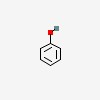 3D/inchi 3D/inchi
|
| ECHA EINECS - REACH Pre-Reg: | 203-632-7 | |
| FDA UNII: | 339NCG44TV | |
| Nikkaji Web: | J2.873H | |
| Beilstein Number: | 969616 | |
| MDL: | MFCD00002143 | |
| CoE Number: | 11811 | |
| XlogP3: | 1.50 (est) | |
| Molecular Weight: | 94.11302000 | |
| Formula: | C6 H6 O | |
| BioActivity Summary: | listing | |
| NMR Predictor: | Predict (works with chrome or firefox) | |
Category: food contact resinous and polymeric coatings
US / EU / FDA / JECFA / FEMA / FLAVIS / Scholar / Patent Information:
Physical Properties:
| Appearance: | white crystals (est) |
| Assay: | 99.00 to 100.00 % |
| Food Chemicals Codex Listed: | No |
| Specific Gravity: | 1.07100 @ 25.00 °C. |
| Melting Point: | 38.00 to 41.00 °C. @ 760.00 mm Hg |
| Boiling Point: | 181.00 to 182.00 °C. @ 760.00 mm Hg |
| Boiling Point: | 104.00 to 105.00 °C. @ 50.00 mm Hg |
| Vapor Pressure: | 0.614000 mmHg @ 25.00 °C. (est) |
| Flash Point: | 175.00 °F. TCC ( 79.44 °C. ) |
| logP (o/w): | 1.460 |
| Soluble in: | |
| alcohol | |
| water, 2.616e+004 mg/L @ 25 °C (est) | |
Organoleptic Properties:
| Odor Type: phenolic | |
| phenolic plastic rubbery | |
| Odor Description: at 0.01 % in dipropylene glycol. | phenolic plastic rubber |
| Odor and/or flavor descriptions from others (if found). | |
Cosmetic Information:
| CosIng: | cosmetic data |
| Cosmetic Uses: |
not used anymore |
Suppliers:
Safety Information:
| Preferred SDS: View | |
| European information : | |
| Most important hazard(s): | |
| T - Toxic. | |
|
R 20/21/22 - Harmful by inhalation, in contact with skin and if swallowed. R 23/24/25 - Toxic by inhalation, in contact with skin and if swallowed. R 34 - Causes burns. R 48 - Danger of serious damage to health by prolonged exposure. R 68 - Possible risk of irreversible effects. S 01/02 - Keep locked up and out of the reach of children. S 24/25 - Avoid contact with skin and eyes. S 26 - In case of contact with eyes, rinse immediately with plenty of water and seek medical advice. S 28 - After contact with skin, wash immediately with plenty of water. S 36/37/39 - Wear suitable clothing, gloves and eye/face protection. S 45 - In case of accident or if you feel unwell seek medical advice immediately. | |
| Hazards identification | |
| Classification of the substance or mixture | |
| GHS Classification in accordance with 29 CFR 1910 (OSHA HCS) | |
| None found. | |
| GHS Label elements, including precautionary statements | |
| Pictogram | |
| Hazard statement(s) | |
| None found. | |
| Precautionary statement(s) | |
| None found. | |
| Oral/Parenteral Toxicity: | |
|
oral-rat LD50 317 mg/kg BEHAVIORAL: CONVULSIONS OR EFFECT ON SEIZURE THRESHOLD Proceedings of the Society for Experimental Biology and Medicine. Vol. 32, Pg. 592, 1935. oral-mouse LD50 270 mg/kg Gigiena i Sanitariya. For English translation, see HYSAAV. Vol. 38(8), Pg. 6, 1973. intraperitoneal-rat LD50 127 mg/kg Gigiena i Sanitariya. For English translation, see HYSAAV. Vol. 41(6), Pg. 103, 1976. oral-cat LDLo 80 mg/kg "Abdernalden's Handbuch der Biologischen Arbeitsmethoden." Vol. 4, Pg. 1319, 1935. oral-dog LDLo 500 mg/kg "Abdernalden's Handbuch der Biologischen Arbeitsmethoden." Vol. 4, Pg. 1319, 1935. parenteral-frog LDLo 290 mg/kg BEHAVIORAL: CONVULSIONS OR EFFECT ON SEIZURE THRESHOLD CARDIAC: OTHER CHANGES PERIPHERAL NERVE AND SENSATION: SPASTIC PARALYSIS WITH OR WITHOUT SENSORY CHANGE Naunyn-Schmiedeberg's Archiv fuer Experimentelle Pathologie und Pharmakologie. Vol. 166, Pg. 437, 1932. intraperitoneal-guinea pig LDLo 300 mg/kg "Handbook of Toxicology," 4 vols., Philadelphia, W.B. Saunders Co., 1956-59Vol. 1, Pg. 228, 1955. oral-human LDLo 140 mg/kg SKIN AND APPENDAGES (SKIN): SWEATING: OTHER BEHAVIORAL: "HALLUCINATIONS, DISTORTED PERCEPTIONS" "Practical Toxicology of Plastics," Lefaux, R., Cleveland, OH, Chemical Rubber Co., 1968Vol. -, Pg. 329, 1968. oral-human LDLo 14000 mg/kg BEHAVIORAL: MUSCLE WEAKNESS LUNGS, THORAX, OR RESPIRATION: CYANOSIS "Toxicology of Drugs and Chemicals," Deichmann, W.B., New York, Academic Press, Inc., 1969Vol. -, Pg. 463, 1969. oral-mammal (species unspecified) LD50 500 mg/kg Gigiena Truda i Professional'nye Zabolevaniya. Labor Hygiene and Occupational Diseases. Vol. 32(10), Pg. 25, 1988. intraperitoneal-mouse LD50 180 mg/kg Pharmacologist. Vol. 10, Pg. 172, 1968. intravenous-mouse LD50 112 mg/kg BEHAVIORAL: TREMOR Quarterly Journal of Pharmacy & Pharmacology. Vol. 12, Pg. 212, 1939. intraperitoneal-rabbit LDLo 620 mg/kg Journal of Pharmacology and Experimental Therapeutics. Vol. 80, Pg. 233, 1944. intravenous-rabbit LDLo 180 mg/kg Journal of Pharmacology and Experimental Therapeutics. Vol. 80, Pg. 233, 1944. oral-rabbit LDLo 420 mg/kg Journal of Pharmacology and Experimental Therapeutics. Vol. 80, Pg. 233, 1944. | |
| Dermal Toxicity: | |
|
skin-rabbit LD50 630 mg/kg Union Carbide Data Sheet. Vol. 1/6/1966 subcutaneous-mouse LD50 344 mg/kg Industrial Health. Vol. 5, Pg. 143, 1967. skin-rat LD50 669 mg/kg KIDNEY, URETER, AND BLADDER: HEMATURIA SKIN AND APPENDAGES (SKIN): CUTANEOUS SENSITIZATION (EXPERIMENTAL): AFTER TOPICAL EXPOSURE BEHAVIORAL: TREMOR British Journal of Industrial Medicine. Vol. 27, Pg. 155, 1970. subcutaneous-rat LD50 460 mg/kg Toho Igakkai Zasshi. Journal of Medical Society of Toho University. Vol. 10, Pg. 1, 1963. subcutaneous-rabbit LDLo 620 mg/kg Journal of Pharmacology and Experimental Therapeutics. Vol. 80, Pg. 233, 1944. | |
| Inhalation Toxicity: | |
|
inhalation-mouse LC50 177 mg/m3 Gigiena i Sanitariya. For English translation, see HYSAAV. Vol. 41(6), Pg. 103, 1976. inhalation-rat LC50 316 mg/m3 Gigiena i Sanitariya. For English translation, see HYSAAV. Vol. 41(6), Pg. 103, 1976. | |
Safety in Use Information:
| Category: | food contact resinous and polymeric coatings | ||
| Recommendation for phenol usage levels up to: | |||
| not for fragrance use. | |||
| Maximised Survey-derived Daily Intakes (MSDI-EU): | 5.20 (μg/capita/day) | ||
| Maximised Survey-derived Daily Intakes (MSDI-USA): | 1.00 (μg/capita/day) | ||
| Use levels for FEMA GRAS flavoring substances on which the FEMA Expert Panel based its judgments that the substances are generally recognized as safe (GRAS). | |||
| The Expert Panel also publishes separate extensive reviews of scientific information on all FEMA GRAS flavoring substances and can be found at FEMA Flavor Ingredient Library | |||
| publication number: 4 | |||
| Click here to view publication 4 | |||
| average usual ppm | average maximum ppm | ||
| baked goods: | - | 0.50000 | |
| beverages(nonalcoholic): | - | 0.50000 | |
| beverages(alcoholic): | - | - | |
| breakfast cereal: | - | - | |
| cheese: | - | - | |
| chewing gum: | - | - | |
| condiments / relishes: | - | - | |
| confectionery froastings: | - | - | |
| egg products: | - | - | |
| fats / oils: | - | - | |
| fish products: | - | - | |
| frozen dairy: | - | 0.50000 | |
| fruit ices: | - | 0.50000 | |
| gelatins / puddings: | - | 0.50000 | |
| granulated sugar: | - | - | |
| gravies: | - | - | |
| hard candy: | - | 0.50000 | |
| imitation dairy: | - | - | |
| instant coffee / tea: | - | - | |
| jams / jellies: | - | - | |
| meat products: | - | - | |
| milk products: | - | - | |
| nut products: | - | - | |
| other grains: | - | - | |
| poultry: | - | - | |
| processed fruits: | - | - | |
| processed vegetables: | - | - | |
| reconstituted vegetables: | - | - | |
| seasonings / flavors: | - | - | |
| snack foods: | - | - | |
| soft candy: | - | - | |
| soups: | - | - | |
| sugar substitutes: | - | - | |
| sweet sauces: | - | - | |
Safety References:
| European Food Safety Athority(EFSA): | Flavor usage levels; Subacute, Subchronic, Chronic and Carcinogenicity Studies; Developmental / Reproductive Toxicity Studies; Genotoxicity Studies... |
| European Food Safety Authority (EFSA) reference(s): | |
| Flavouring Group Evaluation 88, (FGE.88)[1] - Consideration of Phenol and Phenol Derivatives - Opinion of the Scientific Panel on Food Additives, Flavourings, Processing Aids and Materials in Contact with Food View page or View pdf | |
| Scientific Opinion on the safety and efficacy of phenol derivatives containing ring-alkyl, ring-alkoxy and side-chains with an oxygenated functional group (chemical group 25) when used as flavourings for all species View page or View pdf | |
| Scientific Opinion on the toxicological evaluation of phenol View page or View pdf | |
| EPI System: | View |
| EPA-Iris: | IRIS |
| ClinicalTrials.gov: | search |
| Daily Med: | search |
| NIOSH International Chemical Safety Cards: | search |
| NIOSH Pocket Guide: | search |
| Chemical Carcinogenesis Research Information System: | Search |
| AIDS Citations: | Search |
| Cancer Citations: | Search |
| Toxicology Citations: | Search |
| Carcinogenic Potency Database: | Search |
| EPA GENetic TOXicology: | Search |
| EPA Substance Registry Services (TSCA): | 108-95-2 |
| EPA ACToR: | Toxicology Data |
| EPA Substance Registry Services (SRS): | Registry |
| Laboratory Chemical Safety Summary : | 996 |
| National Institute of Allergy and Infectious Diseases: | Data |
| SCCNFP: | opinion |
| WISER: | UN 1671 |
| WGK Germany: | 2 |
| phenol | |
| Chemidplus: | 0000108952 |
| EPA/NOAA CAMEO: | hazardous materials |
| RTECS: | 108-95-2 |
References:
| phenol | |
| NIST Chemistry WebBook: | Search Inchi |
| Canada Domestic Sub. List: | 108-95-2 |
| Pubchem (cid): | 996 |
| Pubchem (sid): | 134973339 |
| Flavornet: | 108-95-2 |
| Pherobase: | View |
Other Information:
| (IUPAC): | Atomic Weights of the Elements 2011 (pdf) |
| Videos: | The Periodic Table of Videos |
| tgsc: | Atomic Weights use for this web site |
| (IUPAC): | Periodic Table of the Elements |
| FDA Substances Added to Food (formerly EAFUS): | View |
| FDA Indirect Additives used in Food Contact Substances: | View |
| CHEBI: | View |
| CHEMBL: | View |
| Golm Metabolome Database: | Search |
| Metabolomics Database: | Search |
| UM BBD: | Search |
| KEGG (GenomeNet): | C00146 |
| HMDB (The Human Metabolome Database): | HMDB00228 |
| FooDB: | FDB000893 |
| Export Tariff Code: | 2907.11.0000 |
| Typical G.C. | |
| VCF-Online: | VCF Volatile Compounds in Food |
| ChemSpider: | View |
| Wikipedia: | View |
Potential Blenders and core components note
| None Found | ||
Potential Uses:
| antimicrobial agents | ||
| denaturants | ||
| deodorants |
Occurrence (nature, food, other): note
| asparagus shoot Search Trop Picture | |
| bilberry fruit juice Search Trop Picture | |
| blueberry fruit Search Trop Picture | |
| castoreum Search PMC Picture | |
| champaca concrete @ trace% Data GC Search Trop Picture | |
| cinnamon ceylon cinnamon root bark Search Trop Picture | |
| cranberry fruit Search Trop Picture | |
| guava fruit headspace reunion @ 1.60% Data GC Search Trop Picture | |
| lavender oil spike spain @ 0.017% Data GC Search Trop Picture | |
| mangrove bark red oil cuba @ trace% Data GC Search Trop Picture | |
| marjoram plant Search Trop Picture | |
| mikan peel oil @ trace% Data GC Search Trop Picture | |
| morus spp. Search Trop Picture | |
| pepper bell pepper fruit Search Trop Picture | |
| safflower bud Search Trop Picture | |
| savory winter savory plant Search Trop Picture | |
| sesame seed Search Trop Picture | |
| tamarind fruit Search Trop Picture | |
| tamarind fruit oil Search Trop Picture | |
| tamarind seed oil Search Trop Picture | |
| tarragon plant Search Trop Picture | |
| tomato fruit Search Trop Picture |
Synonyms:
| acid, carbolic | |
| acide carbolique | |
| acide phenique | |
| benzene, hydroxy- | |
| benzophenol | |
| carbolic acid | |
| carbolic oil | |
| carbolicum acidum | |
| carbolsaeure | |
| fenosmolin | |
| hydroxy-benzene | |
| hydroxybenzene | |
| karbolsaeure | |
| phenic acid | |
| phenic alcohol | |
| phenol alcohol | |
| phenol loose crystal (free flowing crystals) | |
| phenol natural | |
| phenosmolin | |
| phenyl alcohol | |
| phenyl hydrate | |
| phenyl hydroxide | |
| phenylalcohol | |
| phenylic acid |