Articles:
urea, N-(2,5-dioxo-4-imidazolidinyl)-
Notes:
a urea hydantoin that is found in urine and plants and is used in dermatological preparations. Allantoin is a chemical compound with formula C4H6N4O3. It is also called 5-ureidohydantoin or glyoxyldiureide. It is a diureide of glyoxylic acid. Named after the allantois, an amniote embryonic excretory organ in which it concentrates during development in most mammals except humans and higher apes, it is a product of oxidation of uric acid by purine catabolism. After birth, it is the predominant means by which nitrogenous waste is excreted in the urine of these animals. In humans and higher apes, the metabolic pathway for conversion of uric acid to allantoin is not present, so the former is excreted. Recombinant rasburicase is sometimes used as a drug to catalyze this metabolic conversion in patients. In fish, allantoin is broken down further (into ammonia) before excretion. Allantoin is a major metabolic intermediate in many other organisms including plants and bacteria.; Its chemical formula is C4H6N4O3. It is also called 5-ureidohydantoin, glyoxyldiureide, and 5-ureidohydantoin. It is a product of oxidation of uric acid. It is a diureide of glyoxylic acid. It is a product of purine metabolism in most mammals except higher apes, and it is present in their urine. Allantoin is a botanical extract of the comfrey plant and is used for its healing, soothing, and anti-irritating properties. Allantoin helps to heal wounds and skin irritations and stimulate growth of healthy tissue. This extract can be found in anti-acne products, sun care products, and clarifying lotions because of its ability to help heal minor wounds and promote healthy skin.

-
American International Chemical, Inc. Consistent sources North American supplier for globally sourced ingredients. AIC is a Westborough, MA based ISO Certified sales and marketing company serving the food, pharmaceutical, nutritional, personal care, biotech, and industrial markets of North America since 1972. Our success is a result of a company culture built on customer needs, along with partnerships with global manufacturers committed to the rigors and demands of the North American market. Our team of Sales Representatives, along with our network of strategically located warehouses are ready to supply product when and where you need it. Email: Info Voice: (800) 238-0001 Facebook Twitter Linkedin Products List: View Product(s): ALLKCP ALLANTOIN USP
-
-
BOC Sciences Best of Chemicals Supplier Quality supplier of research chemicals and biochemicals including inhibitors, building blocks, GMP Products, impurities and metabolites, APIs for Veterinary, Natural Compounds, ADCs, Stem Cell Molecule and chiral compounds. BOC Sciences provides a wide range of services to support the pharmaceutical industry through all stages of drug discovery including Custom Synthesis of those chemicals that are not in stock, Isotope Labeling Service, Chiral Synthesis and Resolution, Bioconjugation, PEGylation services, analytical services. BOC Sciences is a brand of BOCSCI Inc. We leverage our wide spectrum of business in the fields of development, manufacturing, marketing, and distribution to help you make best-informed decisions tailored to your evolving needs for premium chemicals. Our complete suite of CRO services spans the entire molecule development pipeline including contract research for target identification, building blocks, compound synthesis, biochemical and cellular analysis, preclinical animal tests, and clinical studies. Email: Marketing US Email: Marketing Email: Sales US Email: Sales Voice: 1-631-485-4226 Fax: 1-631-614-7828 US Voice: 1-631-485-4226 US Fax: 1-631-614-7828 Europe 44-203-286-1088 Facebook Twitter Linkedin Blog Get the App! Product(s): 97-59-6 Allantoin
-
-
Charkit Chemical Corporation The Specialty Chemical Specialists Explore this website to discover the products and services that Charkit provides for your industry and please contact us directly to find out how we can be of service to you. about: Since 1982, Charkit has been committed to expanding the markets we serve as our roster of products and services continues to grow with us. Our substantial portfolio of personal care ingredients now include a wide array of luxury and exotic components to compliment the key products we have always offered. We have expanded our offerings to the nutraceutical, industrial, and resin markets with a growing roster of versatile and unique ingredients. We continue to lead the way in our traditional markets such as Metal and Water Treatment, Imaging, Flavor & Fragrance, Aroma and Food. Our Pharmaceutical offerings continue to expand, still anchored by the Boronic Derivatives that meet the demands of Suzuki coupling reactions. Please contact us to learn how we can help you reach your goals. Email: Sales Voice: 203-299-3220 Fax: 203-299-1355 Facebook Twitter Linkedin Latest News Events Blog Products List: View Product(s): ALLANTOIN MEETS USP FOR COSMETIC USE ALLANTOIN USP
-

-
ECSA Chemicals Human Chemistry ECSA Chemicals has been active since 1913 in the trading and international commerce of raw materials. With an organisation divided into industrial segments managed by specialists, it has become one of the largest distributors worldwide. ECSA Chemicals is the largest Swiss-owned company in terms of warehouses for the distribution of chemical products. We have been distributing chemical products for over 100 years and we have a special interest in protecting the environment and in the safety of our facilities and collaborators. Established in 1913 as a small grocery store, in its over 100 years of activity ECSA Chemicals has become one of the most important Swiss-owned distributors of chemical products. The company, which is active in international distribution and trading, is organised into industrial segments that are managed by teams of specialists and experts. They guarantee professional and customised consultancy and services. With our experience, we can rapidly and safely connect you with the best suppliers on the market, providing you with a complete search, consulting and assistance service. The focus of our approach and operations is you, our customers. We strive every day to find the best products that satisfy your needs as quickly as possible. Your satisfaction is our greatest success. WHY CHOOSE ECSA? EXPERIENCE We have been working for 100 years. QUALITY We have obtained many certifications (ISO, SQAS, GDP, Responsible Care, Bio-Inspecta, RSPO, etc.). We guarantee full compliance with the current laws and continuous training for our staff. SAFETY We constantly carry out risk analyses for each infrastructure, defining safety levels and implementing corrective measures promptly wherever they are needed. WIDESPREAD DISTRIBUTION We have warehouses in strategic locations to supply goods to Switzerland and to the rest of the world. STORAGE CAPACITY The 3 ECSA-owned warehouses guarantee considerable storage area and capacity in each warehouse, with full availability of products (base chemicals and speciality chemicals). SPEED Presence all over the country, staff dedicated to sourcing raw materials and considerable storage capacity guarantee that goods are rapidly obtained and supplied. CONSULTANCY Our specialists - in-depth knowledge of the market and products allows us to provide full consulting services, from the purchase to the supply of raw materials. Email: Info Email: Sales Email: Trading Email: Maintenance Email: Energy Voice: +41 91 695 88 00 Fax: +41 91 695 88 01 Linkedin Youtube RSS Feed ECSA Trade ECSA TRADE THE MOST UPDATED FINANCIAL PUBLICATION ON THE WORLD OF CHEMISTRY Products List: View Product(s): MP-021873 ALLANTOIN
-

-
Glentham Life Sciences Ltd The Chemical, Biochemical & Research Essentials Supplier Glentham Life Sciences is a supplier of fine chemicals and raw materials with warehousing, laboratories and packaging facilities in the UK. With a Glentham Life Sciences account you can view more product details, request quotes and order products online. Email: Info Email: Sales Email: Tech Support Voice: +44 (0) 1225 667798 Fax: +44 (0) 2033 978909 Facebook Twitter Linkedin Google+ News Distribution Products List: View Product(s): GP0435 Allantoin
-
-
Penta International Corporation Chemistry innovation At Penta, our products and services help businesses do business better. For over 30 years, Penta Manufacturing Company has played a growing role in worldwide chemistry innovations and applications. As an industry leader, Penta continues to pioneer chemistry-based solutions for practically every area of commerce. Our products and expertise have helped fuel technical advances in dozens of commercial applications including flavoring, coloring, fragrances and chemical processes. US Email: Technical Services US Email: Sales US Voice: (973) 740-2300 US Fax: (973) 740-1839 Product(s): 01-15600 ALLANTOIN POWDER 01-15605 ALLANTOIN POWDER USP
-
| CAS Number: | 97-59-6 | 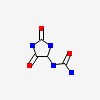 3D/inchi 3D/inchi
|
| Other(deleted CASRN): | 37305-69-4 | |
| ECHA EINECS - REACH Pre-Reg: | 202-592-8 | |
| FDA UNII: | 344S277G0Z | |
| Nikkaji Web: | J3.978K | |
| Beilstein Number: | 102364 | |
| MDL: | MFCD00005260 | |
| XlogP3-AA: | -2.20 (est) | |
| Molecular Weight: | 158.11742000 | |
| Formula: | C4 H6 N4 O3 | |
| BioActivity Summary: | listing | |
| NMR Predictor: | Predict (works with chrome or firefox) | |
Category: cosmetic agents
US / EU / FDA / JECFA / FEMA / FLAVIS / Scholar / Patent Information:
| Google Scholar: | Search |
| Google Books: | Search |
| Google Scholar: with word "volatile" | Search |
| Google Scholar: with word "flavor" | Search |
| Google Scholar: with word "odor" | Search |
| Google Patents: | Search |
| US Patents: | Search |
| EU Patents: | Search |
| Pubchem Patents: | Search |
| PubMed: | Search |
| NCBI: | Search |
Physical Properties:
| Assay: | 95.00 to 100.00 % |
| Food Chemicals Codex Listed: | No |
| Melting Point: | 239.00 °C. @ 760.00 mm Hg |
| Flash Point: | 32.00 °F. TCC ( 0.00 °C. ) (est) |
| logP (o/w): | -1.523 (est) |
| Soluble in: | |
| water, 5260 mg/L @ 25 °C (exp) | |
| water, 1e+006 mg/L @ 25 °C (est) | |
Organoleptic Properties:
| Odor and/or flavor descriptions from others (if found). | |
Cosmetic Information:
| CosIng: | cosmetic data |
| Cosmetic Uses: |
skin conditioning skin protecting agents soothing agents |
Suppliers:
| Alfa Biotechnology |
| For experimental / research use only. |
| Allantoin 98% |
| Allan Chemical |
| Allantoin |
| American International Chemical, LLC. |
| ALLANTOIN USP |
| BOC Sciences |
| For experimental / research use only. |
| Allantoin |
| Camden-Grey Essential Oils |
| Allantoin powder
Odor: characteristic Use: Allantoin is used in cosmetic applications such as shaving creams, shampoos, lipsticks, suntan products, hair gels, body powder, lotions and creams.
Usage recommended rate is from .5% to 2%. Make your emulsion, then add Allantoin during the cooling process (the emulsion should be below 90 deg. F). To completely mix and disperse Allantoin, very good mixing is a must. |
| Charkit Chemical |
| ALLANTOIN MEETS USP FOR COSMETIC USE |
| Charkit Chemical |
| ALLANTOIN USP |
| Connect Chemicals |
| Allantoin
Odor: characteristic Use: ALLANTOIN is used as an active ingredient in a lot of cosmetics with several beneficial effects including: a moisturizing and keratolytic effect, increasing the water content of the extracellular matrix and enhancing the desquamation of upper layers of dead skin cells, increasing the smoothness of the skin; promoting cell proliferation and wound healing; and a soothing, anti-irritant, and skin protectant effect by forming complexes with irritant and sensitizing agents.
ALLANTOIN is frequently present in toothpaste, mouthwash, and other oral hygiene products, in shampoos, lipsticks, anti-acne products, sun care products, and clarifying lotions, various cosmetic lotions and creams, and other cosmetic and pharmaceutical products. |
| ECSA Chemicals |
| ALLANTOIN |
| ECSA TRADE THE MOST UPDATED FINANCIAL PUBLICATION ON THE WORLD OF CHEMISTRY |
| Glentham Life Sciences |
| Allantoin |
| Kraft Chemical |
| Allantoin |
| Nanjing Jiancheng Chemical |
| Allantoin
Odor: characteristic Use: Allantoin is widely used as antiseptic for its bactericidal effect. It can constrain the bacterium, yeast, mould, gram-positive bacterium and gram-negative bacterium. Allantoin can be applied in cream, dew liquid, shampoo, hair conditioner, eye cosmetics, liquid cosmetics and other cosmetics. |
| Norman, Fox & Co. |
| ALLANTOIN |
| Penta International |
| ALLANTOIN POWDER USP |
| Penta International |
| ALLANTOIN POWDER |
| Sigma-Aldrich |
| For experimental / research use only. |
| Allantoin ≥98.0% (N) |
| TRI-K Industries |
| Allantoin
Odor: characteristic Use: An exceptional healing, soothing and moisturizing agent, Allantoin enhances the efficacy and appeal of dermatological and cosmetic formulations, leaving skin soft and supple. |
Safety Information:
| Hazards identification | |
| Classification of the substance or mixture | |
| GHS Classification in accordance with 29 CFR 1910 (OSHA HCS) | |
| None found. | |
| GHS Label elements, including precautionary statements | |
| Pictogram | |
| Hazard statement(s) | |
| None found. | |
| Precautionary statement(s) | |
| None found. | |
| Oral/Parenteral Toxicity: | |
| Not determined | |
| Dermal Toxicity: | |
| Not determined | |
| Inhalation Toxicity: | |
| Not determined | |
Safety in Use Information:
| Category: | cosmetic agents | ||
| Recommendation for allantoin usage levels up to: | |||
| not for fragrance use. | |||
| Recommendation for allantoin flavor usage levels up to: | |||
| not for flavor use. | |||
Safety References:
| EPI System: | View |
| ClinicalTrials.gov: | search |
| Daily Med: | search |
| Chemical Carcinogenesis Research Information System: | Search |
| AIDS Citations: | Search |
| Cancer Citations: | Search |
| Toxicology Citations: | Search |
| Carcinogenic Potency Database: | Search |
| EPA Substance Registry Services (TSCA): | 97-59-6 |
| EPA ACToR: | Toxicology Data |
| EPA Substance Registry Services (SRS): | Registry |
| Laboratory Chemical Safety Summary : | 204 |
| National Institute of Allergy and Infectious Diseases: | Data |
| WGK Germany: | 1 |
| (2,5-dioxoimidazolidin-4-yl)urea | |
| Chemidplus: | 0000097596 |
| RTECS: | YT1600000 for cas# 97-59-6 |
References:
| (2,5-dioxoimidazolidin-4-yl)urea | |
| NIST Chemistry WebBook: | Search Inchi |
| Canada Domestic Sub. List: | 97-59-6 |
| Pubchem (cid): | 204 |
| Pubchem (sid): | 134970637 |
Other Information:
| (IUPAC): | Atomic Weights of the Elements 2011 (pdf) |
| Videos: | The Periodic Table of Videos |
| tgsc: | Atomic Weights use for this web site |
| (IUPAC): | Periodic Table of the Elements |
| CHEBI: | View |
| CHEMBL: | View |
| Golm Metabolome Database: | Search |
| Metabolomics Database: | Search |
| KEGG (GenomeNet): | C01551 |
| HMDB (The Human Metabolome Database): | HMDB00462 |
| FooDB: | FDB001613 |
| YMDB (Yeast Metabolome Database): | YMDB00213 |
| Export Tariff Code: | 2933.21.0000 |
| VCF-Online: | VCF Volatile Compounds in Food |
| ChemSpider: | View |
| Wikipedia: | View |
| Formulations/Preparations: mederma, a topical skin gel produced by merz pharmaceuticals, llc, 4215 tudor lane greensboro, nc 27410, contains water (purified), peg-4, allium cepa (onion) bulb extraxt, xanthan gum, allantoin, fragrance, methylparaben and sorbic acid. | |
Potential Blenders and core components note
| None Found | ||
Potential Uses:
| oral care agents |
Occurrence (nature, food, other): note
| beet root Search Trop Picture | |
| black gram seed Search Trop Picture | |
| borage embryo Search Trop Picture | |
| borage leaf Search Trop Picture | |
| borage rhizome Search Trop Picture | |
| borage root Search Trop Picture | |
| borage seed Search Trop Picture | |
| borage sprout Search Trop Picture | |
| butternut seed Search Trop Picture | |
| cherry sour cherry stem Search Trop Picture | |
| coffee leaf Search Trop Picture | |
| comfrey Search Trop Picture | |
| corn embryo Search Trop Picture | |
| corn seed Search Trop Picture | |
| lupine white lupine sprout Search Trop Picture | |
| pea shoot Search Trop Picture | |
| potato plant Search Trop Picture | |
| rice seed Search Trop Picture | |
| shea tree seed Search Trop Picture | |
| soybean leaf Search Trop Picture | |
| soybean seed Search Trop Picture | |
| soybean shoot Search Trop Picture | |
| tea plant Search Trop Picture | |
| watermelon seed Search Trop Picture | |
| wheat embryo Search Trop Picture |
Synonyms:
| (±)- | allantoin |
| DL- | allantoin |
| allantoin powder | |
| allantoin powder USP | |
| allantoin USP | |
| brookosome A | |
| cordianin | |
| cutemol emollient | |
| 2,5- | dioxo-4-imidazolidinyl-urea |
| (2,5- | dioxo-4-imidazolidinyl)-urea |
| (2,5- | dioxo-4-imidazolidinyl)urea |
| 1-(2,5- | dioxo-4-imidazolidinyl)urea |
| N-(2,5- | dioxo-4-imidazolidinyl)urea |
| (2,5- | dioxo-imidazolidin-4-yl)-urea |
| (2,5- | dioxoimidazolidin-4-yl)urea |
| 1-(2,5- | dioxoimidazolidin-4-yl)urea |
| fancol TOIN | |
| glyoxyldiureid | |
| glyoxylic diureide | |
| hemocane | |
| 4H- | imidazole-2,5-diol, 4-[(hydroxyiminomethyl)amino]- |
| paxyl | |
| psoralon | |
| sebical | |
| septalan | |
| uniderm A | |
| urea, (2,5-dioxo-4-imidazolidinyl)- | |
| urea, N-(2,5-dioxo-4-imidazolidinyl)- | |
| 5- | ureidohydantoin |
| 5- | ureidohydrantoin |