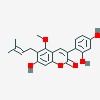
glycycoumarin
 
Notes:
None found
  • BOC Sciences
    • BOC Sciences
      Best of Chemicals Supplier
      Quality supplier of research chemicals and biochemicals including inhibitors, building blocks, GMP Products, impurities and metabolites, APIs for Veterinary, Natural Compounds, ADCs, Stem Cell Molecule and chiral compounds.
      BOC Sciences provides a wide range of services to support the pharmaceutical industry through all stages of drug discovery including Custom Synthesis of those chemicals that are not in stock, Isotope Labeling Service, Chiral Synthesis and Resolution, Bioconjugation, PEGylation services, analytical services.
      BOC Sciences is a brand of BOCSCI Inc. We leverage our wide spectrum of business in the fields of development, manufacturing, marketing, and distribution to help you make best-informed decisions tailored to your evolving needs for premium chemicals. Our complete suite of CRO services spans the entire molecule development pipeline including contract research for target identification, building blocks, compound synthesis, biochemical and cellular analysis, preclinical animal tests, and clinical studies.
      Email: Marketing
      US Email: Marketing
      Email: Sales
      US Email: Sales
      Voice: 1-631-485-4226
      Fax: 1-631-614-7828
      US Voice: 1-631-485-4226
      US Fax: 1-631-614-7828
      Europe44-203-286-1088
      Facebook
      Twitter
      Linkedin
      Blog
      Get the App!
      Product(s):
      94805-82-0 Glycycoumarin >98%
      Glycycoumarin is a natural coumarin compound found in several plants.
       
       
Synonyms   Articles   Notes   Search
CAS Number: 94805-82-0Picture of molecule3D/inchi
Nikkaji Web: J253.511D
XlogP3-AA: 4.40 (est)
Molecular Weight: 368.38560000
Formula: C21 H20 O6
NMR Predictor: Predict (works with chrome or firefox)
Category: natural substances and extractives
 
US / EU / FDA / JECFA / FEMA / FLAVIS / Scholar / Patent Information:
Google Scholar: Search
Google Books: Search
Google Scholar: with word "volatile"Search
Google Scholar: with word "flavor"Search
Google Scholar: with word "odor"Search
Google Patents: Search
US Patents: Search
EU Patents: Search
Pubchem Patents: Search
PubMed: Search
NCBI: Search
Synonyms   Articles   Notes   Search   Top
Physical Properties:
Assay: 95.00 to 100.00 % 
Food Chemicals Codex Listed: No
Soluble in:
 water, 4.11 mg/L @ 25 °C (est)
Synonyms   Articles   Notes   Search   Top
Organoleptic Properties:
 
Odor and/or flavor descriptions from others (if found).
 
 
Synonyms   Articles   Notes   Search   Top
Cosmetic Information:
None found
Synonyms   Articles   Notes   Search   Top
Suppliers:
BOC Sciences
For experimental / research use only.
Glycycoumarin >98%
Odor: characteristic
Use: Glycycoumarin is a natural coumarin compound found in several plants.
Synonyms   Articles   Notes   Search   Top
Safety Information:
 
Hazards identification
 
Classification of the substance or mixture
GHS Classification in accordance with 29 CFR 1910 (OSHA HCS)
None found.
GHS Label elements, including precautionary statements
 
Pictogram
 
Hazard statement(s)
None found.
Precautionary statement(s)
None found.
Oral/Parenteral Toxicity:
Not determined
Dermal Toxicity:
Not determined
Inhalation Toxicity:
Not determined
Synonyms   Articles   Notes   Search   Top
Safety in Use Information:
Category: natural substances and extractives
Recommendation for glycycoumarin usage levels up to:
 not for fragrance use.
 
Recommendation for glycycoumarin flavor usage levels up to:
 not for flavor use.
Synonyms   Articles   Notes   Search   Top
Safety References:
EPI System: View
AIDS Citations: Search
Cancer Citations: Search
Toxicology Citations: Search
EPA ACToR: Toxicology Data
EPA Substance Registry Services (SRS): Registry
Laboratory Chemical Safety Summary : 5317756
National Institute of Allergy and Infectious Diseases: Data
 3-(2,4-dihydroxyphenyl)-7-hydroxy-5-methoxy-6-(3-methylbut-2-enyl)chromen-2-one
Chemidplus: 0094805820
Synonyms   Articles   Notes   Search   Top
References:
 3-(2,4-dihydroxyphenyl)-7-hydroxy-5-methoxy-6-(3-methylbut-2-enyl)chromen-2-one
NIST Chemistry WebBook: Search Inchi
Pubchem (cid): 5317756
Pubchem (cas): 94805-82-0
Synonyms   Articles   Notes   Search   Top
Other Information:
(IUPAC): Atomic Weights of the Elements 2011 (pdf)
Videos: The Periodic Table of Videos
tgsc: Atomic Weights use for this web site
(IUPAC): Periodic Table of the Elements
CHEBI: View
CHEMBL: View
HMDB (The Human Metabolome Database): HMDB38225
FooDB: FDB017468
VCF-Online: VCF Volatile Compounds in Food
ChemSpider: View
Synonyms   Articles   Notes   Search   Top
Potential Blenders and core components note
 
None Found
 
Synonyms   Articles   Notes   Search   Top
Potential Uses:
None Found
Synonyms   Articles   Notes   Search   Top
Occurrence (nature, food, other): note
 glycyrrhiza glabra root
Search Trop  Picture
Synonyms   Articles   Notes   Search   Top
Synonyms:
3-(2,4-dihydroxy-phenyl)-7-hydroxy-5-methoxy-6-(3-methyl-but-2-enyl)-1-benzopyran-2-one
3-(2,4-dihydroxyphenyl)-7-hydroxy-5-methoxy-6-(3-methylbut-2-enyl)chromen-2-one
Synonyms   Articles   Notes   Search   Top
Articles:
PubMed: Glycycoumarin Sensitizes Liver Cancer Cells to ABT-737 by Targeting De Novo Lipogenesis and TOPK-Survivin Axis.
PubMed: Cytochrome P450 inhibition by three licorice species and fourteen licorice constituents.
PubMed: Glycycoumarin inhibits hepatocyte lipoapoptosis through activation of autophagy and inhibition of ER stress/GSK-3-mediated mitochondrial pathway.
PubMed: Identification and Chemical Standardization of Licorice Raw Materials and Dietary Supplements Using UHPLC-MS/MS.
PubMed: Glycycoumarin exerts anti-liver cancer activity by directly targeting T-LAK cell-originated protein kinase.
PubMed: Licorice root components in dietary supplements are selective estrogen receptor modulators with a spectrum of estrogenic and anti-estrogenic activities.
PubMed: Pharmacokinetic Profiles of Active Components After Oral Administration of a Kampo Medicine, Shakuyakukanzoto, to Healthy Adult Japanese Volunteers.
PubMed: Glycycoumarin ameliorates alcohol-induced hepatotoxicity via activation of Nrf2 and autophagy.
PubMed: [Screening of active compounds with myocardial protective effects from Tongmai Yangxin pill].
PubMed: Prenylated polyphenolic compounds from Glycyrrhiza iconica and their antimicrobial and antioxidant activities.
PubMed: Protective effects of glycycoumarin and procyanidin B1, active components of traditional Japanese medicine yokukansan, on amyloid β oligomer-induced neuronal death.
PubMed: Metabolites identification of glycycoumarin, a major bioactive coumarin from licorice in rats.
PubMed: Structures of two new flavonoids and effects of licorice phenolics on vancomycin-resistant Enterococcus species.
PubMed: Simultaneous determination of five minor coumarins and flavonoids in Glycyrrhiza uralensis by solid-phase extraction and high-performance liquid chromatography/electrospray ionization tandem mass spectrometry.
PubMed: Anti-hepatitis C virus compounds obtained from Glycyrrhiza uralensis and other Glycyrrhiza species.
PubMed: Antioxidant and anti-inflammatory activities of six flavonoids separated from licorice.
PubMed: Antispasmodic effect of shakuyakukanzoto extract on experimental muscle cramps in vivo: role of the active constituents of Glycyrrhizae radix.
PubMed: Isoliquiritigenin is a novel NMDA receptor antagonist in kampo medicine yokukansan.
PubMed: Prenylflavonoids from Glycyrrhiza uralensis and their protein tyrosine phosphatase-1B inhibitory activities.
PubMed: Separation, characterization and dose-effect relationship of the PPARgamma-activating bio-active constituents in the Chinese herb formulation 'San-Ao decoction'.
PubMed: Survey of Glycyrrhizae Radix resources in Mongolia: chemical assessment of the underground part of Glycyrrhiza uralensis and comparison with Chinese Glycyrrhizea Radix.
PubMed: Two flavonoids extracts from Glycyrrhizae radix inhibit in vitro hepatitis C virus replication.
PubMed: Constituent properties of licorices derived from Glycyrrhiza uralensis, G. glabra, or G. inflata identified by genetic information.
PubMed: [Inhibitory effects of 11 coumarin compounds against growth of human bladder carcinoma cell line E-J in vitro].
PubMed: Isoliquiritigenin, one of the antispasmodic principles of Glycyrrhiza ularensis roots, acts in the lower part of intestine.
PubMed: Pharmaceutical evaluation of cultivated Glycyrrhiza uralensis roots in comparison of their antispasmodic activity and glycycoumarin contents with those of licorice.
PubMed: Glycycoumarin from Glycyrrhizae Radix acts as a potent antispasmodic through inhibition of phosphodiesterase 3.
PubMed: Comparative analysis of ten strains of Glycyrrhiza uralensis cultivated in Japan.
PubMed: A licorice ethanolic extract with peroxisome proliferator-activated receptor-gamma ligand-binding activity affects diabetes in KK-Ay mice, abdominal obesity in diet-induced obese C57BL mice and hypertension in spontaneously hypertensive rats.
PubMed: Field survey of Glycyrrhiza plants in Central Asia (1). Characterization of G. uralensis, G. glabra and the putative intermediate collected in Kazakhstan.
PubMed: Antibacterial compounds of licorice against upper airway respiratory tract pathogens.
PubMed: Phenolic constituents of licorice. VIII. Structures of glicophenone and glicoisoflavanone, and effects of licorice phenolics on methicillin-resistant Staphylococcus aureus.
PubMed: [Phenolic constituents of licorice. IV. Correlation of phenolic constituents and licorice specimens from various sources, and inhibitory effects of licorice extracts on xanthine oxidase and monoamine oxidase].
PubMed: [Quality evaluation of Chinese licorice].
Synonyms   Articles   Notes   Search   Top
Please share your Comments.
Email Address:


Top of Page Home
Copyright © 1980-2021 Perflavory ™ Disclaimer Privacy Policy