
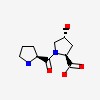
 3D/inchi
Articles:
| None found yet. |
| dipeptide-6
synthetic peptide consisting of proline and hydroxyproline | ||||||||||||||||||||||||||||||||||||||||||||||||||||||||||||||||||||||||||||||||||||||||||||||||||||||||||||||||||||||||||||||||||||||||||||||||||||||||||||||||||||||||||||||||||||
Notes: Prolylhydroxyproline is a dipeptide. Prolylhydroxyproline is a marker of bone collagen degradation, showing high sensitivity for the diagnosis of osteoporosis. Prolylhydroxyproline has been suggested as a possible alternative to hydroxyproline determination in bone resorption studies. Prolylhydroxyproline is one of the iminodipeptides present in the urine of patients with prolidase deficiency. Prolidase (X-Pro dipeptidase EC 3.4. 13.9) splits iminodipeptides containing C-terminal proline or hydroxyproline (X-Pro or X-Hyp) to X+Pro or X+Hyp. Prolidase deficiency is a rare autosomal recessive disease characterized by chronic ulcerative dermatitis and mental retardation. These patients excrete large amounts of iminodipeptides containing C-terminal proline in the urine due to hereditary prolidase deficiency. (PMID: 12636053, 11863289, 2387877, 1874885, 9586797) [HMDB]
| ||||||||||||||||||||||||||||||||||||||||||||||||||||||||||||||||||||||||||||||||||||||||||||||||||||||||||||||||||||||||||||||||||||||||||||||||||||||||||||||||||||||||||||||||||||
| ||||||||||||||||||||||||||||||||||||||||||||||||||||||||||||||||||||||||||||||||||||||||||||||||||||||||||||||||||||||||||||||||||||||||||||||||||||||||||||||||||||||||||||||||||||
Category: cosmetic ingredient for skin conditioning
US / EU / FDA / JECFA / FEMA / FLAVIS / Scholar / Patent Information:
Physical Properties:
Organoleptic Properties:
Cosmetic Information:
Suppliers:
Safety Information:
Safety in Use Information:
Safety References:
References:
Other Information:
Potential Blenders and core components note
Potential Uses:
Occurrence (nature, food, other): note
Synonyms:
Articles:
| ||||||||||||||||||||||||||||||||||||||||||||||||||||||||||||||||||||||||||||||||||||||||||||||||||||||||||||||||||||||||||||||||||||||||||||||||||||||||||||||||||||||||||||||||||||