|
Category: natural substances and extractives
US / EU / FDA / JECFA / FEMA / FLAVIS / Scholar / Patent Information:
Physical Properties:
| Assay: | 95.00 to 100.00 %
|
| Food Chemicals Codex Listed: | No |
| Melting Point: | 195.00 °C. @ 760.00 mm Hg
|
| Boiling Point: | 535.70 °C. @ 760.00 mm Hg (est)
|
| Flash Point: | 373.00 °F. TCC ( 189.30 °C. ) (est)
|
| logP (o/w): | 6.140 (est) |
| Soluble in: |
| | water, 0.02303 mg/L @ 25 °C (est) |
Organoleptic Properties:
| |
| Odor and/or flavor descriptions from others (if found). |
| |
| |
Cosmetic Information:
Suppliers:
| BOC Sciences |
| For experimental / research use only. |
| ATRANORIN >98%
Odor: characteristic Use: Atranorin, which can be found in the herbs of Parmelia tinctorum Despr, has a relevant redox-active action, acting as a pro-oxidant or antioxidant agent depending on the radical. Also, it will exert cytoprotective effects on cells under oxidative stress
Antinociceptive/antiinflammatory/antibacterial |
| Coompo |
| For experimental / research use only. |
| Atranorin from Plants ≥96%
|
| Sigma-Aldrich: Sigma |
| For experimental / research use only. |
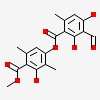
| Atranorin
|
Safety Information:
| Preferred SDS: View |
| |
| Hazards identification |
| |
| Classification of the substance or mixture |
| GHS Classification in accordance with 29 CFR 1910 (OSHA HCS) |
| None found. |
| GHS Label elements, including precautionary statements |
| |
| Pictogram | |
| |
| Hazard statement(s) |
| None found. |
| Precautionary statement(s) |
| None found. |
| Oral/Parenteral Toxicity: |
|
Not determined
|
| Dermal Toxicity: |
|
Not determined
|
| Inhalation Toxicity: |
|
Not determined
|
Safety in Use Information:
| Category: | natural substances and extractives |
| Recommendation for atranorin usage levels up to: | | | not for fragrance use.
|
| |
| Recommendation for atranorin flavor usage levels up to: |
| | not for flavor use.
|
Safety References:
References:
| | (3-hydroxy-4-methoxycarbonyl-2,5-dimethylphenyl)3-formyl-2,4-dihydroxy-6-methylbenzoate |
| NIST Chemistry WebBook: | Search Inchi |
| Pubchem (cid): | 68066 |
| Pubchem (sid): | 135026024 |
Other Information:
Potential Blenders and core components notePotential Uses:
Occurrence (nature, food, other): noteSynonyms:
| | antranoric acid | | | atranoric acid | | | atranorine | | | benzoic acid, 3-formyl-2,4-dihydroxy-6-methyl-, 3-hydroxy-4- (methoxycarbonyl)-2,5-dimethylphenyl ester | | | benzoic acid, 3-formyl-2,4-dihydroxy-6-methyl-, 3-hydroxy-4-(methoxycarbonyl)-2,5-dimethylphenyl ester (9CI) | | 3- | formyl-2,4-dihydroxy-6-methylbenzoic acid 3-hydroxy-4-(methoxycarbonyl)-2,5-dimethylphenyl ester | | 3- | hydroxy-4-(methoxycarbonyl)-2,5-dimethyl phenyl 3-formyl-2,4-dihydroxy-6-methyl benzoate | | 3- | hydroxy-4-(methoxycarbonyl)-2,5-dimethylphenyl 3-formyl-2,4-dihydroxy-6-methylbenzoate | | (3- | hydroxy-4-methoxycarbonyl-2,5-dimethylphenyl)3-formyl-2,4-dihydroxy-6-methylbenzoate | | | methyl 1-(3-formyl-2,4-dihydroxy-6-methylphenylcarbonyloxy)-3-hydroxy-2,5-dimethyl-4-benzenecarboxylate | | | parmelin | | | parmelin acid | | iso | phthalaldehydic acid, 2,4-dihydroxy-6-methyl-, 4-ester with methyl 3,6-dimethyl-b-resorcylate (8CI) | | | usnarin | | | usnarin acid |
Articles:
| PubMed: | Clastogenic effect of atranorin, evernic acid, and usnic acid on human lymphocytes. |
| PubMed: | Redox properties and cytoprotective actions of atranorin, a lichen secondary metabolite. |
| PubMed: | Variable responses of different human cancer cells to the lichen compounds parietin, atranorin, usnic acid and gyrophoric acid. |
| PubMed: | Antinociceptive activity of atranorin in mice orofacial nociception tests. |
| PubMed: | Antimicrobial and antibiofilm activity of secondary metabolites of lichens against methicillin-resistant Staphylococcus aureus strains from cystic fibrosis patients. |
| PubMed: | Depsides: lichen metabolites active against hepatitis C virus. |
| PubMed: | Ecological implication of variation in the secondary metabolites in Parmelioid lichens with respect to altitude. |
| PubMed: | Purification, physicochemical properties, thermal analysis and antinociceptive effect of atranorin extracted from Cladina kalbii. |
| PubMed: | Contact allergy to atranorin in lichens and perfumes. |
| PubMed: | The antimicrobial activity of extracts of the lichen Cladonia foliacea and its (-)-usnic acid, atranorin, and fumarprotocetraric acid constituents. |
| PubMed: | Antimicrobial activity of extracts of chemical races of the lichen Pseudevernia furfuracea and their physodic acid, chloroatranorin, atranorin, and olivetoric acid constituents. |
| PubMed: | The sensitizing capacity of atranorin. |
| PubMed: | Enzymatic production of atranorin: a component of the oak moss absolute by immobilized lichen cells. |
| PubMed: | Identification of atranorin and related potential allergens in oakmoss absolute by high-performance liquid chromatography-tandem mass spectrometry using negative ion atmospheric pressure chemical ionization. |
| PubMed: | Secondary metabolites of the lichen Hypogymnia physodes (L.) Nyl. and their presence in spruce (Picea abies (L.) H. Karst.) bark. |
| PubMed: | Airborne contact dermatitis from atranorin. |
| PubMed: | Larvicidal activity of some secondary lichen metabolites against the mosquito Culiseta longiareolata Macquart (Diptera: Culicidae). |
| PubMed: | Atranorin and oak moss contact allergy. |
| PubMed: | Lichen secondary metabolites as DNA-interacting agents. |
| PubMed: | Lichen secondary metabolites are responsible for induction of apoptosis in HT-29 and A2780 human cancer cell lines. |
| PubMed: | Antimalarial drug interactions of compounds isolated from Kigelia africana (Bignoniaceae) and their synergism with artemether, against the multidrug-resistant W2mef Plasmodium falciparum strain. |
| PubMed: | Growth promoting effects of some lichen metabolites on probiotic bacteria. |
| PubMed: | Biosynthesis of lichen depsides, lecanoric acid and atranorin. |
| PubMed: | Light screening in lichen cortices can be quantified by chlorophyll fluorescence techniques for both reflecting and absorbing pigments. |
| PubMed: | Effect of vicanicin and protolichesterinic acid on human prostate cancer cells: role of Hsp70 protein. |
| PubMed: | Platismatia glaucia and Pseudevernia furfuracea lichens as sources of antioxidant, antimicrobial and antibiofilm agents. |
| PubMed: | Biological activities and chemical composition of lichens from Serbia. |
| PubMed: | β-Orcinol-type depsides from the lichen Thamnolia vermicularis. |
| PubMed: | Dereplication of depsides from the lichen Pseudevernia furfuracea by centrifugal partition chromatography combined to 13C nuclear magnetic resonance pattern recognition. |
| PubMed: | A new depside from Usnea aciculifera growing in Vietnam. |
| PubMed: | Biologically active components of a Papua New Guinea analgesic and anti-inflammatory lichen preparation. |
| PubMed: | UV-protectant metabolites from lichens and their symbiotic partners. |
| PubMed: | Antibacterial and antioxidant activity of lichen species Ramalina roesleri. |
| PubMed: | Cytotoxic evaluation of phenolic compounds from lichens against melanoma cells. |
| PubMed: | In vitro antiplasmodial activity and cytotoxicity of crude extracts and compounds from the stem bark of Kigelia africana (Lam.) Benth (Bignoniaceae). |
| PubMed: | Chemical composition of three Parmelia lichens and antioxidant, antimicrobial and cytotoxic activities of some their major metabolites. |
| PubMed: | Isolation, characterization and antifungal activity of major constituents of the Himalayan lichen Parmelia reticulata Tayl. |
| PubMed: | Chemical constituents of Stereospermum acuminatissimum and their urease and α-chymotrypsin inhibitions. |
| PubMed: | Chemical Composition, Antioxidant, and Antimicrobial Activities of Lichen Umbilicaria cylindrica (L.) Delise (Umbilicariaceae). |
| PubMed: | A study of lipid secretion from the lichen symbionts, ascomycetous fungus Myelochroa leucotyliza and green alga Trebouxia sp. |
| PubMed: | Lichen acids as uncouplers of oxidative phosphorylation of mouse-liver mitochondria. |
| PubMed: | Sensitivity of Xanthoria parietina to UV-A: role of metabolic modulators. |
| PubMed: | Physiological responses of root-less epiphytic plants to acid rain. |
| PubMed: | Light might regulate divergently depside and depsidone accumulation in the lichen Parmotrema hypotropum by affecting thallus temperature and water potential. |
| PubMed: | Solubilization of poorly soluble lichen metabolites for biological testing on cell lines. |
| PubMed: | Photoprotector capacity of lichen metabolites assessed through the inhibition of the 8-methoxypsoralen photobinding to protein. |
| PubMed: | Chemical constituents of the lichen, Candelaria concolor: a complete NMR and chemical degradative investigation. |
| PubMed: | Antimycobacterial activity of lichen substances. |
| PubMed: | Identification of crystalline material found in the thallus of the lichen, Myelochroa leucotyliza. |
| PubMed: | Photosensitivity and allergy to aromatic lichen acids, Compositae oleoresins and other plant substances. |
| PubMed: | Quantitative determination of secondary metabolites in Cladina stellaris and other lichens by micellar electrokinetic chromatography. |
| PubMed: | Production of phenolics by immobilized cells of the lichen Pseudevernia furfuracea: the role of epiphytic bacteria. |
| PubMed: | Antimycobacterial activity of lichen metabolites in vitro. |
| PubMed: | Photohemolytic activity of lichen metabolites. |
| PubMed: | Lichen metabolites modulate hydrogen peroxide and nitric oxide in mouse macrophages. |
| PubMed: | Chemistry of the lichen Hypogymnia physodes transplanted to an industrial region. |
| PubMed: | An investigation of the allergenic constituents of Cladonia stellaris (Opiz) Pous & Vezda ('silver moss', 'reindeer moss' or 'reindeer lichen'). |
| PubMed: | Metabolites from the Lichen Ochrolechia parella growing under two different heliotropic conditions. |
| PubMed: | Metabolites of Pseudevernia furfuracea (L.) Zopf. and their inhibition potential of proteolytic enzymes. |
| PubMed: | Phytochemical investigation of the Australian lichens Ramalina glaucescens and Xanthoria parietina. |
| PubMed: | Characterization of a non-reducing polyketide synthase gene from lichen Dirinaria applanata. |
| PubMed: | Is a low content in atranol/chloroatranol safe in oak moss-sensitized individuals? |
| PubMed: | Antimicrobial activity of extracts of the lichen Parmelia sulcata and its salazinic acid constituent. |
| PubMed: | Lupane triterpenoids from Acacia mellifera with cytotoxic activity. |
| PubMed: | Ozone reactivity and free radical scavenging behavior of phenolic secondary metabolites in lichens exposed to chronic oxidant air pollution from Mexico City. |
| PubMed: | Lichen substances affect metal adsorption in Hypogymnia physodes. |
| PubMed: | A study of the genetic variability of Rhizoplaca chrysoleuca using DNA sequences and secondary metabolic substances. |
| PubMed: | Identification and quantitation of allelochemicals from the lichen Lethariella canariensis: phytotoxicity and antioxidative activity. |
| PubMed: | Contact allergy to oak moss: search for sensitizing molecules using combined bioassay-guided chemical fractionation, GC-MS, and structure-activity relationship analysis. |
| PubMed: | Lichen metabolites. 2. Antiproliferative and cytotoxic activity of gyrophoric, usnic, and diffractaic acid on human keratinocyte growth. |
| PubMed: | Preparation of an oakmoss absolute with reduced allergenic potential. |
| PubMed: | Chemical Constituents of the Lichen Ramalina hierrensis. |
| PubMed: | Contact sensitivity to oak moss. |
| PubMed: | The Utilization of Urea by the Lichen Cladonia sandstedei. |
| PubMed: | Perfume allergy due to oak moss and other lichens. |
| PubMed: | Contact allergy due to lichens in patients with a history of photosensitivity. |
| PubMed: | First Report of Heterodermia squamulosa (Lichenized Ascomycota, Physciaceae) in South Korea. |
| PubMed: | Beta-orcinol metabolites from the lichen Hypotrachyna revoluta. |
| PubMed: | Antifungal constituents from the Chinese moss Homalia trichomanoides. |
| PubMed: | Comparison of elicitation potential of chloroatranol and atranol--2 allergens in oak moss absolute. |
| PubMed: | Culture studies and secondary compounds of six Ramalina species. |
| PubMed: | Phenolic constituents from the lichen Parmotrema stuppeum (Nyl.) Hale and their antioxidant activity. |
| PubMed: | Allergy to lichen acids in a fragrance. |
| PubMed: | Lichen metabolites. 1. Inhibitory action against leukotriene B4 biosynthesis by a non-redox mechanism. |
| PubMed: | Lichen biodeterioration of the Convento de la Peregrina, Sahagún, Spain. |
| PubMed: | Sequestration of lichen compounds by lichen-feeding members of the Arctiidae (Lepidoptera). |
| PubMed: | Sequestration of lichen compounds by three species of terrestrial snails. |
| PubMed: | Contact dermatitis from oak moss. |
| PubMed: | The occurrence of lichen phenolics in the photobiont cells of Evernia prunastri. |
| PubMed: | Contact sensitivity to lichens and compositae in Frullania dermatitis. |
| PubMed: | Photosensitivity to oak moss. |
| PubMed: | Purification and Properties of the Constitutive Arginase of Evernia prunastri. |
| PubMed: | Photosensitivity and allergy to aromatic lichen acids, Compositae oleoresins and other plant substances. |
|

 3D/inchi