|
Category: cosmetic agents
US / EU / FDA / JECFA / FEMA / FLAVIS / Scholar / Patent Information:
Physical Properties:
| Assay: | 95.00 to 100.00 %
|
| Food Chemicals Codex Listed: | No |
| Boiling Point: | 416.97 °C. @ 760.00 mm Hg (est)
|
| Flash Point: | 364.00 °F. TCC ( 184.60 °C. ) (est)
|
| logP (o/w): | 9.213 (est) |
| Soluble in: |
| | water, 1.655e-005 mg/L @ 25 °C (est) |
Organoleptic Properties:
| |
| Odor and/or flavor descriptions from others (if found). |
| |
| |
Cosmetic Information:
Suppliers:
| BOC Sciences |
| For experimental / research use only. |
| Nonanedioic acid,1,9-bis(2-ethylhexyl) ester >75.0%(GC)
|
| HallStar |
| MONOPLEX® DOZ
Odor: characteristic Use: MONOPLEX DOZ is an excellent low temperature dibasic acid ester. This ester is primarily used for PVC applications that will be exposed to extreme cold. In addition, MONOPLEX DOZ offers excellent efficiency characteristics. Finally, MONOPLEX DOZ imparts a glossy yet dry surface to PVC parts as well as excellent “hand” and drape properties. Both MONOPLEX DOZ and PLASTHALL® DOZ are chemically the same they differ in specifications. MONOPLEX DOZ has a tighter color specification. |
| HallStar |
| PLASTHALL® DOZ
Odor: characteristic Use: PLASTHALL DOZ is utilized when the best low temperature performance is required in a PVC formulation. In addition, PLASTHALL DOZ offers excellent efficiency characteristics. Finally, PLASTHALL DOZ imparts a glossy yet dry surface to PVC parts as well as excellent “hand” and drape properties. |
| Sigma-Aldrich: Aldrich |
| For experimental / research use only. |
| Dioctyl Azelate
|
| Zschimmer & Schwarz |
| Lubricit 2-EHAZ
|
Safety Information:
| Preferred SDS: View |
| |
| Hazards identification |
| |
| Classification of the substance or mixture |
| GHS Classification in accordance with 29 CFR 1910 (OSHA HCS) |
| None found. |
| GHS Label elements, including precautionary statements |
| |
| Pictogram | |
| |
| Hazard statement(s) |
| None found. |
| Precautionary statement(s) |
| None found. |
| Oral/Parenteral Toxicity: |
intravenous-rabbit LD50 640 mg/kg
U.S. Army, Chemical Corps Medical Laboratories Research Reports. Vol. #256, Pg. 1954
intravenous-rat LD50 1060 mg/kg
U.S. Army, Chemical Corps Medical Laboratories Research Reports. Vol. #256, Pg. 1954
oral-rat LD50 8720 uL/kg
American Industrial Hygiene Association Journal. Vol. 23, Pg. 95, 1962.
|
| Dermal Toxicity: |
skin-rabbit LD50 20 mL/kg
American Industrial Hygiene Association Journal. Vol. 23, Pg. 95, 1962.
|
| Inhalation Toxicity: |
|
Not determined
|
Safety in Use Information:
| Category: | cosmetic agents |
| Recommendation for dioctyl azelate usage levels up to: | | | not for fragrance use.
|
| |
| Recommendation for dioctyl azelate flavor usage levels up to: |
| | not for flavor use.
|
Safety References:
References:
Other Information:
Potential Blenders and core components notePotential Uses:
Occurrence (nature, food, other): noteSynonyms:
| | azelaic acid, bis(2-ethylhexyl) ester | | | azelaic acid, di(2-ethylhexyl)ester | | | di-2-ethyl hexyl azelate | | | di-2-ethylhexyl azelate | | | di(2-ethylhexyl) azelate | | | emolien 2986 | | bis(2- | ethyl hexyl) azelate | | bis(2- | ethylhexyl) azelaate | | bis(2- | ethylhexyl) azelate | | bis(2- | ethylhexyl) nonanedioate | | | nonanedioic acid bis(2-ethylhexyl) ester | | | nonanedioic acid, bis(2-ethylhexyl) ester | | | octyl azelate | | | plastolein 9058 | | | sansocizer DOZ | | | staflex DOX | | | truflex DOX |
Articles:
|

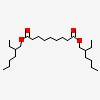 3D/inchi