Articles:
hexadecanoic acid, 10,16-dihydroxy-
Notes:
None found
| CAS Number: | 3233-90-7 | 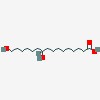 3D/inchi 3D/inchi
|
| Nikkaji Web: | J650.507D | |
| XlogP3-AA: | 3.60 (est) | |
| Molecular Weight: | 216.36184000 | |
| Formula: | C10 H32 O4 | |
| NMR Predictor: | Predict (works with chrome or firefox) | |
Category: natural substances and extractives
US / EU / FDA / JECFA / FEMA / FLAVIS / Scholar / Patent Information:
| Google Scholar: | Search |
| Google Books: | Search |
| Google Scholar: with word "volatile" | Search |
| Google Scholar: with word "flavor" | Search |
| Google Scholar: with word "odor" | Search |
| Google Patents: | Search |
| US Patents: | Search |
| EU Patents: | Search |
| Pubchem Patents: | Search |
| PubMed: | Search |
| NCBI: | Search |
Physical Properties:
| Assay: | 95.00 to 100.00 % |
| Food Chemicals Codex Listed: | No |
| Soluble in: | |
| water, 6.655 mg/L @ 25 °C (est) | |
Organoleptic Properties:
| Odor and/or flavor descriptions from others (if found). | |
Cosmetic Information:
| None found |
Suppliers:
| None found |
Safety Information:
| Hazards identification | |
| Classification of the substance or mixture | |
| GHS Classification in accordance with 29 CFR 1910 (OSHA HCS) | |
| None found. | |
| GHS Label elements, including precautionary statements | |
| Pictogram | |
| Hazard statement(s) | |
| None found. | |
| Precautionary statement(s) | |
| None found. | |
| Oral/Parenteral Toxicity: | |
| Not determined | |
| Dermal Toxicity: | |
| Not determined | |
| Inhalation Toxicity: | |
| Not determined | |
Safety in Use Information:
| Category: | natural substances and extractives | ||
| Recommendation for 10,16-dihydroxyhexadecanoic acid usage levels up to: | |||
| not for fragrance use. | |||
| Recommendation for 10,16-dihydroxyhexadecanoic acid flavor usage levels up to: | |||
| not for flavor use. | |||
Safety References:
| EPI System: | View |
| AIDS Citations: | Search |
| Cancer Citations: | Search |
| Toxicology Citations: | Search |
| EPA ACToR: | Toxicology Data |
| EPA Substance Registry Services (SRS): | Registry |
| Laboratory Chemical Safety Summary : | 441449 |
| National Institute of Allergy and Infectious Diseases: | Data |
| 10,16-dihydroxyhexadecanoic acid | |
| Chemidplus: | 0003233907 |
References:
| 10,16-dihydroxyhexadecanoic acid | |
| NIST Chemistry WebBook: | Search Inchi |
| Pubchem (cid): | 441449 |
| Pubchem (cas): | 3233-90-7 |
Other Information:
| (IUPAC): | Atomic Weights of the Elements 2011 (pdf) |
| Videos: | The Periodic Table of Videos |
| tgsc: | Atomic Weights use for this web site |
| (IUPAC): | Periodic Table of the Elements |
| CHEBI: | View |
| KEGG (GenomeNet): | C08285 |
| HMDB (The Human Metabolome Database): | Search |
| FooDB: | FDB021203 |
| VCF-Online: | VCF Volatile Compounds in Food |
| ChemSpider: | View |
Potential Blenders and core components note
| None Found | ||
Potential Uses:
| None Found |
Occurrence (nature, food, other): note
| gooseberry fruit Search Trop Picture | |
| tomato fruit Search Trop Picture |
Synonyms:
| 10,16- | dihydroxypalmitic acid |
| hexadecanoic acid, 10,16-dihydroxy- |