|
Category: coloring agents
US / EU / FDA / JECFA / FEMA / FLAVIS / Scholar / Patent Information:
Physical Properties:
| Appearance: | deep red needles (est) |
| Assay: | 95.00 to 100.00 %
|
| Food Chemicals Codex Listed: | No |
| Boiling Point: | 726.00 to 727.00 °C. @ 760.00 mm Hg (est)
|
| Flash Point: | 765.00 °F. TCC ( 407.20 °C. ) (est)
|
| logP (o/w): | 9.467 (est) |
| Soluble in: |
| | water, 1.113e-009 mg/L @ 25 °C (est) |
Organoleptic Properties:
| |
| Odor and/or flavor descriptions from others (if found). |
| |
| |
Cosmetic Information:
Suppliers:
Safety Information:
| Preferred SDS: View |
| |
| Hazards identification |
| |
| Classification of the substance or mixture |
| GHS Classification in accordance with 29 CFR 1910 (OSHA HCS) |
| None found. |
| GHS Label elements, including precautionary statements |
| |
| Pictogram | |
| |
| Hazard statement(s) |
| None found. |
| Precautionary statement(s) |
| None found. |
| Oral/Parenteral Toxicity: |
|
Not determined
|
| Dermal Toxicity: |
|
Not determined
|
| Inhalation Toxicity: |
|
Not determined
|
Safety in Use Information:
| Category: | coloring agents |
| Recommendation for capsanthin usage levels up to: | | | not for fragrance use.
|
| |
| Recommendation for capsanthin flavor usage levels up to: |
| | not for flavor use.
|
Safety References:
| European Food Safety Authority (EFSA) reference(s): |
Scientific Opinion on the re-evaluation of paprika extract (E 160c) as a food additive
View page or View pdf |
Outcome of the consultation with Member States and EFSA on the basic substance application for paprika extract, capsanthin, capsorubin E 160 c (admissibility accepted when named Capsicum spp. spice) for use in plant protection as repellent to various invertebrates, mammals and birds
View page or View pdf |
| EPI System: | View |
| Cancer Citations: | Search |
| Toxicology Citations: | Search |
| EPA ACToR: | Toxicology Data |
| EPA Substance Registry Services (SRS): | Registry |
| Laboratory Chemical Safety Summary : | 5281228 |
| National Institute of Allergy and Infectious Diseases: | Data |
| WGK Germany: | 3 |
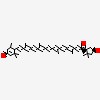
| | (2E,4E,6E,8E,10E,12E,14E,16E,18E)-19-[(4R)-4-hydroxy-2,6,6-trimethylcyclohexen-1-yl]-1-[(1R,4S)-4-hydroxy-1,2,2-trimethylcyclopentyl]-4,8,13,17-tetramethylnonad |
| Chemidplus: | 0000465429 |
References:
| | (2E,4E,6E,8E,10E,12E,14E,16E,18E)-19-[(4R)-4-hydroxy-2,6,6-trimethylcyclohexen-1-yl]-1-[(1R,4S)-4-hydroxy-1,2,2-trimethylcyclopentyl]-4,8,13,17-tetramethylnonad |
| NIST Chemistry WebBook: | Search Inchi |
| Pubchem (cid): | 5281228 |
| Pubchem (sid): | 135228485 |
Other Information:
Potential Blenders and core components notePotential Uses:
Occurrence (nature, food, other): noteSynonyms:
| (3R,3'S,5'R)-3,3'- | dihydroxy-beta,kappa-caroten-6'-one | | 3,3'- | dihydroxy-beta,kappa-caroten-6'one | | (2E,4E,6E,8E,10E,12E,14E,16E,18E)-19-[(4R)-4- | hydroxy-2,6,6-trimethylcyclohexen-1-yl]-1-[(1R,4S)-4-hydroxy-1,2,2-trimethylcyclopentyl]-4,8,13,17-tetramethylnonad |
Articles:
| PubMed: | Cross-linking of soybean protein isolate-chitosan coacervate with transglutaminase utilizing capsanthin as the model core. |
| PubMed: | [Spectral characterization for capsanthin molecule with in vitro oxidative defense reaction]. |
| PubMed: | Alteration of flower color in Iris germanica L. 'Fire Bride' through ectopic expression of phytoene synthase gene (crtB) from Pantoea agglomerans. |
| PubMed: | The bioefficacy of microemulsified natural pigments in egg yolk pigmentation. |
| PubMed: | Fluorescent nanomicelles for selective detection of Sudan dye in Pluronic F127 aqueous media. |
| PubMed: | De novo transcriptome analysis of Liriodendron chinense petals and leaves by Illumina sequencing. |
| PubMed: | Antioxidant activity and content of chlorophylls and carotenoids in raw and heat-processed Jalapeño peppers at intermediate stages of ripening. |
| PubMed: | Determination of egg yolk xanthophylls by isocratic high-performance liquid chromatography. |
| PubMed: | Assessment of free radicals scavenging activity of seven natural pigments and protective effects in AAPH-challenged chicken erythrocytes. |
| PubMed: | Biochemistry and molecular biology of carotenoid biosynthesis in chili peppers (Capsicum spp.). |
| PubMed: | Paprika Pigments Attenuate Obesity-Induced Inflammation in 3T3-L1 Adipocytes. |
| PubMed: | The effect of domestic processing on the content and bioaccessibility of carotenoids from chili peppers (Capsicum species). |
| PubMed: | In vitro investigation of the bioaccessibility of carotenoids from raw, frozen and boiled red chili peppers (Capsicum annuum). |
| PubMed: | Simultaneous determination of free capsorubin and capsanthin in red pepper powder using u-HPLC. |
| PubMed: | Lower photostability of capsanthin dispersed in an aqueous solution. |
| PubMed: | Characterization of 12 Capsicum varieties by evaluation of their carotenoid profile and pungency determination. |
| PubMed: | [Potency of carotenoids found in vegetables and fruits]. |
| PubMed: | A further analysis of the relationship between yellow ripe-fruit color and the capsanthin-capsorubin synthase gene in pepper (Capsicum sp.) indicated a new mutant variant in C. annuum and a tandem repeat structure in promoter region. |
| PubMed: | Proteomic analysis of chromoplasts from six crop species reveals insights into chromoplast function and development. |
| PubMed: | Effect of heat processing on the profile of pigments and antioxidant capacity of green and red jalapeño peppers. |
| PubMed: | Cloning and functional characterization of a gene for capsanthin-capsorubin synthase from tiger lily (Lilium lancifolium Thunb. 'Splendens'). |
| PubMed: | Separation and quantification of 15 carotenoids by reversed phase high performance liquid chromatography coupled to diode array detection with isosbestic wavelength approach. |
| PubMed: | Analysis of native carotenoid composition of sweet bell peppers by serially coupled C30 columns. |
| PubMed: | Putative supramolecular complexes formed by carotenoids and xanthophylls with ascorbic acid to reverse multidrug resistance in cancer cells. |
| PubMed: | Influence of different drying methods on carotenoids and capsaicinoids of paprika (Cv., Jalapeno). |
| PubMed: | Carotenoid accumulation in orange-pigmented Capsicum annuum fruit, regulated at multiple levels. |
| PubMed: | Nitrocapsanthin and nitrofucoxanthin, respective products of capsanthin and fucoxanthin reaction with peroxynitrite. |
| PubMed: | Carotenoids inhibit proliferation and regulate expression of peroxisome proliferators-activated receptor gamma (PPARγ) in K562 cancer cells. |
| PubMed: | Phytochemicals and antioxidant activity of fruits and leaves of paprika (Capsicum Annuum L., var. special) cultivated in Korea. |
| PubMed: | Carotenoid composition and vitamin A value in ají (Capsicum baccatum L.) and rocoto (C. pubescens R. & P.), 2 pepper species from the Andean region. |
| PubMed: | Recent advances in the study on capsaicinoids and capsinoids. |
| PubMed: | Effect of Capsicum carotenoids on growth and aflatoxins production by Aspergillus flavus isolated from paprika and chilli. |
| PubMed: | Effect of Capsicum carotenoids on growth and ochratoxin A production by chilli and paprika Aspergillus spp. isolates. |
| PubMed: | Purified canola lutein selectively inhibits specific isoforms of mammalian DNA polymerases and reduces inflammatory response. |
| PubMed: | Reversal of multidrug resitance by natural substances from plants. |
| PubMed: | Variability of Carotenoid Biosynthesis in Orange Colored Capsicum spp. |
| PubMed: | Characterization of plant carotenoid cyclases as members of the flavoprotein family functioning with no net redox change. |
| PubMed: | Production of single cell protein using waste capsicum powder produced during capsanthin extraction. |
| PubMed: | Qualitative and quantitative differences in the carotenoid composition of yellow and red peppers determined by HPLC-DAD-MS. |
| PubMed: | Dietary capsanthin, the main carotenoid in paprika (Capsicum annuum), alters plasma high-density lipoprotein-cholesterol levels and hepatic gene expression in rats. |
| PubMed: | Carotenoid synthesis: retrospect and recent progress. |
| PubMed: | Research of the (E/Z)-isomerization of carotenoids in Pécs since the 1970s. |
| PubMed: | Total synthesis of cucurbitaxanthin A, cycloviolaxanthin and capsanthin 3,6-epoxide by applying a regioselective ring opening of tetrasubstituted epoxides. |
| PubMed: | Reversal of multidrug resistance by synthetic and natural compounds in drug-resistant MCF-7 cell lines. |
| PubMed: | A density functional theory study of the structure and vibrational spectra of beta-carotene, capsanthin, and capsorubin. |
| PubMed: | Qualitative and quantitative analysis of genetically modified pepper. |
| PubMed: | Antioxidant activities of different colored sweet bell peppers (Capsicum annuum L.). |
| PubMed: | Total synthesis of capsanthin and capsorubin using Lewis acid-promoted regio- and stereoselective rearrangement of tetrasubsutituted epoxides. |
| PubMed: | A comparison of the carotenoid accumulation in Capsicum varieties that show different ripening colours: deletion of the capsanthin-capsorubin synthase gene is not a prerequisite for the formation of a yellow pepper. |
| PubMed: | Proteome analysis of bell pepper (Capsicum annuum L.) chromoplasts. |
| PubMed: | Identification of carotenoids in ovarian tissue in women. |
| PubMed: | Biological activity of carotenoids in red paprika, Valencia orange and Golden delicious apple. |
| PubMed: | Characterization of carotenoids and carotenoid esters in red pepper pods (Capsicum annuum L.) by high-performance liquid chromatography/atmospheric pressure chemical ionization mass spectrometry. |
| PubMed: | Changes in carotenoid content and distribution in living plant tissue can be observed and mapped in situ using NIR-FT-Raman spectroscopy. |
| PubMed: | Thermal degradation products formed from carotenoids during a heat-induced degradation process of paprika oleoresins (Capsicum annuum L.). |
| PubMed: | [Effects of the dietary incorporation of carotenoid pigments on gonad development and oocyte maturity in females of rainbow trout (Oncorhynchus mykiss, Walbaum, 1972)]. |
| PubMed: | Modulation of multidrug resistance and apoptosis of cancer cells by selected carotenoids. |
| PubMed: | [Inhibition of oxidation of human blood low density lipoproteins by carotenoids from paprika]. |
| PubMed: | Influences of gamma-irradiation and storage on the carotenoids of sun-dried and dehydrated paprika. |
| PubMed: | Incorporation of carotenoids from paprika oleoresin into human chylomicrons. |
| PubMed: | Quantification of carotenoids in chicken plasma after feeding free or esterified lutein and capsanthin using high-performance liquid chromatography and liquid chromatography-mass spectrometry analysis. |
| PubMed: | Carotenoids in cancer chemoprevention. |
| PubMed: | [Molecular cloning of full length capsanthin/capsorubin synthase homologous gene from orange (Citrus sinensis)]. |
| PubMed: | Effect of ascorbic acid on the stability of beta-carotene and capsanthin in paprika (Capsicum annuum) powder. |
| PubMed: | Carotenol fatty acid esters: easy substrates for digestive enzymes? |
| PubMed: | The supramolecular structure of self-assembly formed by capsanthin derivatives. |
| PubMed: | Growth inhibitory effect of paradicsompaprika in cancer cell lines. |
| PubMed: | Degradation of non-esterified and esterified xanthophylls by free radicals. |
| PubMed: | Total synthesis of capsanthin using lewis acid-promoted regio- and stereoselective rearrangement of tetrasubstituted epoxide. |
| PubMed: | Supramolecular assemblies of carotenoids. |
| PubMed: | Structure-reactivity relationship in the oxidation of carotenoid pigments of the pepper (Capsicum annuum L.). |
| PubMed: | (9Z)-capsanthin-5,6-epoxide, a new carotenoid from the fruits of Asparagus falcatus. |
| PubMed: | Cancer chemopreventive activity of carotenoids in the fruits of red paprika Capsicum annuum L. |
| PubMed: | Capsanthone 3,6-epoxide, a new carotenoid from the fruits of the red paprika Capsicum annuum L. |
| PubMed: | Isolation of a series of apocarotenoids from the fruits of the red paprika Capsicum annuum L. |
| PubMed: | Carotenoid composition in the fruits of red paprika (Capsicum annuum var. lycopersiciforme rubrum) during ripening; biosynthesis of carotenoids in red paprika. |
| PubMed: | Enzymatic hydrolysis of carotenoid fatty acid esters of red pepper (Capsicum annuum L.) by a lipase from Candida rugosa. |
| PubMed: | Molecular evolution of lycopene cyclases involved in the formation of carotenoids with ionone end groups. |
| PubMed: | Identification of a novel gene coding for neoxanthin synthase from Solanum tuberosum. |
| PubMed: | Carotenoid composition in the fruits of Asparagus officinalis. |
| PubMed: | Identification of neoxanthin synthase as a carotenoid cyclase paralog. |
| PubMed: | Candidate gene analysis of organ pigmentation loci in the Solanaceae. |
| PubMed: | An alternative pathway to beta -carotene formation in plant chromoplasts discovered by map-based cloning of beta and old-gold color mutations in tomato. |
| PubMed: | Carotenoid biosynthesis changes in five red pepper (Capsicum annuum L.) cultivars during ripening. Cultivar selection for breeding. |
| PubMed: | Carotenoids in human blood plasma after ingesting paprika juice. |
| PubMed: | Xanthophyll esterification accompanying carotenoid overaccumulation in chromoplast of Capsicum annuum ripening fruits is a constitutive process and useful for ripeness index. |
| PubMed: | Prevention of N-methylnitrosourea-induced colon carcinogenesis in rats by oxygenated carotenoid capsanthin and capsanthin-rich paprika juice. |
| PubMed: | Paprika (Capsicum annuum) oleoresin extraction with supercritical carbon dioxide. |
| PubMed: | Amelioratory effect of dietary ingestion with red bell pepper on learning impairment in senescence-accelerated mice (SAMP8). |
| PubMed: | Induction and control of chromoplast-specific carotenoid genes by oxidative stress. |
| PubMed: | Functional integration of non-native carotenoids into chloroplasts by viral-derived expression of capsanthin-capsorubin synthase in Nicotiana benthamiana. |
| PubMed: | The capsanthin-capsorubin synthase gene: a candidate gene for the y locus controlling the red fruit colour in pepper. |
| PubMed: | Molecular analysis of carotenoid cyclase inhibition. |
| PubMed: | Accumulation and clearance of capsanthin in blood plasma after the ingestion of paprika juice in men. |
| PubMed: | Isocratic non-aqueous reversed-phase high-performance liquid chromatographic separation of capsanthin and capsorubin in red peppers (Capsicum annuum L.), paprika and oleoresin. |
| PubMed: | Chemoprevention of lung and skin cancer by Beta vulgaris (beet) root extract. |
| PubMed: | Metabolism of cyclic carotenoids: a model for the alteration of this biosynthetic pathway in Capsicum annuum chromoplasts. |
| PubMed: | Identification of a plastid protein involved in vesicle fusion and/or membrane protein translocation. |
| PubMed: | Structure of a functional geranylgeranyl pyrophosphate synthase gene from Capsicum annuum. |
| PubMed: | A chromoplast-specific protein in Capsicum annuum: characterization and expression of the corresponding gene. |
| PubMed: | Xanthophyll biosynthesis in chromoplasts: isolation and molecular cloning of an enzyme catalyzing the conversion of 5,6-epoxycarotenoid into ketocarotenoid. |
| PubMed: | Structure and expression of two plant genes encoding chromoplast-specific proteins: occurrence of partially spliced transcripts. |
| PubMed: | Separation and quantitative analysis of some carotenoid fatty acid esters of fruits by liquid chromatography. |
| PubMed: | Capsicum--production, technology, chemistry, and quality. Part III. Chemistry of the color, aroma, and pungency stimuli. |
| PubMed: | Gastric cytoprotective effects of vitamin A and other carotenoids. |
| PubMed: | Carotenoid biosynthesis. In vitro conversion of antheraxanthin to capsanthin by a chromoplast enriched fraction of capsicum fruits. |
| PubMed: | Carotenoid metabolism during chloroplast to chromoplast transformation in Capsicum annuum fruit. |
| PubMed: | A study on the toxicity of natural food dyes--toxicity and enzyme inhibition in Paramecium caudatum. |
|

 3D/inchi