Articles:
pentanal, 4-methyl-
Notes:
produced from side-chain cleavage of 20,22-dihydroxycholesterol. 4-Methylpentanal is an intermediate in the metabolism of C21-Steroid hormone. It is a substrate for Cytochrome P450 11A1 (mitochondrial). [HMDB]

-
BOC Sciences Best of Chemicals Supplier Quality supplier of research chemicals and biochemicals including inhibitors, building blocks, GMP Products, impurities and metabolites, APIs for Veterinary, Natural Compounds, ADCs, Stem Cell Molecule and chiral compounds. BOC Sciences provides a wide range of services to support the pharmaceutical industry through all stages of drug discovery including Custom Synthesis of those chemicals that are not in stock, Isotope Labeling Service, Chiral Synthesis and Resolution, Bioconjugation, PEGylation services, analytical services. BOC Sciences is a brand of BOCSCI Inc. We leverage our wide spectrum of business in the fields of development, manufacturing, marketing, and distribution to help you make best-informed decisions tailored to your evolving needs for premium chemicals. Our complete suite of CRO services spans the entire molecule development pipeline including contract research for target identification, building blocks, compound synthesis, biochemical and cellular analysis, preclinical animal tests, and clinical studies. Email: Marketing US Email: Marketing Email: Sales US Email: Sales Voice: 1-631-485-4226 Fax: 1-631-614-7828 US Voice: 1-631-485-4226 US Fax: 1-631-614-7828 Europe 44-203-286-1088 Facebook Twitter Linkedin Blog Get the App! Product(s): 1119-16-0 4-Methylvaleraldehyde
-

-
Chemical sources Association Inc Exchange of knowledge Need This Item for Flavor? You can contact the Chemical Sources Association. Events Links Product(s):
-
| CAS Number: | 1119-16-0 | 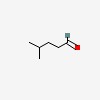 3D/inchi 3D/inchi
|
| ECHA EINECS - REACH Pre-Reg: | 214-273-0 | |
| FDA UNII: | T0AO9E93RH | |
| Nikkaji Web: | J49.658H | |
| Beilstein Number: | 0506059 | |
| MDL: | MFCD00871507 | |
| CoE Number: | 10369 | |
| XlogP3-AA: | 1.30 (est) | |
| Molecular Weight: | 100.16084000 | |
| Formula: | C6 H12 O | |
| NMR Predictor: | Predict (works with chrome or firefox) | |
Category: flavoring agents
US / EU / FDA / JECFA / FEMA / FLAVIS / Scholar / Patent Information:
| Google Scholar: | Search |
| Google Books: | Search |
| Google Scholar: with word "volatile" | Search |
| Google Scholar: with word "flavor" | Search |
| Google Scholar: with word "odor" | Search |
| Perfumer and Flavorist: | Search |
| Google Patents: | Search |
| US Patents: | Search |
| EU Patents: | Search |
| Pubchem Patents: | Search |
| PubMed: | Search |
| NCBI: | Search |
| DG SANTE Food Flavourings: | 05.166 4-methylpentanal |
Physical Properties:
| Appearance: | colorless clear liquid (est) |
| Assay: | 95.00 to 100.00 % |
| Food Chemicals Codex Listed: | No |
| Specific Gravity: | 0.79900 to 0.80500 @ 25.00 °C. |
| Pounds per Gallon - (est).: | 6.648 to 6.698 |
| Refractive Index: | 1.39900 to 1.41500 @ 20.00 °C. |
| Boiling Point: | 117.00 to 118.00 °C. @ 760.00 mm Hg (est) |
| Vapor Pressure: | 16.915001 mmHg @ 25.00 °C. (est) |
| Flash Point: | 64.00 °F. TCC ( 17.78 °C. ) |
| logP (o/w): | 1.777 (est) |
| Soluble in: | |
| alcohol | |
| water, 3930 mg/L @ 25 °C (est) | |
| Insoluble in: | |
| water | |
Organoleptic Properties:
| Odor and/or flavor descriptions from others (if found). | |
Cosmetic Information:
| None found |
Suppliers:
| BOC Sciences |
| For experimental / research use only. |
| 4-Methylvaleraldehyde |
| Santa Cruz Biotechnology |
| For experimental / research use only. |
| 4-Methylpentanal |
| Chemical Sources Association |
| Need This Item for Flavor/Food?: You can contact the CSA |
Safety Information:
| Preferred SDS: View | |
| Hazards identification | |
| Classification of the substance or mixture | |
| GHS Classification in accordance with 29 CFR 1910 (OSHA HCS) | |
| None found. | |
| GHS Label elements, including precautionary statements | |
| Pictogram | |
| Hazard statement(s) | |
| None found. | |
| Precautionary statement(s) | |
| None found. | |
| Oral/Parenteral Toxicity: | |
|
oral-rat LD50 5660 ul/kg (Smyth et al., 1962) oral-rat LD50 5660 uL/kg American Industrial Hygiene Association Journal. Vol. 23, Pg. 95, 1962. | |
| Dermal Toxicity: | |
|
skin-rabbit LD50 4460 ul/kg American Industrial Hygiene Association Journal. Vol. 23, Pg. 95, 1962. skin-rabbit LD50 4460 uL/kg American Industrial Hygiene Association Journal. Vol. 23, Pg. 95, 1962. | |
| Inhalation Toxicity: | |
|
inhalation-rat LCLo 16000 ppm/4H American Industrial Hygiene Association Journal. Vol. 23, Pg. 95, 1962. | |
Safety in Use Information:
| Category: | flavoring agents | ||
| Recommendation for isohexanal usage levels up to: | |||
| not for fragrance use. | |||
| Maximised Survey-derived Daily Intakes (MSDI-EU): | 0.0012 (μg/capita/day) | ||
| Modified Theoretical Added Maximum Daily Intake (mTAMDI): | 1000 (μg/person/day) | ||
| Threshold of Concern: | 1800 (μg/person/day) | ||
| Structure Class: | I | ||
| Food categories according to Commission Regulation EC No. 1565/2000 (EC, 2000) in FGE.06 (EFSA, 2002a). According to the Industry the "normal" use is defined as the average of reported usages and "maximum use" is defined as the 95th percentile of reported usages (EFSA, 2002i). | |||
| Note: mg/kg = 0.001/1000 = 0.000001 = 1/1000000 = ppm. | |||
| average usage mg/kg | maximum usage mg/kg | ||
| Dairy products, excluding products of category 02.0 (01.0): | 3.00000 | 15.00000 | |
| Fats and oils, and fat emulsions (type water-in-oil) (02.0): | 2.00000 | 10.00000 | |
| Edible ices, including sherbet and sorbet (03.0): | 3.00000 | 15.00000 | |
| Processed fruit (04.1): | 2.00000 | 10.00000 | |
| Processed vegetables (incl. mushrooms & fungi, roots & tubers, pulses and legumes), and nuts & seeds (04.2): | - | - | |
| Confectionery (05.0): | 4.00000 | 20.00000 | |
| Chewing gum (05.0): | - | - | |
| Cereals and cereal products, incl. flours & starches from roots & tubers, pulses & legumes, excluding bakery (06.0): | 2.00000 | 10.00000 | |
| Bakery wares (07.0): | 5.00000 | 25.00000 | |
| Meat and meat products, including poultry and game (08.0): | 2.00000 | 10.00000 | |
| Fish and fish products, including molluscs, crustaceans and echinoderms (MCE) (09.0): | 2.00000 | 10.00000 | |
| Eggs and egg products (10.0): | - | - | |
| Sweeteners, including honey (11.0): | - | - | |
| Salts, spices, soups, sauces, salads, protein products, etc. (12.0): | 2.00000 | 10.00000 | |
| Foodstuffs intended for particular nutritional uses (13.0): | 3.00000 | 15.00000 | |
| Non-alcoholic ("soft") beverages, excl. dairy products (14.1): | - | - | |
| Alcoholic beverages, incl. alcohol-free and low-alcoholic counterparts (14.2): | 4.00000 | 20.00000 | |
| Ready-to-eat savouries (15.0): | 5.00000 | 25.00000 | |
| Composite foods (e.g. casseroles, meat pies, mincemeat) - foods that could not be placed in categories 01.0 - 15.0 (16.0): | 2.00000 | 10.00000 | |
Safety References:
| European Food Safety Athority(EFSA): | Flavor usage levels; Subacute, Subchronic, Chronic and Carcinogenicity Studies; Developmental / Reproductive Toxicity Studies; Genotoxicity Studies... |
| European Food Safety Authority (EFSA) reference(s): | |
| Flavouring Group Evaluation 1, Revision 1 (FGE.01Rev 1): Branched-chain aliphatic saturated aldehydes, carboxylic acids and related esters of primary alcohols and branched-chain carboxylic acids from chemical groups 1 and 2 (Commission Regulation (EC) No 1565/2000 of 18 July 2000) - Scientific Opinion of the Panel on Food Additives, Flavourings, Processing Aids and Materials in contact with Food (AFC) on a request from the Commission View page or View pdf | |
| Flavouring Group Evaluation 01 Rev2 (FGE.01 Rev2): Branched-chain aliphatic saturated aldehydes, carboxylic acids and related esters of primary alcohols and branched-chain carboxylic acids from chemical groups 1 and 2 View page or View pdf | |
| EPI System: | View |
| AIDS Citations: | Search |
| Cancer Citations: | Search |
| Toxicology Citations: | Search |
| EPA Substance Registry Services (TSCA): | 1119-16-0 |
| EPA ACToR: | Toxicology Data |
| EPA Substance Registry Services (SRS): | Registry |
| Laboratory Chemical Safety Summary : | 129 |
| National Institute of Allergy and Infectious Diseases: | Data |
| 4-methylpentanal | |
| Chemidplus: | 0001119160 |
| RTECS: | YV4200000 for cas# 1119-16-0 |
References:
| 4-methylpentanal | |
| NIST Chemistry WebBook: | Search Inchi |
| Pubchem (cid): | 129 |
| Pubchem (sid): | 134979777 |
Other Information:
| (IUPAC): | Atomic Weights of the Elements 2011 (pdf) |
| Videos: | The Periodic Table of Videos |
| tgsc: | Atomic Weights use for this web site |
| (IUPAC): | Periodic Table of the Elements |
| CHEBI: | View |
| CHEMBL: | View |
| KEGG (GenomeNet): | C02373 |
| HMDB (The Human Metabolome Database): | HMDB01318 |
| FooDB: | FDB022551 |
| VCF-Online: | VCF Volatile Compounds in Food |
| ChemSpider: | View |
Potential Blenders and core components note
| None Found | ||
Potential Uses:
| None Found |
Occurrence (nature, food, other): note
| cheese Search PMC Picture |
Synonyms:
| iso | caproaldehyde |
| 4- | methyl pentanal |
| 4- | methyl valeraldehyde |
| 4- | methylpentaldehyde |
| 4- | methylpentanal |
| 4- | methylvaleraldehyde |
| pentanal, 4-methyl- | |
| valeraldehyde, 4-methyl- |