

 3D/inchi
Articles:
| None found yet. Try the PubMed Search. |
| melanin | ||||||||||||||||||||||||||||||||||||||||||||||||||||||||||||||||||||||||||||||||||||||||||||||||||||||||||||||||||||||||||||||||||||||||||||||||||||||||||||||||||||||||||||||||||||||||||||||||||||||||||||||||||||||
Notes: insoluble polymers of tyrosine derivatives found in and causing darkness in skin (skin pigmentation), hair, and feathers providing protection against sunburn induced by sunlight. carotenes contribute yellow and red coloration. Dermal melanin is produced by melanocytes, which are found in the stratum basale of the epidermis. Although human beings generally possess a similar concentration of melanocytes in their skin, the melanocytes in some individuals and races more frequently or less frequently express the melanin-producing genes, thereby conferring a greater or lesser concentration of skin melanin. Some individual animals and humans have no or very little melanin in their bodies, which is a condition known as albinism.
Higher eumelanin levels also can be a disadvantage, however, beyond a higher disposition toward vitamin D deficiency. Dark skin is a complicating factor in the laser removal of port-wine stains. Effective in treating fair skin, lasers generally are less successful in removing port-wine stains in Asians and people of African descent. Higher concentrations of melanin in darker-skinned individuals simply diffuse and absorb the laser radiation, inhibiting light absorption by the targeted tissue. Melanin similarly can complicate laser treatment of other dermatological conditions in people with darker skin.
Under the microscope melanin is brown, non-refractile and finely granular with individual granules having a diameter of less than 800 nanometers. This differentiates melanin from common blood breakdown pigments which are larger, chunky and refractile and range in color from green to yellow or red-brown. In heavily pigmented lesions, dense aggregates of melanin can obscure histologic detail. A dilute solution of potassium permanganate is an effective melanin bleach.
Pigments causing darkness in skin, hair, feathers, etc. They are irregular polymeric structures and are divided into three groups: allomelanins in the plant kingdom and eumelanins and phaeomelanins in the animal kingdom.
When skin pigmentation as a characteristic of race is linked to social status or other human attributes, this phenomenon is known as racialism. Many people and societies overlay racialism with racist perceptions and systems which arbitrarily assign to groups of people a status of inherent superiority or inferiority, privilege or disadvantage based on skin color or racial classification. Apartheid-era South Africa is an example of a white supremacist society based on a system of stratification of power and privilege by skin color, as well as racial admixture. Similar examples can be found in Brazil's highly socially color-stratified society; and, in the U.S., segregation and institutional racism on the part of white-controlled and black-controlled institutions, and internal 'color consciousness' on the part of some ethnic minorities. Prejudice against people with more highly pigmented skin is the most pervasive form of color bias. Many other societies remain informally divided on the basis of skin color and, often, related ethnicity. (See also colonialism, Nazism, pigmentocracy and institutional racism.)
Because melanin is an aggregate of smaller component molecules, there are a number of different types of melanin with differing proportions and bonding patterns of these component molecules. Both pheomelanin and eumelanin are found in human skin and hair, but eumelanin is the most abundant melanin in humans, as well as the form most likely to be deficient in albinism.
Freckles and moles are formed where there is a localized concentration of melanin in the skin. They are highly associated with pale skin.
Melanin is a biopolymer and a neuropeptide. In the early 1970s, John McGinness, Peter Corry, and Peter Proctor reported that melanin is a high-conductivity organic semiconductor (Science, vol 183, 853-855 (1974)). Studies revealed that melanin acted as a voltage-controlled solid-state threshold switch. Further, it emitting a flash of light electroluminescence when it switched.
There are approximately ten different types of oculocutaneous albinism, which is mostly an autosomal recessive disorder. Certain ethnicities have higher incidences of different forms. For example, the most common type, called oculocutaneous albinism type 2 (OCA2), is especially frequent among people of indigenous African descent. It is an autosomal recessive disorder characterized by a congenital reduction or absence of melanin pigment in the skin, hair and eyes. The estimated frequency of OCA2 among African-Americans is 1 in 10,000, which contrasts with a frequency of 1 in 36,000 in white Americans . In some African nations, the frequency of the disorder is even higher, ranging from 1 in 2,000 to 1 in 5,000. Another form of Albinism, the 'yellow oculocutaneous albinism', appears to be more prevalent among the Amish, who are of primarily Swiss and German ancestry. People with this IB variant of the disorder commonly have white hair and skin at birth, but rapidly develop normal skin pigmentation in infancy.
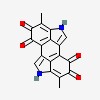
Broadly, melanin is any of the polyacetylene, polyaniline, and polypyrrole 'blacks' and "browns" or their mixed copolymers. The most common form of biological melanin is a polymer of either or both of two monomer molecules: indolequinone, and dihydroxyindole carboxylic acid. In contrast, some fungal melanin is polyacetylene black. Melanin exists in the plant, animal and protista kingdoms, where it serves as a pigment. The presence of melanin in the archaea and bacteria kingdoms is an issue of ongoing debate amongst researchers in the field. [HMDB]
| ||||||||||||||||||||||||||||||||||||||||||||||||||||||||||||||||||||||||||||||||||||||||||||||||||||||||||||||||||||||||||||||||||||||||||||||||||||||||||||||||||||||||||||||||||||||||||||||||||||||||||||||||||||||
| ||||||||||||||||||||||||||||||||||||||||||||||||||||||||||||||||||||||||||||||||||||||||||||||||||||||||||||||||||||||||||||||||||||||||||||||||||||||||||||||||||||||||||||||||||||||||||||||||||||||||||||||||||||||
Category: cosmetic ingredient for skin protecting
US / EU / FDA / JECFA / FEMA / FLAVIS / Scholar / Patent Information:
Physical Properties:
Organoleptic Properties:
Cosmetic Information:
Suppliers:
Safety Information:
Safety in Use Information:
Safety References:
References:
Other Information:
Potential Blenders and core components note
Potential Uses:
Occurrence (nature, food, other): note
Synonyms:
Articles:
| ||||||||||||||||||||||||||||||||||||||||||||||||||||||||||||||||||||||||||||||||||||||||||||||||||||||||||||||||||||||||||||||||||||||||||||||||||||||||||||||||||||||||||||||||||||||||||||||||||||||||||||||||||||||