Articles:
dodecanoic acid, 1,2,3-propantriyl ester
Notes:
TG(12:0/12:0/12:0) or trilauric glyceride is a tridodecanoic acid triglyceride or medium chain triglyceride. Triglycerides (TGs) are also known as triacylglycerols or triacylglycerides, meaning that they are glycerides in which the glycerol is esterified with three fatty acid groups (i.e. fatty acid tri-esters of glycerol). TGs may be divided into three general types with respect to their acyl substituents. They are simple or monoacid if they contain only one type of fatty acid, diacid if they contain two types of fatty acids and triacid if three different acyl groups. Chain lengths of the fatty acids in naturally occurring triglycerides can be of varying lengths and saturations but 16, 18 and 20 carbons are the most common. TG(12:0/12:0/12:0), in particular, consists of one chain of dodecanoic acid at the C-1 position, one chain of dodecanoic acid at the C-2 position and one chain of dodecanoic acid at the C-3 position. TGs are the main constituent of vegetable oil and animal fats. TGs are major components of very low density lipoprotein (VLDL) and chylomicrons, play an important role in metabolism as energy sources and transporters of dietary fat. They contain more than twice the energy (9 kcal/g) of carbohydrates and proteins. In the intestine, triglycerides are split into glycerol and fatty acids (this process is called lipolysis) with the help of lipases and bile secretions, which can then move into blood vessels. The triglycerides are rebuilt in the blood from their fragments and become constituents of lipoproteins, which deliver the fatty acids to and from fat cells among other functions. Various tissues can release the free fatty acids and take them up as a source of energy. Fat cells can synthesize and store triglycerides. When the body requires fatty acids as an energy source, the hormone glucagon signals the breakdown of the triglycerides by hormone-sensitive lipase to release free fatty acids. As the brain cannot utilize fatty acids as an energy source, the glycerol component of triglycerides can be converted into glucose for brain fuel when it is broken down. (www.cyberlipid.org, www.wikipedia.org)
TAGs can serve as fatty acid stores in all cells, but primarily in adipocytes of adipose tissue. The major building block for the synthesis of triacylglycerides, in non-adipose tissue, is glycerol. Adipocytes lack glycerol kinase and so must use another route to TAG synthesis. Specifically, dihydroxyacetone phosphate (DHAP), which is produced during glycolysis, is the precursor for TAG synthesis in adipose tissue. DHAP can also serve as a TAG precursor in non-adipose tissues, but does so to a much lesser extent than glycerol. The use of DHAP for the TAG backbone depends on whether the synthesis of the TAGs occurs in the mitochondria and ER or the ER and the peroxisomes. The ER/mitochondria pathway requires the action of glycerol-3-phosphate dehydrogenase to convert DHAP to glycerol-3-phosphate. Glycerol-3-phosphate acyltransferase then esterifies a fatty acid to glycerol-3-phosphate thereby generating lysophosphatidic acid. The ER/peroxisome reaction pathway uses the peroxisomal enzyme DHAP acyltransferase to acylate DHAP to acyl-DHAP which is then reduced by acyl-DHAP reductase. The fatty acids that are incorporated into TAGs are activated to acyl-CoAs through the action of acyl-CoA synthetases. Two molecules of acyl-CoA are esterified to glycerol-3-phosphate to yield 1,2-diacylglycerol phosphate (also known as phosphatidic acid). The phosphate is then removed by phosphatidic acid phosphatase (PAP1), to generate 1,2-diacylglycerol. This diacylglycerol serves as the substrate for addition of the third fatty acid to make TAG. Intestinal monoacylglycerols, derived from dietary fats, can also serve as substrates for the synthesis of 1,2-diacylglycerols. [HMDB]

-
BOC Sciences Best of Chemicals Supplier Quality supplier of research chemicals and biochemicals including inhibitors, building blocks, GMP Products, impurities and metabolites, APIs for Veterinary, Natural Compounds, ADCs, Stem Cell Molecule and chiral compounds. BOC Sciences provides a wide range of services to support the pharmaceutical industry through all stages of drug discovery including Custom Synthesis of those chemicals that are not in stock, Isotope Labeling Service, Chiral Synthesis and Resolution, Bioconjugation, PEGylation services, analytical services. BOC Sciences is a brand of BOCSCI Inc. We leverage our wide spectrum of business in the fields of development, manufacturing, marketing, and distribution to help you make best-informed decisions tailored to your evolving needs for premium chemicals. Our complete suite of CRO services spans the entire molecule development pipeline including contract research for target identification, building blocks, compound synthesis, biochemical and cellular analysis, preclinical animal tests, and clinical studies. Email: Marketing US Email: Marketing Email: Sales US Email: Sales Voice: 1-631-485-4226 Fax: 1-631-614-7828 US Voice: 1-631-485-4226 US Fax: 1-631-614-7828 Europe 44-203-286-1088 Facebook Twitter Linkedin Blog Get the App! Product(s): 538-24-9 Trilaurin
-

-
TCI AMERICA Moving Your Chemistry Forward We continuously strive to advance our technology. With East & West Coast distribution centers, count on TCI to deliver products quickly and reliably. Over 30,000 Reagents available today in benchtop to bulk quantities. We also offer custom synthesis solutions. Sign up for a TCI account today for fast and free shipping! Tokyo Chemical Industry Co., Ltd. (TCI) is a leading worldwide manufacturer of specialty organic chemicals founded in 1946. TCI provides organic laboratory chemicals as well as pharmaceutical, cosmetic and functional materials. More than 70 years of synthesis experience and multi-purpose plants enable TCI to offer more than 30,000 products as well as custom synthesis. US Email: Sales Email: Technical Support Voice: 1-800-423-8616 Fax: 1- 888-520-1075 Facebook Twitter Instagram Linkedin Product(s): G0087 Trilaurin
-
| CAS Number: | 538-24-9 | 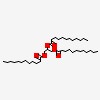 3D/inchi 3D/inchi
|
| Other(deleted CASRN): | 127377-16-6 | |
| ECHA EINECS - REACH Pre-Reg: | 208-687-0 | |
| FDA UNII: | 7FP2Z3RVUV | |
| Nikkaji Web: | J6.369J | |
| Beilstein Number: | 1730452 | |
| MDL: | MFCD00026559 | |
| XlogP3-AA: | 15.40 (est) | |
| Molecular Weight: | 639.01398000 | |
| Formula: | C39 H74 O6 | |
| NMR Predictor: | Predict (works with chrome or firefox) | |
Category: emollients, viscosity controlling
US / EU / FDA / JECFA / FEMA / FLAVIS / Scholar / Patent Information:
| Google Scholar: | Search |
| Google Books: | Search |
| Google Scholar: with word "volatile" | Search |
| Google Scholar: with word "flavor" | Search |
| Google Scholar: with word "odor" | Search |
| Google Patents: | Search |
| US Patents: | Search |
| EU Patents: | Search |
| Pubchem Patents: | Search |
| PubMed: | Search |
| NCBI: | Search |
Physical Properties:
| Assay: | 95.00 to 100.00 % |
| Food Chemicals Codex Listed: | No |
| Boiling Point: | 643.33 °C. @ 760.00 mm Hg (est) |
| Flash Point: | 488.00 °F. TCC ( 253.50 °C. ) (est) |
| logP (o/w): | 15.501 (est) |
| Soluble in: | |
| water, 1.141e-011 mg/L @ 25 °C (est) | |
Organoleptic Properties:
| Odor and/or flavor descriptions from others (if found). | |
Cosmetic Information:
| CosIng: | cosmetic data |
| Cosmetic Uses: |
skin conditioning skin conditioning - emollient solvents viscosity controlling agents |
Suppliers:
| BOC Sciences |
| For experimental / research use only. |
| Trilaurin |
| Santa Cruz Biotechnology |
| For experimental / research use only. |
| Trilauroylglycerol |
| Sigma-Aldrich |
| For experimental / research use only. |
| Trilaurin
European Pharmacopoeia (EP) Reference Standard |
| TCI AMERICA |
| For experimental / research use only. |
| Trilaurin |
| Zschimmer & Schwarz |
| Lubricit GTL |
Safety Information:
| Preferred SDS: View | |
| Hazards identification | |
| Classification of the substance or mixture | |
| GHS Classification in accordance with 29 CFR 1910 (OSHA HCS) | |
| None found. | |
| GHS Label elements, including precautionary statements | |
| Pictogram | |
| Hazard statement(s) | |
| None found. | |
| Precautionary statement(s) | |
| None found. | |
| Oral/Parenteral Toxicity: | |
| Not determined | |
| Dermal Toxicity: | |
| Not determined | |
| Inhalation Toxicity: | |
| Not determined | |
Safety in Use Information:
| Category: | emollients, viscosity controlling | ||
| Recommendation for trilaurin usage levels up to: | |||
| not for fragrance use. | |||
| Recommendation for trilaurin flavor usage levels up to: | |||
| not for flavor use. | |||
Safety References:
| EPI System: | View |
| Chemical Carcinogenesis Research Information System: | Search |
| AIDS Citations: | Search |
| Cancer Citations: | Search |
| Toxicology Citations: | Search |
| EPA Substance Registry Services (TSCA): | 538-24-9 |
| EPA ACToR: | Toxicology Data |
| EPA Substance Registry Services (SRS): | Registry |
| Laboratory Chemical Safety Summary : | 10851 |
| National Institute of Allergy and Infectious Diseases: | Data |
| 2,3-di(dodecanoyloxy)propyl dodecanoate | |
| Chemidplus: | 0000538249 |
References:
| 2,3-di(dodecanoyloxy)propyl dodecanoate | |
| NIST Chemistry WebBook: | Search Inchi |
| Pubchem (cid): | 10851 |
| Pubchem (sid): | 134978189 |
Other Information:
| (IUPAC): | Atomic Weights of the Elements 2011 (pdf) |
| Videos: | The Periodic Table of Videos |
| tgsc: | Atomic Weights use for this web site |
| (IUPAC): | Periodic Table of the Elements |
| CHEBI: | View |
| HMDB (The Human Metabolome Database): | HMDB11188 |
| FooDB: | FDB002906 |
| Export Tariff Code: | 2915.90.1050 |
| VCF-Online: | VCF Volatile Compounds in Food |
| ChemSpider: | View |
| Wikipedia: | View |
Potential Blenders and core components note
| None Found | ||
Potential Uses:
| emollients | ||
| solvents | ||
| viscosity controlling agents |
Occurrence (nature, food, other): note
| bay laurel fruit Search Trop Picture | |
| not found in nature |
Synonyms:
| hydrogenated | coco mono-, di-,tri-, glycerides |
| coco mono-, di-,tri-, glycerides hydrogenated | |
| 2,3- | di(dodecanoyloxy)propyl dodecanoate |
| dodecanoic acid, 1,2,3-propanetriyl ester | |
| dodecanoic acid, 1,2,3-propantriyl ester | |
| glycerin trilaurate | |
| glycerol trilaurate | |
| glyceryl tridodecanoate | |
| glyceryl trilaurate | |
| lauric acid triglyceride | |
| lauric acid triglycerin ester | |
| laurin, tri- | |
| 1,2,3- | propane triol tridodecanoate |
| propane-1,2,3-triyl tridodecanoate | |
| 1,2,3- | propanetriol tridodecanoate |
| tridodecanoin | |
| 1,2,3- | tridodecanoylglycerol |
| trilauroylglycerol | |
| 1,2,3- | trilauroylglycerol |