|
Category: buffering agents
US / EU / FDA / JECFA / FEMA / FLAVIS / Scholar / Patent Information:
Physical Properties:
| Assay: | 95.00 to 100.00 %
|
| Food Chemicals Codex Listed: | No |
| Boiling Point: | 335.40 °C. @ 760.00 mm Hg (est)
|
| Vapor Pressure: | 0.000008 mmHg @ 25.00 °C. (est) |
| Flash Point: | 365.00 °F. TCC ( 185.00 °C. ) (est)
|
| logP (o/w): | -1.108 (est) |
Organoleptic Properties:
| |
| Odor and/or flavor descriptions from others (if found). |
| |
| |
Cosmetic Information:
Suppliers:
| American International Chemical, LLC. |
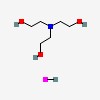
| TEA Hydroiodide
|
| BOC Sciences |
| For experimental / research use only. |
| Ethanol,2,2',2''-nitrilotris-, hydriodide (9CI)
|
| Vevy Europe |
| IODOTRAT
Odor: characteristic Use: Low molecular weight organic iodine (thus non proteic) for body contour treatment (cosmetic cellulitis). Does not give free iodine. Very stable and non-irritating, improves skin trophism and reduces fat deposits. Iodotrat activity on cellulitis and its mechanism of action were discovered by Vevy Europe in 1983. Several imitations of the reaction which produces iodine amine exist, overlooking that Iodotrat is not the simple result of that reaction but the end result of a specific procedure for the stabilisation of iodine and its capacity to be modified by membrane receptors (Beta-receptors of mastcells). See association with Zedomine-1, Zedomine-2, and Edesal, [Deep cosmetology of the dermis (C2 Concepts and Cosmetology 1987, Article No 1:27). |
Safety Information:
| |
| Hazards identification |
| |
| Classification of the substance or mixture |
| GHS Classification in accordance with 29 CFR 1910 (OSHA HCS) |
| None found. |
| GHS Label elements, including precautionary statements |
| |
| Pictogram | |
| |
| Hazard statement(s) |
| None found. |
| Precautionary statement(s) |
| None found. |
| Oral/Parenteral Toxicity: |
|
Not determined
|
| Dermal Toxicity: |
|
Not determined
|
| Inhalation Toxicity: |
|
Not determined
|
Safety in Use Information:
| Category: | buffering agents |
| Recommendation for TEA-hydroiodide usage levels up to: | | | not for fragrance use.
|
| |
| Recommendation for TEA-hydroiodide flavor usage levels up to: |
| | not for flavor use.
|
Safety References:
| EPA ACToR: | Toxicology Data |
| EPA Substance Registry Services (SRS): | Registry |
| Laboratory Chemical Safety Summary : | 2723762 |
| National Institute of Allergy and Infectious Diseases: | Data |
| | 2-[bis(2-hydroxyethyl)amino]ethanol;hydroiodide |
| Chemidplus: | 0007601538 |
References:
Other Information:
Potential Blenders and core components notePotential Uses:
Occurrence (nature, food, other): noteSynonyms:
| 2-(bis(2- | hydroxyethyl)amino)ethanol hydroiodide | | 2-[bis(2- | hydroxyethyl)amino]ethanol;hydroiodide | | | iodotrat (Vevy) | | 2,2',2''- | nitrilotrisethanol hydroiodide | | | triethanol amine hydroiodide | | | triethanolamine hydroiodide |
Articles:
|


 3D/inchi