|
Category: preservative for cut or peeled squash
US / EU / FDA / JECFA / FEMA / FLAVIS / Scholar / Patent Information:
Physical Properties:
| Assay: | 98.00 to 100.00 %
|
| Food Chemicals Codex Listed: | No |
| Melting Point: | 109.00 to 111.00 °C. @ 760.00 mm Hg
|
| Flash Point: | 32.00 °F. TCC ( 0.00 °C. ) (est)
|
| Soluble in: |
| | water, 9.134e+004 mg/L @ 25 °C (est) |
Organoleptic Properties:
| |
| Odor and/or flavor descriptions from others (if found). |
| |
| |
Cosmetic Information:
Suppliers:
| Anhui Haibei |
| Sodium Dehydroacetate
|
| BOC Sciences |
| For experimental / research use only. |
| Sodium dehydroacetate 97%
Odor: characteristic Use: Sodium dehydroacetate can be used as a food additive, preservative, and antimicrobial agent. |
| Connect Chemicals |
| Sodium dehydroacetate (NaDHA)
Odor: characteristic Use: Sodium dehydroacetate is a globally approved preservative for cosmetics and toiletries (leave-on and rinse-off products).
It is a preservative with high efficacy and low use cost, with a broad spectrum activity.
Sodium dehydroacetate is water soluble and compatible with any type of formulating system.
It has an excellent toxicity profile, non-sensitizing and non-irritating. Sodium dehydroacetate is permitted by Ecocert, as synthetic preservative in ecological and organic certified cosmetics. |
| ECSA Chemicals |
| SODIUM DEHYDROACETATE ANHYDROUS
|
| ECSA TRADE THE MOST UPDATED FINANCIAL PUBLICATION ON THE WORLD OF CHEMISTRY |
| ECSA Chemicals |
| SODIUM DEHYDROACETATE
|
| EMD Millipore |
| For experimental / research use only. |
| Dehydroacetic acid sodium salt
|
| Foodchem International |
| Sodium Dehydroacetate
|
| Santa Cruz Biotechnology |
| For experimental / research use only. |
| Dehydroacetic acid sodium salt
|
| Sigma-Aldrich: Aldrich |
| For experimental / research use only. |
| Dehydroacetic acid sodium salt, Lonza quality, 99.0-100.3% (w/w) (T)
|
| Sinofi Food Ingredients |
| Sodium Dehydroacetate
Odor: characteristic Use: Preservative, Cosmetics, Feed, Mold Inhibitor, Yeast Inhibitor, Bactericide, Antimicrobial, Beverages, Beverage Powder, Soft Drink, Cakes, Cookies, Cheese, Fish, Fruit Juice, Margarine, Sauces, Soup, Baking Food, Sauage, Food Colors, Milk, Flavoring Agent. |
| TCI AMERICA |
| For experimental / research use only. |
| Sodium Dehydroacetate Monohydrate >98.0%(HPLC)(T)
|
| TRI-K Industries |
| TRIstat SDHA, NF
Odor: characteristic Use: This product is Paraben and Formaldehyde Free. It will fight against Yeast, Molds and Gram Positive and Gram Negative Bacteria. TRIstat SDHA FCC, NF can be used in leave-on and rinse-off applications. It is permitted in natural and organic cosmetics (Ex. ECOCERT/COSMOS, Soil Association, ICEA/AIAB, NaTrue). |
| United International |
| Sodium Dehydroacetate
|
| Vevy Europe |
| FENEXOL
Odor: characteristic Use: Preservative having broad action spectrum (gram +/- bacteria, particularly Pseudomonas aeruginosa;molds, yeasts and fungi).
Compatible with usual cosmetic ingredients. |
Safety Information:
| Preferred SDS: View |
| |
| Hazards identification |
| |
| Classification of the substance or mixture |
| GHS Classification in accordance with 29 CFR 1910 (OSHA HCS) |
| None found. |
| GHS Label elements, including precautionary statements |
| |
| Pictogram | |
| |
| Hazard statement(s) |
| None found. |
| Precautionary statement(s) |
| None found. |
| Oral/Parenteral Toxicity: |
oral-rat LD50 500 mg/kg
Journal of the American College of Toxicology. Vol. 4(3), Pg. 123, 1985.
oral-rabbit LD50 500 mg/kg
Personal Communication from LONZA Ltd., CH-4002, Basel, SwitzerlandVol. 02JUN1980
oral-mouse LD50 1050 mg/kg
Journal of the American College of Toxicology. Vol. 4(3), Pg. 123, 1985.
intravenous-dog LD50 400 mg/kg
BEHAVIORAL: ATAXIA
BEHAVIORAL: MUSCLE WEAKNESS
GASTROINTESTINAL: NAUSEA OR VOMITING
Journal of Pharmacology and Experimental Therapeutics. Vol. 99, Pg. 69, 1950.
oral-dog LDLo 452 mg/kg
BEHAVIORAL: ATAXIA
LUNGS, THORAX, OR RESPIRATION: DYSPNEA
GASTROINTESTINAL: CHANGES IN STRUCTURE OR FUNCTION OF SALIVARY GLANDS
Journal of Pharmacology and Experimental Therapeutics. Vol. 99, Pg. 69, 1950.
|
| Dermal Toxicity: |
|
Not determined
|
| Inhalation Toxicity: |
|
Not determined
|
Safety in Use Information:
| Category: | preservative for cut or peeled squash |
| Recommendation for sodium dehydroacetate usage levels up to: | | | not for fragrance use.
|
| |
| Recommendation for sodium dehydroacetate flavor usage levels up to: |
| | not for flavor use.
|
Safety References:
References:
Other Information:
Potential Blenders and core components notePotential Uses:
Occurrence (nature, food, other): noteSynonyms:
| 2- | acetyl-5-hydroxy-3-oxo-4-henenoic acid delta-lactone sodium | | 3- | acetyl-6-methyl-2H-pyran-2,4(3H)-dione sodium | | | dehydroacetic acid sodium salt | | | fenexol (Vevy) | | | harven | | 2H- | pyran-2,4(3H)-dione, 3-(1-hydroxyethylidene)-6-methyl-, sodium salt (1:1) | | | sodium 1-(3,4-dihydro-6-methyl-2,4-dioxo-2H-pyran-3-ylidene)ethanolate | | | sodium 1-(6-methyl-2,4-dioxo-2H-pyran-3(4H)-ylidene)ethanolate | | | sodium 3-acetyl-6-methyl-2,4-pyrandione | | | sodium 3-acetyl-6-methyl-2H-pyran-2,4(3H)-dione | | | sodium 3-acetyl-6-methylpyran-3-ide-2,4-dione | | | sodium dehydroacetic acid |
Articles:
|




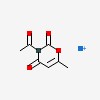 3D/inchi