Articles:
1-[1,3-bis(hydroxymethyl)-2,5-dioxo-4-imidazolidinyl]-1,3-bis(hydroxymethyl)urea
Notes:
None found

-
BOC Sciences Best of Chemicals Supplier Quality supplier of research chemicals and biochemicals including inhibitors, building blocks, GMP Products, impurities and metabolites, APIs for Veterinary, Natural Compounds, ADCs, Stem Cell Molecule and chiral compounds. BOC Sciences provides a wide range of services to support the pharmaceutical industry through all stages of drug discovery including Custom Synthesis of those chemicals that are not in stock, Isotope Labeling Service, Chiral Synthesis and Resolution, Bioconjugation, PEGylation services, analytical services. BOC Sciences is a brand of BOCSCI Inc. We leverage our wide spectrum of business in the fields of development, manufacturing, marketing, and distribution to help you make best-informed decisions tailored to your evolving needs for premium chemicals. Our complete suite of CRO services spans the entire molecule development pipeline including contract research for target identification, building blocks, compound synthesis, biochemical and cellular analysis, preclinical animal tests, and clinical studies. Email: Marketing US Email: Marketing Email: Sales US Email: Sales Voice: 1-631-485-4226 Fax: 1-631-614-7828 US Voice: 1-631-485-4226 US Fax: 1-631-614-7828 Europe 44-203-286-1088 Facebook Twitter Linkedin Blog Get the App! Product(s): 78491-02-8 Diazolidinyl urea Diazolidinyl urea is an antimicrobial preservative used in cosmetics.
-

-
ECSA Chemicals Human Chemistry ECSA Chemicals has been active since 1913 in the trading and international commerce of raw materials. With an organisation divided into industrial segments managed by specialists, it has become one of the largest distributors worldwide. ECSA Chemicals is the largest Swiss-owned company in terms of warehouses for the distribution of chemical products. We have been distributing chemical products for over 100 years and we have a special interest in protecting the environment and in the safety of our facilities and collaborators. Established in 1913 as a small grocery store, in its over 100 years of activity ECSA Chemicals has become one of the most important Swiss-owned distributors of chemical products. The company, which is active in international distribution and trading, is organised into industrial segments that are managed by teams of specialists and experts. They guarantee professional and customised consultancy and services. With our experience, we can rapidly and safely connect you with the best suppliers on the market, providing you with a complete search, consulting and assistance service. The focus of our approach and operations is you, our customers. We strive every day to find the best products that satisfy your needs as quickly as possible. Your satisfaction is our greatest success. WHY CHOOSE ECSA? EXPERIENCE We have been working for 100 years. QUALITY We have obtained many certifications (ISO, SQAS, GDP, Responsible Care, Bio-Inspecta, RSPO, etc.). We guarantee full compliance with the current laws and continuous training for our staff. SAFETY We constantly carry out risk analyses for each infrastructure, defining safety levels and implementing corrective measures promptly wherever they are needed. WIDESPREAD DISTRIBUTION We have warehouses in strategic locations to supply goods to Switzerland and to the rest of the world. STORAGE CAPACITY The 3 ECSA-owned warehouses guarantee considerable storage area and capacity in each warehouse, with full availability of products (base chemicals and speciality chemicals). SPEED Presence all over the country, staff dedicated to sourcing raw materials and considerable storage capacity guarantee that goods are rapidly obtained and supplied. CONSULTANCY Our specialists - in-depth knowledge of the market and products allows us to provide full consulting services, from the purchase to the supply of raw materials. Email: Info Email: Sales Email: Trading Email: Maintenance Email: Energy Voice: +41 91 695 88 00 Fax: +41 91 695 88 01 Linkedin Youtube RSS Feed ECSA Trade ECSA TRADE THE MOST UPDATED FINANCIAL PUBLICATION ON THE WORLD OF CHEMISTRY Products List: View Product(s): MP-040005 DIAZOLIDINYL UREA
-

-
TCI AMERICA Moving Your Chemistry Forward We continuously strive to advance our technology. With East & West Coast distribution centers, count on TCI to deliver products quickly and reliably. Over 30,000 Reagents available today in benchtop to bulk quantities. We also offer custom synthesis solutions. Sign up for a TCI account today for fast and free shipping! Tokyo Chemical Industry Co., Ltd. (TCI) is a leading worldwide manufacturer of specialty organic chemicals founded in 1946. TCI provides organic laboratory chemicals as well as pharmaceutical, cosmetic and functional materials. More than 70 years of synthesis experience and multi-purpose plants enable TCI to offer more than 30,000 products as well as custom synthesis. US Email: Sales Email: Technical Support Voice: 1-800-423-8616 Fax: 1- 888-520-1075 Facebook Twitter Instagram Linkedin Product(s): D3769 Diazolidinyl Urea >98.0%(N)
-
| CAS Number: | 78491-02-8 | 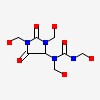 3D/inchi 3D/inchi
|
| ECHA EINECS - REACH Pre-Reg: | 278-928-2 | |
| FDA UNII: | N9VX1IBW6K | |
| Nikkaji Web: | J319.774C | |
| MDL: | MFCD03547942 | |
| XlogP3-AA: | -2.50 (est) | |
| Molecular Weight: | 278.22198000 | |
| Formula: | C8 H14 N4 O7 | |
| NMR Predictor: | Predict (works with chrome or firefox) | |
Category: preservatives
US / EU / FDA / JECFA / FEMA / FLAVIS / Scholar / Patent Information:
| Google Scholar: | Search |
| Google Books: | Search |
| Google Scholar: with word "volatile" | Search |
| Google Scholar: with word "flavor" | Search |
| Google Scholar: with word "odor" | Search |
| Google Patents: | Search |
| US Patents: | Search |
| EU Patents: | Search |
| Pubchem Patents: | Search |
| PubMed: | Search |
| NCBI: | Search |
Physical Properties:
| Assay: | 95.00 to 100.00 % |
| Food Chemicals Codex Listed: | No |
| Flash Point: | 32.00 °F. TCC ( 0.00 °C. ) (est) |
| logP (o/w): | -5.398 (est) |
| Soluble in: | |
| water, 1e+006 mg/L @ 25 °C (est) | |
Organoleptic Properties:
| Odor and/or flavor descriptions from others (if found). | |
Cosmetic Information:
| CosIng: | cosmetic data |
| Cosmetic Uses: |
preservatives |
Suppliers:
| BOC Sciences |
| For experimental / research use only. |
| Diazolidinyl urea
Odor: characteristic Use: Diazolidinyl urea is an antimicrobial preservative used in cosmetics. |
| ECSA Chemicals |
| DIAZOLIDINYL UREA |
| ECSA TRADE THE MOST UPDATED FINANCIAL PUBLICATION ON THE WORLD OF CHEMISTRY |
| Kingyoung Bio Technical |
| Diazolidinyl Urea |
| Kraft Chemical |
| Diazolidinyl Urea USP/NF |
| Nanjing Jiancheng Chemical |
| Diazolidinyl Urea(Germall II)
Odor: characteristic Use: Diazolidinyl urea is widely used as antiseptic for its bactericidal effect. It can constrain the bacterium, yeast, mould, gram-positive bacterium and gram-negative bacterium.It can be applied in cream, dew liquid, shampoo, hair conditioner, eye cosmetics, liquid cosmetics and other cosmetics. |
| Santa Cruz Biotechnology |
| For experimental / research use only. |
| Diazolidinyl Urea |
| Sigma-Aldrich: Aldrich |
| For experimental / research use only. |
| Diazolidinyl urea ≥95% |
| TCI AMERICA |
| For experimental / research use only. |
| Diazolidinyl Urea >98.0%(N) |
| TRI-K Industries |
| TRIstat D
Odor: characteristic Use: A fine powder, highly soluble in water and effective against Gram positive and Gram negative bacteria. |
Safety Information:
| Preferred SDS: View | |
| Hazards identification | |
| Classification of the substance or mixture | |
| GHS Classification in accordance with 29 CFR 1910 (OSHA HCS) | |
| None found. | |
| GHS Label elements, including precautionary statements | |
| Pictogram | |
| Hazard statement(s) | |
| None found. | |
| Precautionary statement(s) | |
| None found. | |
| Oral/Parenteral Toxicity: | |
|
oral-bird - wild LD50 > 2250 mg/kg Journal of Toxicology, Cutaneous and Ocular Toxicology. Vol. 14, Pg. 3, 1995. oral-mouse LD50 3573 mg/kg BEHAVIORAL: ALTERED SLEEP TIME (INCLUDING CHANGE IN RIGHTING REFLEX) BEHAVIORAL: ATAXIA GASTROINTESTINAL: CHANGES IN STRUCTURE OR FUNCTION OF SALIVARY GLANDS Journal of Toxicology, Cutaneous and Ocular Toxicology. Vol. 14, Pg. 3, 1995. oral-rat LD50 2600 mg/kg Journal of the American College of Toxicology. Vol. 9(2), Pg. 229, 1990. | |
| Dermal Toxicity: | |
|
skin-rabbit LD50 > 2000 mg/kg SKIN AND APPENDAGES (SKIN): "DERMATITIS, OTHER: AFTER SYSTEMIC EXPOSURE" Journal of Toxicology, Cutaneous and Ocular Toxicology. Vol. 14, Pg. 3, 1995. | |
| Inhalation Toxicity: | |
| Not determined | |
Safety in Use Information:
| Category: | preservatives | ||
| Recommendation for diazolidinyl urea usage levels up to: | |||
| not for fragrance use. | |||
| Recommendation for diazolidinyl urea flavor usage levels up to: | |||
| not for flavor use. | |||
Safety References:
| EPI System: | View |
| Daily Med: | search |
| AIDS Citations: | Search |
| Cancer Citations: | Search |
| Toxicology Citations: | Search |
| EPA Substance Registry Services (TSCA): | 78491-02-8 |
| EPA ACToR: | Toxicology Data |
| EPA Substance Registry Services (SRS): | Registry |
| Laboratory Chemical Safety Summary : | 62277 |
| National Institute of Allergy and Infectious Diseases: | Data |
| WGK Germany: | 2 |
| 1-[1,3-bis(hydroxymethyl)-2,5-dioxoimidazolidin-4-yl]-1,3-bis(hydroxymethyl)urea | |
| Chemidplus: | 0078491028 |
| RTECS: | YS2717000 for cas# 78491-02-8 |
References:
| 1-[1,3-bis(hydroxymethyl)-2,5-dioxoimidazolidin-4-yl]-1,3-bis(hydroxymethyl)urea | |
| NIST Chemistry WebBook: | Search Inchi |
| Canada Domestic Sub. List: | 78491-02-8 |
| Pubchem (cid): | 62277 |
| Pubchem (sid): | 135019701 |
Other Information:
| (IUPAC): | Atomic Weights of the Elements 2011 (pdf) |
| Videos: | The Periodic Table of Videos |
| tgsc: | Atomic Weights use for this web site |
| (IUPAC): | Periodic Table of the Elements |
| CHEMBL: | View |
| HMDB (The Human Metabolome Database): | Search |
| Export Tariff Code: | 2941.90.5000 |
| ChemSpider: | View |
| Wikipedia: | View |
Potential Blenders and core components note
| None Found | ||
Potential Uses:
| None Found |
Occurrence (nature, food, other): note
| not found in nature |
Synonyms:
| diazolidinyl urea USP/NF | |
| diazolidinylurea | |
| germall 11 | |
| N-(1,3-bis( | hydroxymethyl)-2,5-dioxo-4-imidazolidinyl)-N,N'-bis(hydroxymethyl)urea |
| 1-[1,3-bis( | hydroxymethyl)-2,5-dioxo-4-imidazolidinyl]-1,3-bis(hydroxymethyl)urea |
| N-[1,3-bis( | hydroxymethyl)-2,5-dioxo-4-imidazolidinyl]-N,N'-bis(hydroxymethyl)urea |
| N-[1,3-bis( | hydroxymethyl)-2,5-dioxo(1,3-diazolidin-4-yl)]-N-(hydroxymethyl)[(h ydroxymethyl)amino]carboxamide |
| N-[1,3-bis( | hydroxymethyl)-2,5-dioxo(1,3-diazolidin-4-yl)]-N-(hydroxymethyl)[(hydroxymethyl)amino]carboxamide |
| 1-(1,3-bis( | hydroxymethyl)-2,5-dioxoimidazolidin-4-yl)-1,3-bis(hydroxymethyl) urea |
| 1-(1,3-bis( | hydroxymethyl)-2,5-dioxoimidazolidin-4-yl)-1,3-bis(hydroxymethyl)urea |
| 1-[1,3-bis( | hydroxymethyl)-2,5-dioxoimidazolidin-4-yl]-1,3-bis(hydroxymethyl)urea |
| N-( | hydroxymethyl)-N-(1,3-dihydroxymethyl-2,5-dioxo-4-imidazolidinyl)-N'-(hydroxymethyl)urea |
| urea, diazolidinyl | |
| urea, N-(1,3-bis(hydroxymethyl)-2,5-dioxo-4-imidazolidinyl)-N,N'-bis(hydroxymethyl)- | |
| urea, N-[1,3-bis(hydroxymethyl)-2,5-dioxo-4-imidazolidinyl]-N,N'-bis(hydroxymethyl)- |