Articles:
methanesulfonic acid, 1,1,1-trifluoro-
Notes:
deblocking reagent for peptide synthesis. Catalyst used in the prodn. of cocoa butter substitute from palm oil
This is a very similar reaction to what would be done if one wanted to create polymers using triflic acid in the synthesis. Other Friedel-Crafts type reactions using triflic acid include cracking of alkanes and alkylation of alkenes which are very important to the petroleum industry. These triflic acid derivative catalysts are very effective in isomerizing straight chain or slightly branched hydrocarbons that can increase the octane rating of a particular petroleum based fuel.; Triflic acid is a hygroscopic, colorless liquid at room temperature. It is soluble in polar solvents such as DMF, DMSO, acetonitrile, and dimethyl sulfone. Addition of triflic acid to polar solvents can be dangerously exothermic.; Trifluoromethanesulfonic acid, also known as triflic acid, HOTf or TfOH, is a sulfonic acid with the chemical formula CF3SO3H. It is often regarded as one of the strongest acids, and is one of a number of so-called "superacids". Triflic acid is widely used especially as a catalyst and a precursor in organic chemistry.; With an Ka = 8.0 ×10¹⁴ (pKa ~ -15) mol/kg, HOTf qualifies as a superacid. Triflic acid owes many of its useful properties to its great thermal and chemical stability. Both the acid and its conjugate base CF3SO3-, known as triflate, resist oxidation/reduction reactions, whereas many strong acids are oxidizing, e.g. HClO4 and HNO3. The triflate anion is immune to attack by even strong nucleophiles. Because of its resistance to oxidation and reduction, triflic acid is a very useful and versatile reagent. Further recommending its use, triflic acid does not sulfonate substrates, which can be a problem with sulfuric acid, fluorosulfuric acid, and chlorosulfonic acid. Below is a prototypical sulfonation, which HOTf does not undergo:

-
BOC Sciences Best of Chemicals Supplier Quality supplier of research chemicals and biochemicals including inhibitors, building blocks, GMP Products, impurities and metabolites, APIs for Veterinary, Natural Compounds, ADCs, Stem Cell Molecule and chiral compounds. BOC Sciences provides a wide range of services to support the pharmaceutical industry through all stages of drug discovery including Custom Synthesis of those chemicals that are not in stock, Isotope Labeling Service, Chiral Synthesis and Resolution, Bioconjugation, PEGylation services, analytical services. BOC Sciences is a brand of BOCSCI Inc. We leverage our wide spectrum of business in the fields of development, manufacturing, marketing, and distribution to help you make best-informed decisions tailored to your evolving needs for premium chemicals. Our complete suite of CRO services spans the entire molecule development pipeline including contract research for target identification, building blocks, compound synthesis, biochemical and cellular analysis, preclinical animal tests, and clinical studies. Email: Marketing US Email: Marketing Email: Sales US Email: Sales Voice: 1-631-485-4226 Fax: 1-631-614-7828 US Voice: 1-631-485-4226 US Fax: 1-631-614-7828 Europe 44-203-286-1088 Facebook Twitter Linkedin Blog Get the App! Product(s): 1493-13-6 PERFLUOROMETHANESULFONIC ACID 95%
-

-
Glentham Life Sciences Ltd The Chemical, Biochemical & Research Essentials Supplier Glentham Life Sciences is a supplier of fine chemicals and raw materials with warehousing, laboratories and packaging facilities in the UK. With a Glentham Life Sciences account you can view more product details, request quotes and order products online. Email: Info Email: Sales Email: Tech Support Voice: +44 (0) 1225 667798 Fax: +44 (0) 2033 978909 Facebook Twitter Linkedin Google+ News Distribution Products List: View Product(s): GC7093 Trifluoromethanesulfonic acid
-

-
TCI AMERICA Moving Your Chemistry Forward We continuously strive to advance our technology. With East & West Coast distribution centers, count on TCI to deliver products quickly and reliably. Over 30,000 Reagents available today in benchtop to bulk quantities. We also offer custom synthesis solutions. Sign up for a TCI account today for fast and free shipping! Tokyo Chemical Industry Co., Ltd. (TCI) is a leading worldwide manufacturer of specialty organic chemicals founded in 1946. TCI provides organic laboratory chemicals as well as pharmaceutical, cosmetic and functional materials. More than 70 years of synthesis experience and multi-purpose plants enable TCI to offer more than 30,000 products as well as custom synthesis. US Email: Sales Email: Technical Support Voice: 1-800-423-8616 Fax: 1- 888-520-1075 Facebook Twitter Instagram Linkedin Product(s): T0751 Trifluoromethanesulfonic Acid >98.0%(T)
-
| CAS Number: | 1493-13-6 | 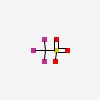 3D/inchi 3D/inchi
|
| ECHA EINECS - REACH Pre-Reg: | 216-087-5 | |
| FDA UNII: | JE2SY203E8 | |
| Nikkaji Web: | J12.301C | |
| Beilstein Number: | 1812100 | |
| MDL: | MFCD00007514 | |
| XlogP3-AA: | 0.30 (est) | |
| Molecular Weight: | 150.07677960 | |
| Formula: | C H F3 O3 S | |
| NMR Predictor: | Predict (works with chrome or firefox) | |
Category: catalyst in the hydrogenation of fats and oils
US / EU / FDA / JECFA / FEMA / FLAVIS / Scholar / Patent Information:
| Google Scholar: | Search |
| Google Books: | Search |
| Google Scholar: with word "volatile" | Search |
| Google Scholar: with word "flavor" | Search |
| Google Scholar: with word "odor" | Search |
| Perfumer and Flavorist: | Search |
| Google Patents: | Search |
| US Patents: | Search |
| EU Patents: | Search |
| Pubchem Patents: | Search |
| PubMed: | Search |
| NCBI: | Search |
| FDA Mainterm (SATF): | 1493-13-6 ; TRIFLUOROMETHANE SULFONIC ACID |
| FDA Regulation: | |
| FDA PART 173 -- SECONDARY DIRECT FOOD ADDITIVES PERMITTED IN FOOD FOR HUMAN CONSUMPTION Subpart D--Specific Usage Additives Sec. 173.395 Trifluoromethane sulfonic acid. | |
Physical Properties:
| Assay: | 95.00 to 100.00 % |
| Food Chemicals Codex Listed: | No |
| Specific Gravity: | 1.69600 @ 25.00 °C. |
| Refractive Index: | 1.32600 to 1.33100 @ 20.00 °C. |
| Boiling Point: | 166.00 °C. @ 760.00 mm Hg |
| Vapor Pressure: | 1.137000 mmHg @ 25.00 °C. (est) |
| Flash Point: | 32.00 °F. TCC ( 0.00 °C. ) (est) |
| logP (o/w): | -1.063 (est) |
| Soluble in: | |
| water, 1.975e+005 mg/L @ 25 °C (est) | |
Organoleptic Properties:
| Odor and/or flavor descriptions from others (if found). | |
Cosmetic Information:
| None found |
Suppliers:
| BOC Sciences |
| For experimental / research use only. |
| PERFLUOROMETHANESULFONIC ACID 95% |
| Glentham Life Sciences |
| Trifluoromethanesulfonic acid |
| Santa Cruz Biotechnology |
| For experimental / research use only. |
| Trifluoromethanesulfonic Acid ≥98% |
| Sigma-Aldrich: Aldrich |
| For experimental / research use only. |
| Trifluoromethanesulfonic acid ReagentPlus®, ≥99% |
| TCI AMERICA |
| For experimental / research use only. |
| Trifluoromethanesulfonic Acid >98.0%(T) |
Safety Information:
| Preferred SDS: View | |
| Hazards identification | |
| Classification of the substance or mixture | |
| GHS Classification in accordance with 29 CFR 1910 (OSHA HCS) | |
| None found. | |
| GHS Label elements, including precautionary statements | |
| Pictogram | |
| Hazard statement(s) | |
| None found. | |
| Precautionary statement(s) | |
| None found. | |
| Oral/Parenteral Toxicity: | |
| Not determined | |
| Dermal Toxicity: | |
| Not determined | |
| Inhalation Toxicity: | |
| Not determined | |
Safety in Use Information:
| Category: | catalyst in the hydrogenation of fats and oils | ||
| Recommendation for trifluoromethane sulfonic acid usage levels up to: | |||
| not for fragrance use. | |||
| Recommendation for trifluoromethane sulfonic acid flavor usage levels up to: | |||
| not for flavor use. | |||
Safety References:
| EPI System: | View |
| AIDS Citations: | Search |
| Cancer Citations: | Search |
| Toxicology Citations: | Search |
| EPA Substance Registry Services (TSCA): | 1493-13-6 |
| EPA ACToR: | Toxicology Data |
| EPA Substance Registry Services (SRS): | Registry |
| Laboratory Chemical Safety Summary : | 62406 |
| National Institute of Allergy and Infectious Diseases: | Data |
| WGK Germany: | 1 |
| trifluoromethanesulfonic acid | |
| Chemidplus: | 0001493136 |
References:
| trifluoromethanesulfonic acid | |
| NIST Chemistry WebBook: | Search Inchi |
| Canada Domestic Sub. List: | 1493-13-6 |
| Pubchem (cid): | 62406 |
| Pubchem (sid): | 135020855 |
Other Information:
| (IUPAC): | Atomic Weights of the Elements 2011 (pdf) |
| Videos: | The Periodic Table of Videos |
| tgsc: | Atomic Weights use for this web site |
| (IUPAC): | Periodic Table of the Elements |
| FDA Substances Added to Food (formerly EAFUS): | View |
| CHEBI: | View |
| CHEMBL: | View |
| HMDB (The Human Metabolome Database): | HMDB36577 |
| FooDB: | FDB015485 |
| Export Tariff Code: | 2904.10.5000 |
| FDA Listing of Food Additive Status: | View |
| ChemSpider: | View |
| Wikipedia: | View |
Potential Blenders and core components note
| None Found | ||
Potential Uses:
| None Found |
Occurrence (nature, food, other): note
| not found in nature |
Synonyms:
| per | fluoromethane sulfonic acid |
| per | fluoromethanesulfonic acid |
| methanesulfonic acid, 1,1,1-trifluoro- | |
| methanesulfonic acid, trifluoro- | |
| triflic acid | |
| trifluoromethanesulfonic acid | |
| 1,1,1- | trifluoromethanesulfonic acid |
| trifluoromethanesulphonic acid | |
| trifluoromethansulfonic acid |