Articles:
ethylene trichloride
Notes:
a highly volatile inhalation anesthetic used mainly in short surgical procedures where light anesthesia with good analgesia is required. it is also used as an industrial solvent. prolonged exposure to high concentrations of the vapor can lead to cardiotoxicity and neurological impairment. Solvent and extractive in the manuf. of foods
A spot was then ultimately chosen to receive and treat the contaminated drinking water known as the Central Groundwater Treatment Facility. Then 1989, as now, this treatment facility (CGTF) is situated on land adjacent to Pima Park and the Siemens facility documented as one of the Potentially Responsible Parties at the corner of Thomas and Pima roads. Close proximity to this park did not appear to enter into Motorola's calculations when asserting that it would save money to remove the carbon air filters in 2007. (See East Valley Tribune, October 5, 2007, "Motorola wants to axe filters at Superfund site" by Ari Cohn); As of 2007, 57,000 thousand pounds, or roughly 19 tons of TCE have been removed from the system of wells that once supplied drinking water to the residents of Scottsdale. One of the three drinking water wells previously owned by the City of Phoenix and ultimately sold to the City of Scottsdale, tested at 390 ppb TCE when it was closed in 1982. (see East Valley Tribune, April 6, 2007, "Feds to Examine Superfund Site" by John Yantis) Some Scottsdale residents who received their water bills from the City of Phoenix throughout the 1960s and 70's were understandably confused as to whether they indeed had been consuming contaminated water when information about the Superfund site was first disseminated. The City of Scottsdale recently updated their website to clarify that the contaminated wells were "in the Scottsdale area" and to delete all references to the levels of TCE discovered when the wells were closed as "trace".; One recent review of the epidemiology of kidney cancer rated cigarette smoking and obesity as more important risk factors for kidney cancer than exposure to solvents such as trichloroethylene. In contrast, the most recent overall assessment of human health risks associated with trichloroethylene states, "[t]here is concordance between animal and human studies, which supports the conclusion that trichloroethylene is a potential kidney carcinogen". The evidence appears to be less certain at this time regarding the relationship between humans and liver cancer observed in mice, with the NAS suggesting that low-level exposure might not represent a significant liver cancer risk in the general population.; The chemical compound trichloroethylene is a chlorinated hydrocarbon commonly used as an industrial solvent. It is a clear non-flammable liquid with a sweet smell.; The first known report of TCE in groundwater was given in 1949 by two English public chemists who described two separate instances of well contamination by industrial releases of TCE. Based on available federal and state surveys, between 9% to 34% of the drinking water supply sources tested in the U.S. may have some TCE contamination, though EPA has reported that most water supplies are in compliance with the Maximum Contaminant Level (MCL) of 5 ppb. In addition, a growing concern in recent years at sites with TCE contamination in soil or groundwater has been vapor intrusion in buildings, which has resulted in indoor air exposures, such is in a recent case in the McCook Field Neighborhood of Dayton, Ohio. Trichloroethylene has been detected in 852 Superfund sites across the United States, according to the Agency for Toxic Substances and Disease Registry (ATSDR). Under the Safe Drinking Water Act of 1974, and as amended annual water quality testing is required for all public drinking water distributors. The EPA'S current guidelines for TCE can be found here. It should be noted that the EPA's table of "TCE Releases to Ground" is dated 1987 to 1993, thereby omitting one of the largest Superfund Cleanup sites in the nation, the NIBW in Scottsdale, Arizona. The TCE "released" here occurred prior to its appearance in the municipal drinking wells in 1982.; This reaction can be catalyzed by a variety of substances. The most commonly used catalyst is a mixture of potassium chloride and aluminum chloride. However, various forms of porous carbon can also be used. This reaction produces tetrachloroethylene as a byproduct, and depending on the amount of chlorine fed to the reaction, tetrachloroethylene can even be the major product. Typically, trichloroethylene and tetrachloroethylene are collected together and then separated by distillation.; Trichloroethylene is a cleaning solvent that was used to clean military weapons during the Gulf War. There are reports associating exposure to this solvent with amyotrophic lateral sclerosis (Kasarskis EJ et al. Amyotrophic Lateral Sclerosis, 2008 Sep 16:1-7, Clinical aspects of ALS in Gulf War Veterans), and also with a neurologic syndrome resembling Parkinson's disease (Gash DM. et al. Ann Neurol. 2008 Feb;63(2):184-92. Trichloroethylene: Parkinsonism and complex 1 mitochondrial neurotoxicity).; Trichloroethylene is an effective solvent for a variety of organic materials.
| CAS Number: | 79-01-6 | 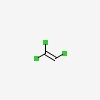 3D/inchi 3D/inchi
|
| ECHA EINECS - REACH Pre-Reg: | 201-167-4 | |
| FDA UNII: | 290YE8AR51 | |
| Nikkaji Web: | J4.408C | |
| Beilstein Number: | 1736782 | |
| MDL: | MFCD00000838 | |
| XlogP3: | 2.60 (est) | |
| Molecular Weight: | 131.38597000 | |
| Formula: | C2 H Cl3 | |
| BioActivity Summary: | listing | |
| NMR Predictor: | Predict (works with chrome or firefox) | |
Category: solvents
US / EU / FDA / JECFA / FEMA / FLAVIS / Scholar / Patent Information:
Physical Properties:
| Appearance: | colorless to pale yellow clear liquid (est) |
| Assay: | 98.00 to 100.00 % |
| Food Chemicals Codex Listed: | No |
| Specific Gravity: | 1.46300 @ 25.00 °C. |
| Melting Point: | 87.00 to 88.00 °C. @ 760.00 mm Hg |
| Boiling Point: | 87.20 °C. @ 760.00 mm Hg |
| Vapor Pressure: | 69.000000 mmHg @ 25.00 °C. (est) |
| Flash Point: | 54.00 °F. TCC ( 12.10 °C. ) (est) |
| logP (o/w): | 2.420 |
| Soluble in: | |
| water, 1280 mg/L @ 25 °C (exp) | |
Organoleptic Properties:
| Odor and/or flavor descriptions from others (if found). | |
Cosmetic Information:
| None found |
Suppliers:
| Covalent Chemical |
| Trichloroethylene |
| Rainbow Chemical |
| Trichloroethylene 99.6 |
| Sigma-Aldrich |
| For experimental / research use only. |
| Trichloroethylene ACS reagent, ≥99.5% |
| Silver Fern Chemical |
| Trichloroethylene
Odor: characteristic Use: Trichloroethylene is commonly used in metal degreasing and as a solvent for oils, fats, and waxes. It can also be considered a heat-exchange fluid and has applications in industries such as inks and dyes, electronics, paints and adhesives, and textiles. |
Safety Information:
| Hazards identification | |
| Classification of the substance or mixture | |
| GHS Classification in accordance with 29 CFR 1910 (OSHA HCS) | |
| None found. | |
| GHS Label elements, including precautionary statements | |
| Pictogram | |
| Hazard statement(s) | |
| None found. | |
| Precautionary statement(s) | |
| None found. | |
| Oral/Parenteral Toxicity: | |
|
oral-rat LD50 4920 mg/kg Industrial Health. Vol. 32, Pg. 145, 1994. intraperitoneal-rat LD50 1282 mg/kg Environmental Research. Vol. 40, Pg. 411, 1986. oral-cat LDLo 5864 mg/kg "Handbook of Toxicology," 4 vols., Philadelphia, W.B. Saunders Co., 1956-59Vol. 5, Pg. 76, 1959. intraperitoneal-dog LD50 1900 mg/kg LIVER: LIVER FUNCTION TESTS IMPAIRED Toxicology and Applied Pharmacology. Vol. 10, Pg. 119, 1967. intravenous-dog LDLo 150 mg/kg Quarterly Journal of Pharmacy & Pharmacology. Vol. 7, Pg. 205, 1934. oral-human LDLo 7000 mg/kg Archives of Toxicology. Vol. 35, Pg. 295, 1976. oral-man TDLo 1 mL/kg BEHAVIORAL: COMA BEHAVIORAL: SOMNOLENCE (GENERAL DEPRESSED ACTIVITY) BEHAVIORAL: TREMOR Toxicological Sciences. Vol. 41, Pg. 157, 1998. oral-man TDLo 2143 mg/kg GASTROINTESTINAL: OTHER CHANGES "Toxicology of Drugs and Chemicals," Deichmann, W.B., New York, Academic Press, Inc., 1969Vol. -, Pg. 602, 1969. intravenous-mouse LD50 33900 ug/kg "Summary Tables of Biological Tests," National Research Council Chemical-Biological Coordination Center. Vol. 6, Pg. 141, 1954. oral-mouse LD50 2402 mg/kg BEHAVIORAL: ATAXIA SKIN AND APPENDAGES (SKIN): HAIR: OTHER BEHAVIORAL: ALTERED SLEEP TIME (INCLUDING CHANGE IN RIGHTING REFLEX) National Technical Information Service. Vol. AD-A080-636 oral-rabbit LDLo 7330 mg/kg "Handbook of Toxicology," 4 vols., Philadelphia, W.B. Saunders Co., 1956-59Vol. 5, Pg. 76, 1959. intratracheal-rat LDLo 150 mg/kg National Technical Information Service. Vol. OTS0520615 | |
| Dermal Toxicity: | |
|
subcutaneous-dog LDLo 150 mg/kg "Handbook of Toxicology," 4 vols., Philadelphia, W.B. Saunders Co., 1956-59Vol. 5, Pg. 76, 1959. subcutaneous-mouse LD50 16000 mg/kg BEHAVIORAL: ATAXIA BEHAVIORAL: SLEEP Journal of Pharmacology and Experimental Therapeutics. Vol. 123, Pg. 224, 1958. skin-rabbit LD50 > 20000 mg/kg National Technical Information Service. Vol. AD-A062-138 subcutaneous-rabbit LDLo 1800 mg/kg Quarterly Journal of Pharmacy & Pharmacology. Vol. 7, Pg. 205, 1934. | |
| Inhalation Toxicity: | |
|
inhalation-mouse LC50 8450 ppm/4H Acta Pharmacologica et Toxicologica. Vol. 9, Pg. 303, 1953. inhalation-cat LCLo 32500 mg/m3/2H PERIPHERAL NERVE AND SENSATION: SPASTIC PARALYSIS WITH OR WITHOUT SENSORY CHANGE BEHAVIORAL: GENERAL ANESTHETIC BEHAVIORAL: CHANGES IN MOTOR ACTIVITY (SPECIFIC ASSAY) Archiv fuer Hygiene und Bakteriologie. Vol. 116, Pg. 131, 1936. inhalation-guinea pig LCLo 37200 ppm/40M "Handbook of Toxicology," 4 vols., Philadelphia, W.B. Saunders Co., 1956-59Vol. 5, Pg. 76, 1959. inhalation-human TCLo 160 ppm/83M BEHAVIORAL: "HALLUCINATIONS, DISTORTED PERCEPTIONS" American Industrial Hygiene Association Journal. Vol. 23, Pg. 167, 1962. inhalation-human TCLo 500 ppm/16.1Y- KIDNEY, URETER, AND BLADDER: CHANGES IN BOTH TUBULES AND GLOMERULI KIDNEY, URETER, AND BLADDER: PROTEINURIS Archives of Toxicology. Vol. 73, Pg. 246, 1999. inhalation-human TCLo 812 mg/kg GASTROINTESTINAL: OTHER CHANGES BEHAVIORAL: SOMNOLENCE (GENERAL DEPRESSED ACTIVITY) LIVER: "JAUNDICE, OTHER OR UNCLASSIFIED" British Medical Journal. Vol. 2, Pg. 689, 1945. inhalation-human TCLo 6900 mg/m3/10M BEHAVIORAL: "HALLUCINATIONS, DISTORTED PERCEPTIONS" BEHAVIORAL: SOMNOLENCE (GENERAL DEPRESSED ACTIVITY) Archiv fuer Hygiene und Bakteriologie. Vol. 116, Pg. 131, 1936. inhalation-man LCLo 2900 ppm New Zealand Medical Journal. Vol. 50, Pg. 119, 1951. inhalation-man TCLo 110 ppm/8H BEHAVIORAL: "HALLUCINATIONS, DISTORTED PERCEPTIONS" SENSE ORGANS AND SPECIAL SENSES: OTHER: EYE British Journal of Industrial Medicine. Vol. 28, Pg. 293, 1971. inhalation-rabbit LCLo 11000 ppm FAO Nutrition Meetings Report Series. Vol. 48A, Pg. 121, 1970. inhalation-rat LCLo 4800 ppm/4H AMA Archives of Industrial Hygiene and Occupational Medicine. Vol. 4, Pg. 469, 1951. | |
Safety in Use Information:
| Category: | solvents | ||
| Recommendation for trichloroethylene usage levels up to: | |||
| not for fragrance use. | |||
| Recommendation for trichloroethylene flavor usage levels up to: | |||
| not for flavor use. | |||
Safety References:
| EPI System: | View |
| ECHA (ESR): | View |
| EPA-Iris: | IRIS |
| ClinicalTrials.gov: | search |
| NIOSH International Chemical Safety Cards: | search |
| NIOSH Pocket Guide: | search |
| Chemical Carcinogenesis Research Information System: | Search |
| AIDS Citations: | Search |
| Cancer Citations: | Search |
| Toxicology Citations: | Search |
| Carcinogenic Potency Database: | Search |
| EPA GENetic TOXicology: | Search |
| EPA Substance Registry Services (TSCA): | 79-01-6 |
| EPA ACToR: | Toxicology Data |
| EPA Substance Registry Services (SRS): | Registry |
| Laboratory Chemical Safety Summary : | 6575 |
| National Institute of Allergy and Infectious Diseases: | Data |
| WISER: | UN 1710 |
| WGK Germany: | 3 |
| 1,1,2-trichloroethene | |
| Chemidplus: | 0000079016 |
| EPA/NOAA CAMEO: | hazardous materials |
| RTECS: | 79-01-6 |
References:
| 1,1,2-trichloroethene | |
| NIST Chemistry WebBook: | Search Inchi |
| Canada Domestic Sub. List: | 79-01-6 |
| Pubchem (cid): | 6575 |
| Pubchem (sid): | 134971240 |
Other Information:
| (IUPAC): | Atomic Weights of the Elements 2011 (pdf) |
| Videos: | The Periodic Table of Videos |
| tgsc: | Atomic Weights use for this web site |
| (IUPAC): | Periodic Table of the Elements |
| FDA Substances Added to Food (formerly EAFUS): | View |
| FDA Indirect Additives used in Food Contact Substances: | View |
| CHEBI: | View |
| CHEMBL: | View |
| UM BBD: | Search |
| KEGG (GenomeNet): | C06790 |
| HMDB (The Human Metabolome Database): | HMDB29593 |
| FooDB: | FDB000752 |
| Export Tariff Code: | 2903.22.0000 |
| ChemSpider: | View |
| Wikipedia: | View |
| Formulations/Preparations: •medicinal trichloroethylene may contain thymol as a preservative; industrial grades may contain stabilizers, such as triethylamine. •grades: usp; technical; high purity; electronic; metal degreasing; extraction. •trichloroethylene is available in the usa in high-purity, electronic usp, technical, metal degreasing and extraction grades •commercial grades of trichloroethylene, formulated to meet use requirements, differ in the amount and type of added inhibitor. typical grades contain >99% trichloroethylene; they include a neutrally inhibited vapor-degreasing grade and a technical grade for use in formulations. •stabilizers that have been used in formulations of trichloroethylene include neutral inhibitors and free-radical scavengers, amyl alcohol, n-propanol, isobutanol, 2-pentanol, diethylamine, triethylamine, dipropylamine, diisopropylamine, diethanolamine, triethanolamine, morpholine, n-methylmorpholine, aniline, acetone, ethyl acetate, borate esters, ethylene oxide, propylene oxide, 1,2-epoxybutane, cyclohexene oxide, butadiene dioxide, styrene oxide, pentene oxide, 2,3-epoxy-1-propenol, 3-methoxy-1,2-epoxypropane, stearates, 2,2,4-trimethyl-1-pentene, 2-methyl-1,2-epoxypropanol, epoxycyclopentanol, epichlorohydrin, tetrahydrofuran, tetrahydropyran, 1,4-dioxane, dioxalane, trioxane, alkoxyaldehyde hydrazones, methyl ethyl ketone, nitromethanes, nitropropanes, phenol, ortho-cresol, thymol, para-tert-butylphenol, para-tert-amylphenol, isoeugenol, pyrrole, n-methylpyrrole, n-ethylpyrrole, (2-pyrryl)trimethylsilane, glycidyl acetate, isocyanates and thiazoles. | |
Potential Blenders and core components note
| None Found | ||
Potential Uses:
| None Found |
Occurrence (nature, food, other): note
| not found in nature |
Synonyms:
| 1- | chloro-2,2-dichloroethylene |
| 1,1- | dichloro-2-chloroethylene |
| ethene, 1,1,2-trichloro- | |
| ethylene trichloride | |
| trichloroethene | |
| 1,1,2- | trichloroethene |
| 1,1,2- | trichloroethylene |
| 1,2,2- | trichloroethylene |
| trilene |