Articles:
all-trans-crocetin di-β-D-gentiobiosyl ester
Notes:
a free radical scavenger. The colouring principle of saffron
Crocin is a natural carotenoid chemical compound that is found in the flowers crocus and gardenia. It is the diester formed from the disaccharide gentiobiose and the dicarboxylic acid crocetin. (Wikipedia)

-
BOC Sciences Best of Chemicals Supplier Quality supplier of research chemicals and biochemicals including inhibitors, building blocks, GMP Products, impurities and metabolites, APIs for Veterinary, Natural Compounds, ADCs, Stem Cell Molecule and chiral compounds. BOC Sciences provides a wide range of services to support the pharmaceutical industry through all stages of drug discovery including Custom Synthesis of those chemicals that are not in stock, Isotope Labeling Service, Chiral Synthesis and Resolution, Bioconjugation, PEGylation services, analytical services. BOC Sciences is a brand of BOCSCI Inc. We leverage our wide spectrum of business in the fields of development, manufacturing, marketing, and distribution to help you make best-informed decisions tailored to your evolving needs for premium chemicals. Our complete suite of CRO services spans the entire molecule development pipeline including contract research for target identification, building blocks, compound synthesis, biochemical and cellular analysis, preclinical animal tests, and clinical studies. Email: Marketing US Email: Marketing Email: Sales US Email: Sales Voice: 1-631-485-4226 Fax: 1-631-614-7828 US Voice: 1-631-485-4226 US Fax: 1-631-614-7828 Europe 44-203-286-1088 Facebook Twitter Linkedin Blog Get the App! Product(s): 42553-65-1 CroCin
-
| CAS Number: | 42553-65-1 | 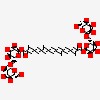 3D/inchi 3D/inchi
|
| Other(deleted CASRN): | 11012-59-2 | |
| ECHA EINECS - REACH Pre-Reg: | 255-881-6 | |
| FDA UNII: | 877GWI46C2 | |
| Nikkaji Web: | J16.015F | |
| Beilstein Number: | 6473367 | |
| MDL: | MFCD00017495 | |
| XlogP3-AA: | -2.50 (est) | |
| Molecular Weight: | 976.97488000 | |
| Formula: | C44 H64 O24 | |
| BioActivity Summary: | listing | |
| NMR Predictor: | Predict (works with chrome or firefox) | |
Category: natural substances and extractives
US / EU / FDA / JECFA / FEMA / FLAVIS / Scholar / Patent Information:
| Google Scholar: | Search |
| Google Books: | Search |
| Google Scholar: with word "volatile" | Search |
| Google Scholar: with word "flavor" | Search |
| Google Scholar: with word "odor" | Search |
| Google Patents: | Search |
| US Patents: | Search |
| EU Patents: | Search |
| Pubchem Patents: | Search |
| PubMed: | Search |
| NCBI: | Search |
Physical Properties:
| Assay: | 95.00 to 100.00 % |
| Food Chemicals Codex Listed: | No |
| Boiling Point: | 1169.04 °C. @ 760.00 mm Hg (est) |
| Flash Point: | 640.00 °F. TCC ( 337.80 °C. ) (est) |
| logP (o/w): | -4.742 (est) |
| Soluble in: | |
| water, 3688 mg/L @ 25 °C (est) | |
Organoleptic Properties:
| Odor and/or flavor descriptions from others (if found). | |
Cosmetic Information:
| None found |
Suppliers:
| Alfa Biotechnology |
| For experimental / research use only. |
| Crocin I 98% |
| BOC Sciences |
| For experimental / research use only. |
| CroCin |
| Changsha Organic Herb |
| Saffron Extract Power Crocus sativus L. |
| Coompo |
| For experimental / research use only. |
| Crocin from Plants ≥98%
Odor: characteristic Use: Crocus sativus L., commonly known as saffron, is used in folk medicine for various purposes. Modern pharmacological studies have demonstrated that saffron extracts have antitumour effects, radical scavenger properties or hypolipaemic effects. Among the constituents of saffron extract, crocetin is mainly responsible for these pharmacological activities. In addition, recent behavioural and electrophysiological studies have demonstrated that saffron extract affects learning and memory in experimental animals. Saffron extract improved ethanol-induced impairments of learning behaviours in mice, and prevented ethanol-induced inhibition of hippocampal long-term potentiation, a form of activity-dependent synaptic plasticity that may underly learning and memory. This effect of saffron extract is attributed to crocin (crocetin di-gentiobiose ester), but not crocetin. Saffron extract or its active constituents, crocetin and crocin, could be useful as a treatment for neurodegenerative disorders accompanying memory impairment.
Crocin has been shown to be a potent antioxidant. It has also been shown to have an anticarcinogenic action. In rodents, crocin has been shown to have antidepressant properties and one study reports aphrodisiac properties.
Crocin inhibitors of pancreatic lipase with an IC50 value of 2.6 mg/ml (triolein as a substrate). Crocin significantly inhibited the increase of serum TG level in corn oil feeding-induced triglyceridemic mice, as well as that of serum triglyceride and total and LDL cholesterol levels in Triton WR-1339-induced hyperlipidemic mice. These compounds also showed hypolipidemic activity in hyperlipidemic mice induced by high cholesterol, high fat or high carbohydrate diets for 5 weeks. The results suggest that the hypolipidemic activity of GF and its component crocin may be due to the inhibition of pancreatic lipase and crocin can improve hyperlipidemia. |
| ExtraSynthese |
| For experimental / research use only. |
| Crocin |
| Sigma-Aldrich: Sigma |
| For experimental / research use only. |
| Crocin for microscopy |
Safety Information:
| Preferred SDS: View | |
| Hazards identification | |
| Classification of the substance or mixture | |
| GHS Classification in accordance with 29 CFR 1910 (OSHA HCS) | |
| None found. | |
| GHS Label elements, including precautionary statements | |
| Pictogram | |
| Hazard statement(s) | |
| None found. | |
| Precautionary statement(s) | |
| None found. | |
| Oral/Parenteral Toxicity: | |
| Not determined | |
| Dermal Toxicity: | |
|
subcutaneous-mouse LDLo 10000 mg/kg PERIPHERAL NERVE AND SENSATION: FLACCID PARALYSIS WITHOUT ANESTHESIA (USUALLY NEUROMUSCULAR BLOCKAGE) BEHAVIORAL: CHANGES IN MOTOR ACTIVITY (SPECIFIC ASSAY) BEHAVIORAL: ALTERED SLEEP TIME (INCLUDING CHANGE IN RIGHTING REFLEX) Japanese Journal of Pharmacology. Vol. 4, Pg. 69, 1954. | |
| Inhalation Toxicity: | |
| Not determined | |
Safety in Use Information:
| Category: | natural substances and extractives | ||
| Recommendation for crocetin digentiobiose ester usage levels up to: | |||
| not for fragrance use. | |||
| Recommendation for crocetin digentiobiose ester flavor usage levels up to: | |||
| not for flavor use. | |||
Safety References:
| EPI System: | View |
| Chemical Carcinogenesis Research Information System: | Search |
| Cancer Citations: | Search |
| Toxicology Citations: | Search |
| EPA ACToR: | Toxicology Data |
| EPA Substance Registry Services (SRS): | Registry |
| Laboratory Chemical Safety Summary : | 5281233 |
| National Institute of Allergy and Infectious Diseases: | Data |
| WGK Germany: | 3 |
| Chemidplus: | 0042553651 |
| RTECS: | HL7380000 for cas# 42553-65-1 |
References:
| Pubchem (cid): | 5281233 |
| Pubchem (sid): | 135079256 |
Other Information:
| (IUPAC): | Atomic Weights of the Elements 2011 (pdf) |
| Videos: | The Periodic Table of Videos |
| tgsc: | Atomic Weights use for this web site |
| (IUPAC): | Periodic Table of the Elements |
| CHEBI: | View |
| CHEMBL: | View |
| KEGG (GenomeNet): | C08589 |
| HMDB (The Human Metabolome Database): | HMDB02398 |
| FooDB: | FDB014549 |
| Export Tariff Code: | 3204.19.4000 |
| VCF-Online: | VCF Volatile Compounds in Food |
| ChemSpider: | View |
| Wikipedia: | View |
Potential Blenders and core components note
| None Found | ||
Potential Uses:
| None Found |
Occurrence (nature, food, other): note
| saffron flower Search Trop Picture | |
| saffron stigma Search Trop Picture | |
| saffron tissue culture Search Trop Picture |
Synonyms:
| all-trans- | crocetin di-β-D-gentiobiosyl ester |
| crocin | |
| a- | crocin |
| 8,8'- | diapo-psi,psi-carotenedioic acid, bis(6-O-β-D-glucopyranosyl-β-D-glucopyranosyl) ester |
| 8,8'- | diapo-y,y-carotenedioic acid bis(6-O-b-D-glucopyranosyl-b-D-glucopyranosyl) ester |
| gardenia yellow | |
| saffron (natural color) |