Articles:
L-(+)-lysine monohydrochloride
Notes:
None found

-
BOC Sciences Best of Chemicals Supplier Quality supplier of research chemicals and biochemicals including inhibitors, building blocks, GMP Products, impurities and metabolites, APIs for Veterinary, Natural Compounds, ADCs, Stem Cell Molecule and chiral compounds. BOC Sciences provides a wide range of services to support the pharmaceutical industry through all stages of drug discovery including Custom Synthesis of those chemicals that are not in stock, Isotope Labeling Service, Chiral Synthesis and Resolution, Bioconjugation, PEGylation services, analytical services. BOC Sciences is a brand of BOCSCI Inc. We leverage our wide spectrum of business in the fields of development, manufacturing, marketing, and distribution to help you make best-informed decisions tailored to your evolving needs for premium chemicals. Our complete suite of CRO services spans the entire molecule development pipeline including contract research for target identification, building blocks, compound synthesis, biochemical and cellular analysis, preclinical animal tests, and clinical studies. Email: Marketing US Email: Marketing Email: Sales US Email: Sales Voice: 1-631-485-4226 Fax: 1-631-614-7828 US Voice: 1-631-485-4226 US Fax: 1-631-614-7828 Europe 44-203-286-1088 Facebook Twitter Linkedin Blog Get the App! Product(s): 657-27-2 H-Lys-OH.HCl
-
-
Charkit Chemical Corporation The Specialty Chemical Specialists Explore this website to discover the products and services that Charkit provides for your industry and please contact us directly to find out how we can be of service to you. about: Since 1982, Charkit has been committed to expanding the markets we serve as our roster of products and services continues to grow with us. Our substantial portfolio of personal care ingredients now include a wide array of luxury and exotic components to compliment the key products we have always offered. We have expanded our offerings to the nutraceutical, industrial, and resin markets with a growing roster of versatile and unique ingredients. We continue to lead the way in our traditional markets such as Metal and Water Treatment, Imaging, Flavor & Fragrance, Aroma and Food. Our Pharmaceutical offerings continue to expand, still anchored by the Boronic Derivatives that meet the demands of Suzuki coupling reactions. Please contact us to learn how we can help you reach your goals. Email: Sales Voice: 203-299-3220 Fax: 203-299-1355 Facebook Twitter Linkedin Latest News Events Blog Products List: View Product(s): LYSINE HYDROCHLORIDE, L-
-

-
ECSA Chemicals Human Chemistry ECSA Chemicals has been active since 1913 in the trading and international commerce of raw materials. With an organisation divided into industrial segments managed by specialists, it has become one of the largest distributors worldwide. ECSA Chemicals is the largest Swiss-owned company in terms of warehouses for the distribution of chemical products. We have been distributing chemical products for over 100 years and we have a special interest in protecting the environment and in the safety of our facilities and collaborators. Established in 1913 as a small grocery store, in its over 100 years of activity ECSA Chemicals has become one of the most important Swiss-owned distributors of chemical products. The company, which is active in international distribution and trading, is organised into industrial segments that are managed by teams of specialists and experts. They guarantee professional and customised consultancy and services. With our experience, we can rapidly and safely connect you with the best suppliers on the market, providing you with a complete search, consulting and assistance service. The focus of our approach and operations is you, our customers. We strive every day to find the best products that satisfy your needs as quickly as possible. Your satisfaction is our greatest success. WHY CHOOSE ECSA? EXPERIENCE We have been working for 100 years. QUALITY We have obtained many certifications (ISO, SQAS, GDP, Responsible Care, Bio-Inspecta, RSPO, etc.). We guarantee full compliance with the current laws and continuous training for our staff. SAFETY We constantly carry out risk analyses for each infrastructure, defining safety levels and implementing corrective measures promptly wherever they are needed. WIDESPREAD DISTRIBUTION We have warehouses in strategic locations to supply goods to Switzerland and to the rest of the world. STORAGE CAPACITY The 3 ECSA-owned warehouses guarantee considerable storage area and capacity in each warehouse, with full availability of products (base chemicals and speciality chemicals). SPEED Presence all over the country, staff dedicated to sourcing raw materials and considerable storage capacity guarantee that goods are rapidly obtained and supplied. CONSULTANCY Our specialists - in-depth knowledge of the market and products allows us to provide full consulting services, from the purchase to the supply of raw materials. Email: Info Email: Sales Email: Trading Email: Maintenance Email: Energy Voice: +41 91 695 88 00 Fax: +41 91 695 88 01 Linkedin Youtube RSS Feed ECSA Trade ECSA TRADE THE MOST UPDATED FINANCIAL PUBLICATION ON THE WORLD OF CHEMISTRY Products List: View Product(s): MP-020487 L.LYSINE MONO HCL
-

-
Glentham Life Sciences Ltd The Chemical, Biochemical & Research Essentials Supplier Glentham Life Sciences is a supplier of fine chemicals and raw materials with warehousing, laboratories and packaging facilities in the UK. With a Glentham Life Sciences account you can view more product details, request quotes and order products online. Email: Info Email: Sales Email: Tech Support Voice: +44 (0) 1225 667798 Fax: +44 (0) 2033 978909 Facebook Twitter Linkedin Google+ News Distribution Products List: View Product(s): GM7532 L-Lysine monohydrochloride SDS GM9011 L-Lysine monohydrochloride, GlenCell?, suitable for cell culture
-

-
OQEMA With a focus on providing the highest level of service OQEMA has established itself at the forefront of the global chemical industry. The guiding principles of OQEMA have always been to establish long term relationships with customers and suppliers alike to build sustainable and profitable business for all parties. Through OQEMA’s business divisions the company tailors products and services to better support and service our customers requirements. This structure also allows the company to focus its marketing campaigns more effectively to certain industries. Over the last decade OQEMA has achieved strong growth as a result of the expansion of our business model. Going forward, the company will be expanding this business model into existing and new strategic territories. Email: Contact Us: US Email: Dean Matienzo Email: Sales US Email: Dean Matienzo - Sales Manager Voice: +44 1993 843081 Fax: +44 1993 841261 US Voice: +1 973 886 3778 US Fax: +1 973 346 1106 Linkedin Website Global Distribution Product(s): L-Lysine HCL
-

-
Penta International Corporation Chemistry innovation At Penta, our products and services help businesses do business better. For over 30 years, Penta Manufacturing Company has played a growing role in worldwide chemistry innovations and applications. As an industry leader, Penta continues to pioneer chemistry-based solutions for practically every area of commerce. Our products and expertise have helped fuel technical advances in dozens of commercial applications including flavoring, coloring, fragrances and chemical processes. US Email: Technical Services US Email: Sales US Voice: (973) 740-2300 US Fax: (973) 740-1839 Product(s): 12-70000 L-LYSINE HYDROCHLORIDE USP FCC GRADE 12-70005 L-LYSINE HYDROCHLORIDE (HCL) NATURAL 12-70002 L-LYSINE HYDROCHLORIDE FCC GRADE 12-70004 L-LYSINE HYDROCHLORIDE USP GRADE
-

-
TCI AMERICA Moving Your Chemistry Forward We continuously strive to advance our technology. With East & West Coast distribution centers, count on TCI to deliver products quickly and reliably. Over 30,000 Reagents available today in benchtop to bulk quantities. We also offer custom synthesis solutions. Sign up for a TCI account today for fast and free shipping! Tokyo Chemical Industry Co., Ltd. (TCI) is a leading worldwide manufacturer of specialty organic chemicals founded in 1946. TCI provides organic laboratory chemicals as well as pharmaceutical, cosmetic and functional materials. More than 70 years of synthesis experience and multi-purpose plants enable TCI to offer more than 30,000 products as well as custom synthesis. US Email: Sales Email: Technical Support Voice: 1-800-423-8616 Fax: 1- 888-520-1075 Facebook Twitter Instagram Linkedin Product(s): L0071 L-(+)-Lysine Hydrochloride >98.0%(T)
-
| CAS Number: | 657-27-2 | 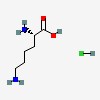 3D/inchi 3D/inchi
|
| ECHA EINECS - REACH Pre-Reg: | 211-519-9 | |
| FDA UNII: | JNJ23Q2COM | |
| Beilstein Number: | 3563889 | |
| MDL: | MFCD00064564 | |
| Molecular Weight: | 182.64995000 | |
| Formula: | C6 H15 N2 O2 Cl | |
| NMR Predictor: | Predict (works with chrome or firefox) | |
| EFSA/JECFA Comments: | Register name to be changed to L-(+)-lysine monohydrochloride (EFSA, 2006b) | |
Category: special dietary and nutritional additives
US / EU / FDA / JECFA / FEMA / FLAVIS / Scholar / Patent Information:
| Google Scholar: | Search |
| Google Books: | Search |
| Google Scholar: with word "volatile" | Search |
| Google Scholar: with word "flavor" | Search |
| Google Scholar: with word "odor" | Search |
| Perfumer and Flavorist: | Search |
| Google Patents: | Search |
| US Patents: | Search |
| EU Patents: | Search |
| Pubchem Patents: | Search |
| PubMed: | Search |
| NCBI: | Search |
| FDA/DG SANTE Petitions, Reviews, Notices: | |
| GRN 414 | L-lysine monohydrochloride View - notice PDF |
| DG SANTE Food Flavourings: | 17.031 L-(+)-lysine monohydrochloride |
| FDA Mainterm (SATF): | L-Lysine Monohydrochloride |
| FDA Regulation: | |
| FDA PART 172 -- FOOD ADDITIVES PERMITTED FOR DIRECT ADDITION TO FOOD FOR HUMAN CONSUMPTION Subpart D--Special Dietary and Nutritional Additives Sec. 172.320 Amino acids. | |
Physical Properties:
| Appearance: | white powder (est) |
| Assay: | 98.50 to 100.00 % |
| Food Chemicals Codex Listed: | No |
| Melting Point: | 261.00 to 263.00 °C. @ 760.00 mm Hg |
| Boiling Point: | 311.50 °C. @ 760.00 mm Hg (est) |
| Vapor Pressure: | 0.000123 mmHg @ 25.00 °C. (est) |
| Flash Point: | 288.00 °F. TCC ( 142.22 °C. ) |
| logP (o/w): | -1.036 (est) |
| Soluble in: | |
| alcohol | |
| water | |
| water, 1e+006 mg/L @ 25 °C (est) | |
Organoleptic Properties:
| Odor and/or flavor descriptions from others (if found). | |
Cosmetic Information:
| CosIng: | cosmetic data2 |
| CosIng: | cosmetic data |
| Cosmetic Uses: |
antioxidants reducing agents skin conditioning |
Suppliers:
| A.M.G.L.T. |
| L-Lysine Hydrochloride |
| ADM |
| L-LYSINE MONOHYDROCHLORIDE 98.5% FEED GRADE
Flavor: characteristic ADM L-Lysine monohydrochloride is a high quality, granular product specifically designed for the feed industry. Produced from advanced technology, this product is composed of 100% isomerically pure L-lysine, which translates into 100% bioavailability for ruminants, swine, poultry, and other animals. |
| AIDP |
| L-Lysine HCl 98.5-101.5% |
| Ajinomoto USA |
| AjiPure™ Lysine HCL
Flavor: characteristic Manufactured under cGMP conditions using no materials of animal origin. |
| Ajinomoto USA |
| L-Lysine HCl
Flavor: characteristic L-lysine is classified as an essential amino acid for humans and must be supplied in the diet. The male adult’s daily requirement is 12 mg per kg of body weight. It is extremely rare for a diet to contain insufficient quantities of lysine. Vegetarians who follow a macrobiotic diet and athletes who exercise vigorously on a frequent basis must take care to obtain sufficient L-lysine. Beans, peas and lentils are the best source of lysine. |
| Anhui Haibei |
| L-Lysine Hydrochloride |
| BBFY Industrial |
| L-Lysine Hydrochloride |
| BOC Sciences |
| For experimental / research use only. |
| H-Lys-OH.HCl |
| Charkit Chemical |
| LYSINE HYDROCHLORIDE, L- |
| ECSA Chemicals |
| L.LYSINE MONO HCL |
| ECSA TRADE THE MOST UPDATED FINANCIAL PUBLICATION ON THE WORLD OF CHEMISTRY |
| ExtraSynthese |
| For experimental / research use only. |
| L-Lysine Hydrochloride |
| Foodchem International |
| L-Lysine Monohydrochloride |
| Glentham Life Sciences |
| L-Lysine monohydrochloride, GlenCell?, suitable for cell culture |
| Glentham Life Sciences |
| L-Lysine monohydrochloride |
| Indis NV |
| For experimental / research use only. |
| L-Lysine (Base, HCl, etc.) |
| OQEMA |
| L-Lysine HCL |
| Penta International |
| L-LYSINE HYDROCHLORIDE (HCL) NATURAL |
| Penta International |
| L-LYSINE HYDROCHLORIDE FCC GRADE |
| Penta International |
| L-LYSINE HYDROCHLORIDE USP FCC GRADE |
| Penta International |
| L-LYSINE HYDROCHLORIDE USP GRADE |
| Prinova |
| L-Lysine Monohydrochloride |
| Sigma-Aldrich |
| For experimental / research use only. |
| L-Lysine monohydrochloride reagent grade, ≥98% (TLC) |
| TCI AMERICA |
| For experimental / research use only. |
| L-(+)-Lysine Hydrochloride >98.0%(T) |
Safety Information:
| European information : | |
| Most important hazard(s): | |
| None - None found. | |
|
S 02 - Keep out of the reach of children. S 22 - Do not breath dust. S 24/25 - Avoid contact with skin and eyes. | |
| Hazards identification | |
| Classification of the substance or mixture | |
| GHS Classification in accordance with 29 CFR 1910 (OSHA HCS) | |
| None found. | |
| GHS Label elements, including precautionary statements | |
| Pictogram | |
| Hazard statement(s) | |
| None found. | |
| Precautionary statement(s) | |
| None found. | |
| Oral/Parenteral Toxicity: | |
|
intraperitoneal-rat LD50 4019 mg/kg LUNGS, THORAX, OR RESPIRATION: DYSPNEA BEHAVIORAL: COMA Archives of Biochemistry and Biophysics. Vol. 58, Pg. 253, 1955. oral-rat LD50 10000 mg/kg BEHAVIORAL: ATAXIA BEHAVIORAL: ALTERED SLEEP TIME (INCLUDING CHANGE IN RIGHTING REFLEX) LUNGS, THORAX, OR RESPIRATION: DYSPNEA Journal of Pharmaceutical Sciences. Vol. 62, Pg. 49, 1973. | |
| Dermal Toxicity: | |
| Not determined | |
| Inhalation Toxicity: | |
| Not determined | |
Safety in Use Information:
| Category: | special dietary and nutritional additives | ||
| Recommendation for laevo-lysine hydrochloride usage levels up to: | |||
| not for fragrance use. | |||
| Maximised Survey-derived Daily Intakes (MSDI-EU): | 30.00 (μg/capita/day) | ||
| Modified Theoretical Added Maximum Daily Intake (mTAMDI): | 23000 (μg/person/day) | ||
| Threshold of Concern: | 1800 (μg/person/day) | ||
| Structure Class: | I | ||
| Food categories according to Commission Regulation EC No. 1565/2000 (EC, 2000) in FGE.06 (EFSA, 2002a). According to the Industry the "normal" use is defined as the average of reported usages and "maximum use" is defined as the 95th percentile of reported usages (EFSA, 2002i). | |||
| Note: mg/kg = 0.001/1000 = 0.000001 = 1/1000000 = ppm. | |||
| average usage mg/kg | maximum usage mg/kg | ||
| Dairy products, excluding products of category 02.0 (01.0): | - | - | |
| Fats and oils, and fat emulsions (type water-in-oil) (02.0): | - | - | |
| Edible ices, including sherbet and sorbet (03.0): | - | - | |
| Processed fruit (04.1): | - | - | |
| Processed vegetables (incl. mushrooms & fungi, roots & tubers, pulses and legumes), and nuts & seeds (04.2): | - | - | |
| Confectionery (05.0): | - | - | |
| Chewing gum (05.0): | - | - | |
| Cereals and cereal products, incl. flours & starches from roots & tubers, pulses & legumes, excluding bakery (06.0): | - | - | |
| Bakery wares (07.0): | - | - | |
| Meat and meat products, including poultry and game (08.0): | - | - | |
| Fish and fish products, including molluscs, crustaceans and echinoderms (MCE) (09.0): | - | - | |
| Eggs and egg products (10.0): | - | - | |
| Sweeteners, including honey (11.0): | - | - | |
| Salts, spices, soups, sauces, salads, protein products, etc. (12.0): | - | - | |
| Foodstuffs intended for particular nutritional uses (13.0): | - | - | |
| Non-alcoholic ("soft") beverages, excl. dairy products (14.1): | 70.00000 | - | |
| Alcoholic beverages, incl. alcohol-free and low-alcoholic counterparts (14.2): | - | - | |
| Ready-to-eat savouries (15.0): | - | - | |
| Composite foods (e.g. casseroles, meat pies, mincemeat) - foods that could not be placed in categories 01.0 - 15.0 (16.0): | - | - | |
Safety References:
| European Food Safety Athority(EFSA): | Flavor usage levels; Subacute, Subchronic, Chronic and Carcinogenicity Studies; Developmental / Reproductive Toxicity Studies; Genotoxicity Studies... |
| European Food Safety Authority (EFSA) reference(s): | |
| Amino acids from chemical group 34 Flavouring Group Evaluation 26, Revision 1 - Scientific opinion of the Panel on Food Additives, Flavourings, Processing Aids and Materials in contact with Food (AFC) View page or View pdf | |
| Flavouring Group Evaluation 29 (FGE29)[1] - Substance from the priority list: Vinylbenzene from chemical group 31 - Scientific Opinion of the Panel on Food Additives, Flavourings, Processing Aids and Materials in Contact with Food (AFC) View page or View pdf | |
| Flavouring Group Evaluation 79, (FGE.79)[1] - Consideration of amino acids and related substances evaluated by JECFA (63rd meeting) structurally related to amino acids from chemical group 34 evaluated by EFSA in FGE.26Rev1 (2008) View page or View pdf | |
| Scientific opinion on the safety and efficacy of concentrated liquid L-lysine (base), concentrated liquid L-lysine monohydrochloride and L-lysine monohydrochloride produced by Escherichia coli (FERM BP-10941) for all animal species, based on three dossiers submitted by Ajinomoto Eurolysine SAS View page or View pdf | |
| Scientific Opinion on the safety and efficacy of L-lysine monohydrochloride produced by fermentation with Escherichia coli for all animal species based on a dossier submitted by HELM AG on behalf of Meihua Holdings Group Co. Ltd View page or View pdf | |
| Scientific Opinion on the safety and efficacy of L-lysine monohydrochloride, technically pure, produced with Escherichia coli CGMCC 3705 and L-lysine sulphate produced with Corynebacterium glutamicum CGMCC 3704 for all animal species, based on a dossier submitted by HELM AG View page or View pdf | |
| Safety and efficacy of concentrated liquid L-lysine (base), L-lysine monohydrochloride and L-lysine sulphate produced using different strains of Corynebacterium glutamicum for all animal species based on a dossier submitted by AMAC/EEIG View page or View pdf | |
| Safety of l-lysine monohydrochloride produced by fermentation with Escherichia coli CGMCC 7.57 for all animal species based on a dossier submitted by Feedway Europe NV View page or View pdf | |
| Scientific Opinion on Flavouring Group Evaluation 49, Revision 1 (FGE.49Rev1): xanthine alkaloids from the priority list View page or View pdf | |
| Safety and efficacy of l-lysine monohydrochloride and concentrated liquid l-lysine (base) produced by fermentation using Corynebacterium glutamicum strain NRRL B-50775 for all animal species based on a dossier submitted by ADM View page or View pdf | |
| Safety of concentrated l-lysine (base), l-lysine monohydrochloride and l-lysine sulfate produced using different strains of Corynebacterium glutamicum for all animal species based on a dossier submitted by FEFANA asbl View page or View pdf | |
| Safety and efficacy of l-lysine monohydrochloride and l-lysine sulfate produced using Corynebacterium glutamicum CCTCC M 2015595 for all animal species View page or View pdf | |
| Safety and efficacy of l-lysine monohydrochloride and concentrated liquid l-lysine (base) produced by fermentation using Corynebacterium glutamicum strain KCCM 10227 for all animal species View page or View pdf | |
| Safety and efficacy of l-lysine monohydrochloride and concentrated liquid l-lysine (base) produced by fermentation using Corynebacterium glutamicum strains NRRL-B-67439 or NRRL B-67535 for all animal species View page or View pdf | |
| Safety and efficacy of l-lysine monohydrochloride and l-lysine sulfate produced using Corynebacterium glutamicum CGMCC 7.266 for all animal species View page or View pdf | |
| Safety and efficacy of l-lysine monohydrochloride produced by fermentation with Corynebacterium glutamicum DSM 32932 for all animal species View page or View pdf | |
| Safety and efficacy of l-lysine monohydrochloride and concentrated liquid l-lysine (base) produced by fermentation with Corynebacterium glutamicum KCCM 80216 as feed additive for all animal species View page or View pdf | |
| Safety and efficacy of l-lysine monohydrochloride and concentrated liquid l-lysine (base) produced by fermentation with Corynebacterium glutamicumKCTC 12307BP as feed additives for all animal species View page or View pdf | |
| EPI System: | View |
| Daily Med: | search |
| EPA Substance Registry Services (TSCA): | 657-27-2 |
| EPA ACToR: | Toxicology Data |
| EPA Substance Registry Services (SRS): | Registry |
| Laboratory Chemical Safety Summary : | 69568 |
| National Institute of Allergy and Infectious Diseases: | Data |
| WGK Germany: | 2 |
| (2S)-2,6-diaminohexanoic acid hydrochloride | |
| Chemidplus: | 0000657272 |
| RTECS: | OL5650000 for cas# 657-27-2 |
References:
| (2S)-2,6-diaminohexanoic acid hydrochloride | |
| NIST Chemistry WebBook: | Search Inchi |
| Canada Domestic Sub. List: | 657-27-2 |
| Pubchem (cid): | 69568 |
| Pubchem (sid): | 135027777 |
Other Information:
| (IUPAC): | Atomic Weights of the Elements 2011 (pdf) |
| Videos: | The Periodic Table of Videos |
| tgsc: | Atomic Weights use for this web site |
| (IUPAC): | Periodic Table of the Elements |
| CHEBI: | View |
| CHEMBL: | View |
| KEGG (GenomeNet): | D02279 |
| HMDB (The Human Metabolome Database): | Search |
| Export Tariff Code: | 2922.41.0090 |
| FDA Listing of Food Additive Status: | View |
| VCF-Online: | VCF Volatile Compounds in Food |
| ChemSpider: | View |
| Formulations/Preparations: •as dl- and l-lysine monohydrochloride. •usp and fcc grades lysine hydrochloride | |
Potential Blenders and core components note
| None Found | ||
Potential Uses:
| antioxidants | ||
| reducing agents | ||
| skin conditioning |
Occurrence (nature, food, other): note
| found in nature |
Synonyms:
| darvyl | |
| (2S)-2,6- | diaminohexanoic acid hydrochloride |
| (S)-2,6- | diaminohexanoic acid monohydrochloride |
| enisyl | |
| lyamine | |
| L- | lysine chlorhydrate |
| L- | lysine HCl |
| lysine hydrochloride | |
| L-mono | lysine hydrochloride |
| laevo- | lysine hydrochloride |
| L- | lysine hydrochloride (1:1) |
| L- | lysine mono hydrochloride |
| L- | lysine monohydrochloride |
| L-(+)- | lysine monohydrochloride |
| laevo- | lysine monohydrochloride |
| L- | lysine, hydrochloride |
| L- | lysine, hydrochloride (1:1) |
| L- | lysine, monohydrochloride |
| lysine, monohydrochloride, L- | |
| L- | lysinehydrochloride |
| lysion |