Articles:
N-b-alanyl-L-histidine
Notes:
a naturally occurring dipeptide neuropeptide found in muscles. Occurs in meats
Carnosine (beta-alanyl-L-histidine) is a dipeptide of the amino acids beta-alanine and histidine. It is highly concentrated in muscle and brain tissues.; Carnosine (beta-alanyl-L-histidine) is found exclusively in animal tissues. It is a dipeptide of the amino acids beta-alanine and histidine. Carnosine has the potential to suppress many of the biochemical changes (e.g., protein oxidation, glycation, AGE formation, and cross-linking) that accompany aging and associated pathologies (PMID 16804013). It is highly concentrated in muscle and brain tissues. Some autistics patients take it as a dietary supplement, and attribute an improvement in their condition to it. Supplemental carnosine may increase corticosterone levels. This may explain the "hyperactivity" seen in autistic subjects at higher doses. Carnosine also exhibits some antioxidant effects. The antioxidant mechanism of carnosine is attributed to its chelating effect against metal ions, superoxide dismutase (SOD)-like activity, ROS and free radicals scavenging ability (PMID 16406688); Some studies have detected beneficial effects of N-acetyl-carnosine in preventing and treating cataracts of the eyes; in one of these, carnosine was found to reduce cloudiness in rat lenses that were exposed to guanidine to cause cataracts. However, claims that carnosine confers these and other posited ophthamological benefits are, as of yet, insufficiently supported for endorsement by the mainstream medical community; Britain's Royal College of Ophthamologists, for instance, has asserted that neither safety nor efficacy has been sufficiently demonstrated to recommend carnosine's use as a topical treatment for cataracts.

-
BOC Sciences Best of Chemicals Supplier Quality supplier of research chemicals and biochemicals including inhibitors, building blocks, GMP Products, impurities and metabolites, APIs for Veterinary, Natural Compounds, ADCs, Stem Cell Molecule and chiral compounds. BOC Sciences provides a wide range of services to support the pharmaceutical industry through all stages of drug discovery including Custom Synthesis of those chemicals that are not in stock, Isotope Labeling Service, Chiral Synthesis and Resolution, Bioconjugation, PEGylation services, analytical services. BOC Sciences is a brand of BOCSCI Inc. We leverage our wide spectrum of business in the fields of development, manufacturing, marketing, and distribution to help you make best-informed decisions tailored to your evolving needs for premium chemicals. Our complete suite of CRO services spans the entire molecule development pipeline including contract research for target identification, building blocks, compound synthesis, biochemical and cellular analysis, preclinical animal tests, and clinical studies. Email: Marketing US Email: Marketing Email: Sales US Email: Sales Voice: 1-631-485-4226 Fax: 1-631-614-7828 US Voice: 1-631-485-4226 US Fax: 1-631-614-7828 Europe 44-203-286-1088 Facebook Twitter Linkedin Blog Get the App! Product(s): 305-84-0 L-Carnosine 95%
-

-
Charkit Chemical Corporation The Specialty Chemical Specialists Explore this website to discover the products and services that Charkit provides for your industry and please contact us directly to find out how we can be of service to you. about: Since 1982, Charkit has been committed to expanding the markets we serve as our roster of products and services continues to grow with us. Our substantial portfolio of personal care ingredients now include a wide array of luxury and exotic components to compliment the key products we have always offered. We have expanded our offerings to the nutraceutical, industrial, and resin markets with a growing roster of versatile and unique ingredients. We continue to lead the way in our traditional markets such as Metal and Water Treatment, Imaging, Flavor & Fragrance, Aroma and Food. Our Pharmaceutical offerings continue to expand, still anchored by the Boronic Derivatives that meet the demands of Suzuki coupling reactions. Please contact us to learn how we can help you reach your goals. Email: Sales Voice: 203-299-3220 Fax: 203-299-1355 Facebook Twitter Linkedin Latest News Events Blog Products List: View Product(s): CARNOSINE,L-
-

-
Glentham Life Sciences Ltd The Chemical, Biochemical & Research Essentials Supplier Glentham Life Sciences is a supplier of fine chemicals and raw materials with warehousing, laboratories and packaging facilities in the UK. With a Glentham Life Sciences account you can view more product details, request quotes and order products online. Email: Info Email: Sales Email: Tech Support Voice: +44 (0) 1225 667798 Fax: +44 (0) 2033 978909 Facebook Twitter Linkedin Google+ News Distribution Products List: View Product(s): GE5095 L-Carnosine
-

-
Jiangyin Healthway International Trade Co., Ltd Independent Ingredients Supplier We provide custom synthesis and contract manufacturing from milligrams to metric tonnes. Jiangyin Healthway International Trade Co., Ltd is a professional company, main engaged in manufacturing and exporting aroma chemicals ,food additives , cosmetic ingredient ,pharmaceutical intermediates & other fine chemicals; especially on aroma chemicals , as the major manufacturer of heterocyclic and sulphur aroma compounds , we are the leading independent ingredients supplier to the flavour and fragrance industries in China, can offer hundreds of different high quality aroma chemicals. Email: Info Email: Sales Voice: 86-510-86023169 Fax: 86-510-86023170 Mobile 0086-13093133011 Services Biochemical Natural Food Colour New functional food ingredients Product(s): 125346 L-Carnosine
-

-
Penta International Corporation Chemistry innovation At Penta, our products and services help businesses do business better. For over 30 years, Penta Manufacturing Company has played a growing role in worldwide chemistry innovations and applications. As an industry leader, Penta continues to pioneer chemistry-based solutions for practically every area of commerce. Our products and expertise have helped fuel technical advances in dozens of commercial applications including flavoring, coloring, fragrances and chemical processes. US Email: Technical Services US Email: Sales US Voice: (973) 740-2300 US Fax: (973) 740-1839 Product(s): 03-11070 L-CARNOSINE
-

-
Symrise AG Always Insiring More Symrise aroma molecules & cosmetic ingredients for unique and innovative fragrances, flavors and cosmetics. We are globally recognized as a leading provider of fragrances, flavors and active ingredients as well as aroma chemicals for the perfume, cosmetic, pharmaceutical, food and beverage industries. We combine our knowledge about consumers’ ever- changing needs with creativity and ground-breaking technologies. In doing so, we concentrate on the development of solutions that provide our customers with added value. We ensure sustained value creation by allowing our employees and shareholders to share our Company’s success. US Email: Life Essentials Email: Aroma Molecules Voice: +49 5531 90 0 Twitter Linkedin Youtube Newsroom RSS Feed Product(s): 844033 Dragosine® Life Essentials - Actives Dragosine® (L-Carnosine) is a nature identical dipeptide (β-Alanyl-L-histidin) present in millimolar concentrations in muscle tissues. It protects cells against oxidative stress. In cosmetic products it is used as an anti-aging ingredient which has powerful anti-oxidant properties that stimulate collagen synthesis. New data confirm that Dragosine® dose dependently and significantly inhibits IRA-induced MMP-1 expression (in vitro assay) and is able to reduce the number of sunburn cells after UV exposure (ex vivo results).
-

-
Vigon International Passion for Simplicity Manufacturer and supplier of high quality flavor and fragrance ingredients. The growth and success of Vigon is due in large part to a unique corporate concept that Vigon has developed and established within the industry: Creative Partnerships. This partnership concept has been and continues to be the foundation and guiding principle for all of Vigon's activities. US Email: Sales US Voice: 570-476-6300 US Fax: 570-476-1110 Facebook Twitter Linkedin Newsletter Blog Products List: View Product(s): 504508 Dragosine
-
| CAS Number: | 305-84-0 | 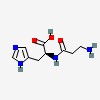 3D/inchi 3D/inchi
|
| Other(deleted CASRN): | 7683-28-5 | |
| ECHA EINECS - REACH Pre-Reg: | 206-169-9 | |
| FDA UNII: | 8HO6PVN24W | |
| Nikkaji Web: | J5.496H | |
| Beilstein Number: | 0087671 | |
| MDL: | MFCD00005207 | |
| XlogP3-AA: | -4.00 (est) | |
| Molecular Weight: | 226.23618000 | |
| Formula: | C9 H14 N4 O3 | |
| BioActivity Summary: | listing | |
| NMR Predictor: | Predict (works with chrome or firefox) | |
Category: cosmetic agents, multi-functional anti-aging peptide
US / EU / FDA / JECFA / FEMA / FLAVIS / Scholar / Patent Information:
| Google Scholar: | Search |
| Google Books: | Search |
| Google Scholar: with word "volatile" | Search |
| Google Scholar: with word "flavor" | Search |
| Google Scholar: with word "odor" | Search |
| Google Patents: | Search |
| US Patents: | Search |
| EU Patents: | Search |
| Pubchem Patents: | Search |
| PubMed: | Search |
| NCBI: | Search |
Physical Properties:
| Appearance: | white powder (est) |
| Assay: | 95.00 to 100.00 % |
| Food Chemicals Codex Listed: | No |
| Melting Point: | 260.00 °C. @ 760.00 mm Hg |
| Boiling Point: | 656.00 to 657.00 °C. @ 760.00 mm Hg (est) |
| Flash Point: | 663.00 °F. TCC ( 350.70 °C. ) (est) |
| logP (o/w): | -2.972 (est) |
| Soluble in: | |
| water | |
| water, 5.503e+004 mg/L @ 25 °C (est) | |
Organoleptic Properties:
| Odor Description: at 100.00 %. | odorless |
| Odor and/or flavor descriptions from others (if found). | |
Cosmetic Information:
| CosIng: | cosmetic data |
| Cosmetic Uses: |
skin conditioning |
Suppliers:
| AIDP |
| L-Carnosine 99% - 101% |
| AuNutra® Industries |
| L-Carnosine |
| BOC Sciences |
| For experimental / research use only. |
| L-Carnosine 95% |
| Charkit Chemical |
| CARNOSINE,L- |
| Glentham Life Sciences |
| L-Carnosine |
| Indis NV |
| For experimental / research use only. |
| L-Carnosine |
| Jiangyin Healthway |
| L-Carnosine |
| New functional food ingredients |
| Kingyoung Bio Technical |
| Carnosine |
| M.C.Biotec |
| Carnosine |
| Meafo |
| For experimental / research use only. |
| L-Carnosine 99% |
| Penta International |
| L-CARNOSINE |
| Sigma-Aldrich: Sigma |
| For experimental / research use only. |
| L-Carnosine ∼99%, crystalline |
| Symrise |
| Dragosine®
Life Essentials - Actives Odor: characteristic Use: Dragosine® (L-Carnosine) is a nature identical dipeptide (β-Alanyl-L-histidin) present in millimolar concentrations in muscle tissues. It protects cells against oxidative stress. In cosmetic products it is used as an anti-aging ingredient which has powerful anti-oxidant properties that stimulate collagen synthesis.
New data confirm that Dragosine® dose dependently and significantly inhibits IRA-induced MMP-1 expression (in vitro assay) and is able to reduce the number of sunburn cells after UV exposure (ex vivo results). |
| Vigon International |
| Dragosine |
Safety Information:
| Preferred SDS: View | |
| Hazards identification | |
| Classification of the substance or mixture | |
| GHS Classification in accordance with 29 CFR 1910 (OSHA HCS) | |
| None found. | |
| GHS Label elements, including precautionary statements | |
| Pictogram | |
| Hazard statement(s) | |
| None found. | |
| Precautionary statement(s) | |
| None found. | |
| Oral/Parenteral Toxicity: | |
|
oral-mouse LD50 > 14930 mg/kg BEHAVIORAL: MUSCLE CONTRACTION OR SPASTICITY) BEHAVIORAL: SOMNOLENCE (GENERAL DEPRESSED ACTIVITY) LUNGS, THORAX, OR RESPIRATION: RESPIRATORY DEPRESSION United States Patent Document. Vol. #4446149 intraperitoneal-mouse LD50 9087 mg/kg BEHAVIORAL: MUSCLE CONTRACTION OR SPASTICITY) BEHAVIORAL: SOMNOLENCE (GENERAL DEPRESSED ACTIVITY) LUNGS, THORAX, OR RESPIRATION: RESPIRATORY DEPRESSION United States Patent Document. Vol. #4446149 | |
| Dermal Toxicity: | |
| Not determined | |
| Inhalation Toxicity: | |
| Not determined | |
Safety in Use Information:
| Category: | cosmetic agents, multi-functional anti-aging peptide | ||
| Recommendation for laevo-carnosine usage levels up to: | |||
| not for fragrance use. | |||
| Recommendation for laevo-carnosine flavor usage levels up to: | |||
| not for flavor use. | |||
Safety References:
| European Food Safety Authority (EFSA) reference(s): | |
| Scientific Opinion on the substantiation of a health claim related to beta-alanine and increase in physical performance during short-duration, high-intensity exercise pursuant to Article 13(5) of Regulation (EC) No 1924/2006 View page or View pdf | |
| EPI System: | View |
| ClinicalTrials.gov: | search |
| AIDS Citations: | Search |
| Cancer Citations: | Search |
| Toxicology Citations: | Search |
| EPA Substance Registry Services (TSCA): | 305-84-0 |
| EPA ACToR: | Toxicology Data |
| EPA Substance Registry Services (SRS): | Registry |
| Laboratory Chemical Safety Summary : | 439224 |
| National Institute of Allergy and Infectious Diseases: | Data |
| WGK Germany: | 2 |
| (2S)-2-(3-aminopropanoylamino)-3-(1H-imidazol-5-yl)propanoic acid | |
| Chemidplus: | 0000305840 |
| RTECS: | MS3080000 for cas# 305-84-0 |
References:
| (2S)-2-(3-aminopropanoylamino)-3-(1H-imidazol-5-yl)propanoic acid | |
| NIST Chemistry WebBook: | Search Inchi |
| Pubchem (cid): | 439224 |
| Pubchem (sid): | 134974114 |
Other Information:
| (IUPAC): | Atomic Weights of the Elements 2011 (pdf) |
| Videos: | The Periodic Table of Videos |
| tgsc: | Atomic Weights use for this web site |
| (IUPAC): | Periodic Table of the Elements |
| CHEBI: | View |
| CHEMBL: | View |
| Metabolomics Database: | Search |
| KEGG (GenomeNet): | C00386 |
| HMDB (The Human Metabolome Database): | HMDB00033 |
| FooDB: | FDB000511 |
| YMDB (Yeast Metabolome Database): | YMDB01555 |
| Export Tariff Code: | 2933.29.5000 |
| VCF-Online: | VCF Volatile Compounds in Food |
| ChemSpider: | View |
| Wikipedia: | View |
Potential Blenders and core components note
| None Found | ||
Potential Uses:
| None Found |
Occurrence (nature, food, other): note
| found in nature |
Synonyms:
| beta- | alanyl-L-histidine |
| N-b- | alanyl-L-histidine |
| N-(b- | alanyl)-L-histidine |
| (2S)-2-(3- | aminopropanamido)-3-(1H-imidazol-5-yl)propanoic acid |
| (2S)-2-(3- | aminopropanoylamino)-3-(1H-imidazol-5-yl)propanoic acid |
| (2S)-2-(3- | aminopropanoylamino)-3-imidazol-4-ylpropanoic acid |
| L- | carnosine |
| dragosine (Symrise) | |
| ignotine |