Articles:
(1E,6E)-1,7-bis[4-hydroxy-3-(methyloxy)phenyl]hepta-1,6-diene-3,5-dione
Notes:
a yellow-orange dye obtained from tumeric, the powdered root of curcuma longa. it is used in the preparation of curcuma paper and the detection of boron. curcumin appears to possess a spectrum of pharmacological properties, due primarily to its inhibitory effects on metabolic enzymes. Isol. from Curcuma zedoaria (zedoary) and other Curcuma spp. flavouring ingredient. Natural colouring matter used extensively in Indian curries etc. Nutriceutical with anticancer and antiinflammatory props.

-
American International Chemical, Inc. Consistent sources North American supplier for globally sourced ingredients. AIC is a Westborough, MA based ISO Certified sales and marketing company serving the food, pharmaceutical, nutritional, personal care, biotech, and industrial markets of North America since 1972. Our success is a result of a company culture built on customer needs, along with partnerships with global manufacturers committed to the rigors and demands of the North American market. Our team of Sales Representatives, along with our network of strategically located warehouses are ready to supply product when and where you need it. Email: Info Voice: (800) 238-0001 Facebook Twitter Linkedin Products List: View Product(s): 123209 Curcumin CU95SP CURCUMIN (Tumeric) 95% Curcuma Longa
-
-
BOC Sciences Best of Chemicals Supplier Quality supplier of research chemicals and biochemicals including inhibitors, building blocks, GMP Products, impurities and metabolites, APIs for Veterinary, Natural Compounds, ADCs, Stem Cell Molecule and chiral compounds. BOC Sciences provides a wide range of services to support the pharmaceutical industry through all stages of drug discovery including Custom Synthesis of those chemicals that are not in stock, Isotope Labeling Service, Chiral Synthesis and Resolution, Bioconjugation, PEGylation services, analytical services. BOC Sciences is a brand of BOCSCI Inc. We leverage our wide spectrum of business in the fields of development, manufacturing, marketing, and distribution to help you make best-informed decisions tailored to your evolving needs for premium chemicals. Our complete suite of CRO services spans the entire molecule development pipeline including contract research for target identification, building blocks, compound synthesis, biochemical and cellular analysis, preclinical animal tests, and clinical studies. Email: Marketing US Email: Marketing Email: Sales US Email: Sales Voice: 1-631-485-4226 Fax: 1-631-614-7828 US Voice: 1-631-485-4226 US Fax: 1-631-614-7828 Europe 44-203-286-1088 Facebook Twitter Linkedin Blog Get the App! Product(s): 458-37-7 Curcumin >98% Curcumin is the principal curcuminoid of the popular Indian spice turmeric, which is a member of the ginger family (Zingiberaceae).
-
-
Charkit Chemical Corporation The Specialty Chemical Specialists Explore this website to discover the products and services that Charkit provides for your industry and please contact us directly to find out how we can be of service to you. about: Since 1982, Charkit has been committed to expanding the markets we serve as our roster of products and services continues to grow with us. Our substantial portfolio of personal care ingredients now include a wide array of luxury and exotic components to compliment the key products we have always offered. We have expanded our offerings to the nutraceutical, industrial, and resin markets with a growing roster of versatile and unique ingredients. We continue to lead the way in our traditional markets such as Metal and Water Treatment, Imaging, Flavor & Fragrance, Aroma and Food. Our Pharmaceutical offerings continue to expand, still anchored by the Boronic Derivatives that meet the demands of Suzuki coupling reactions. Please contact us to learn how we can help you reach your goals. Email: Sales Voice: 203-299-3220 Fax: 203-299-1355 Facebook Twitter Linkedin Latest News Events Blog Products List: View Product(s): CURCUMIN (BIOAVAILABLE) CURQNETIC CURCUMIN 95% 100 MESH FINE POWDER CURCUMIN 95% GRANULAR CURCUMIN 95% POWDERED
-

-
Glentham Life Sciences Ltd The Chemical, Biochemical & Research Essentials Supplier Glentham Life Sciences is a supplier of fine chemicals and raw materials with warehousing, laboratories and packaging facilities in the UK. With a Glentham Life Sciences account you can view more product details, request quotes and order products online. Email: Info Email: Sales Email: Tech Support Voice: +44 (0) 1225 667798 Fax: +44 (0) 2033 978909 Facebook Twitter Linkedin Google+ News Distribution Products List: View Product(s): GP8291 Curcumin GP7022 Curcumin, pure, 98%
-
| CAS Number: | 458-37-7 | 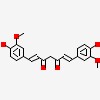 3D/inchi 3D/inchi
|
| Other(deleted CASRN): | 15845-47-3 | |
| ECHA EINECS - REACH Pre-Reg: | 207-280-5 | |
| FDA UNII: | IT942ZTH98 | |
| Nikkaji Web: | J5.762B | |
| Beilstein Number: | 2306965 | |
| MDL: | MFCD00008365 | |
| XlogP3-AA: | 3.20 (est) | |
| Molecular Weight: | 368.38560000 | |
| Formula: | C21 H20 O6 | |
| BioActivity Summary: | listing | |
| NMR Predictor: | Predict (works with chrome or firefox) | |
Category: coloring agents
US / EU / FDA / JECFA / FEMA / FLAVIS / Scholar / Patent Information:
| Google Scholar: | Search |
| Google Books: | Search |
| Google Scholar: with word "volatile" | Search |
| Google Scholar: with word "flavor" | Search |
| Google Scholar: with word "odor" | Search |
| Perfumer and Flavorist: | Search |
| Google Patents: | Search |
| US Patents: | Search |
| EU Patents: | Search |
| Pubchem Patents: | Search |
| PubMed: | Search |
| NCBI: | Search |
| FDA/DG SANTE Petitions, Reviews, Notices: | |
| GRN 460 | Curcuminoids purified from turmeric (Curcuma longa L.) View - notice PDF |
| GRN 686 | Curcumin from turmeric (Curcuma longa L.) View - notice PDF |
| GRN 822 | Curcumin View - notice PDF |
| JECFA Food Additive: | Curcumin |
| GSFA Codex: | Curcumin (100(i)) |
| DG SANTE Food Additives: | curcumin |
Physical Properties:
| Appearance: | orange yellow crystalline powder (est) |
| Assay: | 95.00 to 100.00 % |
| Food Chemicals Codex Listed: | No |
| Melting Point: | 181.00 to 183.00 °C. @ 760.00 mm Hg |
| logP (o/w): | 3.290 (est) |
| Soluble in: | |
| alcohol | |
| water, 7.475 mg/L @ 25 °C (est) | |
| Insoluble in: | |
| water | |
Organoleptic Properties:
| Odor and/or flavor descriptions from others (if found). | |
Cosmetic Information:
| CosIng: | cosmetic data2 |
| CosIng: | cosmetic data |
| Cosmetic Uses: |
antioxidants |
Suppliers:
| AIDP |
| Turmeric 95% Curcumin 95% min. |
| Alfa Biotechnology |
| For experimental / research use only. |
| Curcumin 98% |
| American International Chemical, LLC. |
| CURCUMIN (Tumeric) 95% Curcuma Longa |
| American International Chemical, LLC. |
| Curcumin |
| Asean Aromatics |
| Curcumin 95% |
| BOC Sciences |
| For experimental / research use only. |
| Curcumin >98%
Odor: characteristic Use: Curcumin is the principal curcuminoid of the popular Indian spice turmeric, which is a member of the ginger family (Zingiberaceae). |
| Charkit Chemical |
| CURCUMIN (BIOAVAILABLE) CURQNETIC |
| Charkit Chemical |
| CURCUMIN 95% 100 MESH FINE POWDER |
| Charkit Chemical |
| CURCUMIN 95% GRANULAR |
| Charkit Chemical |
| CURCUMIN 95% POWDERED |
| Chr. Hansen A/S |
| Turmeric
Flavor: characteristic longa L, commonly known as turmeric, is a member of the ginger family. The root plant, native to India, is widely used by locals to spice and tint food and has gained popularity in the West in products such as curry powder. The primary pigment in turmeric is curcumin.
Turmeric is greenish yellow by nature and is typically used to color products such as beverages, ice cream and confectionery. Turmeric-based colors are very tolerant of heat and pH extremes.
Interestingly, in addition to its coloring properties, the pigment curcumin displays antioxidant characteristics. |
| Coompo |
| For experimental / research use only. |
| Curcumin from Plants ≥96%
Odor: characteristic Use: Antiedemic, antiinflammatory agent. Bile stimulant showing hepatoprotective props. Possesses bactericidal and fungicidal props. Antitumour agent functioning through apoptosis. Nutriceutical. Shows antioxidant activity.
In both in vitro and animal studies, curcumin has shown antitumor, antioxidant, antiarthritic, antiamyloid, anti-ischemic, and anti-inflammatory properties. |
| ExtraSynthese |
| For experimental / research use only. |
| Curcumin (HPLC) ≥97.5% |
| Foodchem International |
| Curcumin Extract |
| Glentham Life Sciences |
| Curcumin, pure, 98% |
| Glentham Life Sciences |
| Curcumin |
| Indenta Group |
| Curcumin Powder |
| Indo World Trading |
| Curcumin 95% |
| Maypro Industries |
| Curcumin |
| Minerva Flavours and Fragrances |
| Curcumin 95% |
| Nacalai USA |
| For experimental / research use only. |
| Curcumin 1 |
| P.L. Thomas |
| Curcumin |
| Pangaea Sciences |
| Curcumin |
| Plant Lipids |
| Curcumin Powder |
| Rung International |
| Curcumin
Odor: characteristic Use: The turmeric roots are pulled from the ground and separated from the rest of the plant and dried. The dried rhizome is is ground and curcumin is extracted using a solvent. It has to be de-flavored before use in certain applications. Oleoresin is made be evaporating the mother liquor to a non pourable syrup. |
| Sigma-Aldrich: Sigma |
| For experimental / research use only. |
| Curcumin from Curcuma longa (Turmeric), powder |
| Synthite Industries |
| Curcumin 95% |
| E-books and Brochures |
| Synthite Industries |
| Curcumin |
Safety Information:
| Preferred SDS: View | |
| Hazards identification | |
| Classification of the substance or mixture | |
| GHS Classification in accordance with 29 CFR 1910 (OSHA HCS) | |
| None found. | |
| GHS Label elements, including precautionary statements | |
| Pictogram | |
| Hazard statement(s) | |
| None found. | |
| Precautionary statement(s) | |
| None found. | |
| Oral/Parenteral Toxicity: | |
|
oral-rat LD50 > 2000 mg/kg Planta Medica. Vol. 64, Pg. 353, 1998. oral-mouse LD50 > 2000 mg/kg Journal of Pharmacy and Pharmacology. Vol. 25, Pg. 447, 1973. intraperitoneal-mouse LD50 1500 mg/kg Indian Journal of Medical Research. Vol. 64, Pg. 601, 1976. | |
| Dermal Toxicity: | |
| Not determined | |
| Inhalation Toxicity: | |
| Not determined | |
Safety in Use Information:
| Category: | coloring agents | ||
| Recommendation for curcumin usage levels up to: | |||
| not for fragrance use. | |||
Safety References:
| European Food Safety Authority (EFSA) reference(s): | |
| Scientific Opinion on the re-evaluation of curcumin (E 100) as a food additive View page or View pdf | |
| Refined exposure assessment for curcumin (E 100) View page or View pdf | |
| Curcumin and normal functioning of joints: evaluation of a health claim pursuant to Article 13(5) of Regulation (EC) No 1924/2006 View page or View pdf | |
| EPI System: | View |
| ClinicalTrials.gov: | search |
| Daily Med: | search |
| Chemical Carcinogenesis Research Information System: | Search |
| AIDS Citations: | Search |
| Cancer Citations: | Search |
| Toxicology Citations: | Search |
| Carcinogenic Potency Database: | Search |
| EPA GENetic TOXicology: | Search |
| EPA Substance Registry Services (TSCA): | 458-37-7 |
| EPA ACToR: | Toxicology Data |
| EPA Substance Registry Services (SRS): | Registry |
| Laboratory Chemical Safety Summary : | 969516 |
| National Institute of Allergy and Infectious Diseases: | Data |
| WGK Germany: | 3 |
| (1E,6E)-1,7-bis(4-hydroxy-3-methoxyphenyl)hepta-1,6-diene-3,5-dione | |
| Chemidplus: | 0000458377 |
| EPA/NOAA CAMEO: | hazardous materials |
| RTECS: | MI5230000 for cas# 458-37-7 |
References:
| (1E,6E)-1,7-bis(4-hydroxy-3-methoxyphenyl)hepta-1,6-diene-3,5-dione | |
| NIST Chemistry WebBook: | Search Inchi |
| Canada Domestic Sub. List: | 458-37-7 |
| Pubchem (cid): | 969516 |
| Pubchem (sid): | 134973130 |
Other Information:
| (IUPAC): | Atomic Weights of the Elements 2011 (pdf) |
| Videos: | The Periodic Table of Videos |
| tgsc: | Atomic Weights use for this web site |
| (IUPAC): | Periodic Table of the Elements |
| CHEBI: | View |
| CHEMBL: | View |
| KEGG (GenomeNet): | C10443 |
| HMDB (The Human Metabolome Database): | HMDB02269 |
| FooDB: | FDB012292 |
| Export Tariff Code: | 2914.50.2000 |
| FDA Listing of Food Additive Status: | View |
| FDA Color Additive Status List | View |
| VCF-Online: | VCF Volatile Compounds in Food |
| Wikipedia: | View |
| Formulations/Preparations: derivatives: tincture (20% in 60% ethanol), fluid extract, & oleoresin. deriv of turmeric | |
Potential Blenders and core components note
| None Found | ||
Potential Uses:
| cosmetic colorants |
Occurrence (nature, food, other): note
| ginger plant Search Trop Picture | |
| ginger rhizome Search Trop Picture | |
| turmeric Search Trop Picture | |
| turmeric plant Search Trop Picture | |
| turmeric rhizome Search Trop Picture | |
| turmeric root Search Trop Picture | |
| turmeric sap Search Trop Picture | |
| turmeric tubers Search Trop Picture | |
| zedoary Search Trop Picture |
Synonyms:
| c.i. 75300 | |
| C.I. natural yellow 3 | |
| ci 75300 | |
| CI natural yellow 3 | |
| curcumine | |
| curcuminoids purified from turmeric (curcuma longa l.) | |
| curcurmin | |
| 1,5- | di(vanillyliden)acetylaceton |
| 1,5- | divanillyliden-2,4-pentandion |
| 1,6- | heptadiene-3,5-dione, 1,7-bis(4-hydroxy-3-methoxyphenyl)-, (1E,6E)- |
| 1,6- | heptadiene-3,5-dione, 1,7-bis(4-hydroxy-3-methoxyphenyl)-, (E,E)- |
| (1E,6E)-1,7-bis[4- | hydroxy-3-(methyloxy)phenyl]hepta-1,6-diene-3,5-dione |
| (1E,6E)-1,7-bis(4- | hydroxy-3-methoxyphenyl)-1,6-heptadiene-3,5-dione |
| (E,E)-1,7-bis(4- | hydroxy-3-methoxyphenyl)-1,6-heptadiene-3,5-dione |
| (1E,6E)-1,7-bis(4- | hydroxy-3-methoxyphenyl)hepta-1,6-diene-3,5-dione |
| 1,7-bis(4- | hydroxy-3-methoxyphenyl)hepta-1,6-diene-3,5-dione |
| natural yellow 3 |