|
Category: indirect food additives: adhesives and components of coatings
US / EU / FDA / JECFA / FEMA / FLAVIS / Scholar / Patent Information:
Physical Properties:
| Appearance: | colorless clear liquid (est) |
| Assay: | 95.00 to 100.00 %
|
| Food Chemicals Codex Listed: | No |
| Specific Gravity: | 0.92900 to 0.93500 @ 25.00 °C.
|
| Pounds per Gallon - (est).: | 7.730 to 7.780
|
| Refractive Index: | 1.41800 to 1.42400 @ 20.00 °C.
|
| Boiling Point: | 164.00 to 166.00 °C. @ 760.00 mm Hg
|
| Vapor Pressure: | 1.710000 mmHg @ 25.00 °C. |
| Vapor Density: | 4.0 ( Air = 1 ) |
| Flash Point: | 143.00 °F. TCC ( 61.67 °C. )
|
| logP (o/w): | 0.026 (est) |
| Soluble in: |
| | alcohol | | | water, 6.512e+005 mg/L @ 25 °C (est) | | | water, 1.00E+06 mg/L @ 25 °C (exp) |
Organoleptic Properties:
| |
| Odor and/or flavor descriptions from others (if found). |
| |
| |
Cosmetic Information:
Suppliers:
| Arkema |
| Diacetone Alcohol
Odor: characteristic Use: It can also be used for the treatment of textiles and leather, in chemical synthesis or as a cleaning solvent. |
| ECSA Chemicals |
| DIACETONE ALCOHOL RE-PURE, ML 1000
|
| ECSA TRADE THE MOST UPDATED FINANCIAL PUBLICATION ON THE WORLD OF CHEMISTRY |
| ECSA Chemicals |
| DIACETONE ALCOHOL
|
| EMD Millipore |
| For experimental / research use only. |
| 4-Hydroxy-4-methyl-2-pentanone
|
| Penta International |
| DIACETONE ALCOHOL
|
| Santa Cruz Biotechnology |
| For experimental / research use only. |
| 4-Hydroxy-4-methyl-2-pentanone ≥98%
|
| Shiva Chemicals and Pharmaceuticals |
| Diacetone Alcohol
|
| Sigma-Aldrich: Aldrich |
| For experimental / research use only. |
| 4-Hydroxy-4-methyl-2-pentanone 99%
|
| Silver Fern Chemical |
| Diacetone Alcohol
Odor: characteristic Use: Diacetone alcohol is mainly used as a solvent in industrial and professional applications in coatings, cleaning, oil and gas filed drilling, lubricants, metal working fluids, polymer processing and water treatment. It is found in a number of consumer products such as adhesives, inks, paints, household cleaners and agrochemicals. The substance is also a chemical intermediate for the preparation of other compounds. |
| TCI AMERICA |
| For experimental / research use only. |
| Diacetone Alcohol >98.0%(GC)
|
| Universal Preserv-A-Chem Inc. |
| DIACETONE ALCOHOL
Odor: characteristic Use: It is used in cellulose ester lacquers, particularly of the brushing type, where it produces brilliant gloss and hard film and where its lack of odor is desirable. It is used in lacquer thinners, dopes, wood stains, wood preservatives and printing pastes; in coating compositions for paper and textiles; permanent markers; in making artificial silk and leather; in imitation gold leaf; in celluloid cements; as a preservative for animal tissue; in metal cleaning compounds; in the manufacture of photographic film; and in hydraulic brake fluids, where it is usually mixed with an equal volume of castor oil. |
| Wedor Corporation |
| DIACETONE ALCOHOL
|
Safety Information:
| Preferred SDS: View |
| European information : |
| Most important hazard(s): | | Xi - Irritant |
R 36 - Irritating to eyes.
S 02 - Keep out of the reach of children.
S 25 - Avoid contact with eyes.
S 26 - In case of contact with eyes, rinse immediately with plenty of water and seek medical advice.
S 36/39 - Wear suitable clothing and eye/face protection.
|
| |
| Hazards identification |
| |
| Classification of the substance or mixture |
| GHS Classification in accordance with 29 CFR 1910 (OSHA HCS) |
| None found. |
| GHS Label elements, including precautionary statements |
| |
| Pictogram | |
| |
| Hazard statement(s) |
| None found. |
| Precautionary statement(s) |
| None found. |
| Oral/Parenteral Toxicity: |
gavage-rat LD50 [sex: M] 4920 mg/kg
(Myers et al., 1977a)
oral-rat LD50 4000 mg/kg
(Smyth, 1946a)
oral-mouse LD50 3950 mg/kg
(Smyth, 1946a)
intraperitoneal-mouse LD50 933 mg/kg
Shell Chemical Company. Unpublished Report. Vol. -, Pg. 3, 1961.
oral-mouse LD50 3950 mg/kg
Journal of the American Pharmaceutical Association, Scientific Edition. Vol. 45, Pg. 669, 1956.
intramuscular-rabbit LDLo 2792 mg/kg
BEHAVIORAL: COMA
LUNGS, THORAX, OR RESPIRATION: RESPIRATORY DEPRESSION
Journal of Pharmacology and Experimental Therapeutics. Vol. 33, Pg. 175, 1928.
intravenous-rabbit LDLo 2792 mg/kg
LUNGS, THORAX, OR RESPIRATION: RESPIRATORY DEPRESSION
Journal of Pharmacology and Experimental Therapeutics. Vol. 33, Pg. 175, 1928.
oral-rabbit LDLo 4653 mg/kg
LUNGS, THORAX, OR RESPIRATION: RESPIRATORY DEPRESSION
Journal of Pharmacology and Experimental Therapeutics. Vol. 33, Pg. 175, 1928.
oral-rat LD50 2520 mg/kg
LIVER: OTHER CHANGES
BEHAVIORAL: CONVULSIONS OR EFFECT ON SEIZURE THRESHOLD
BEHAVIORAL: TREMOR
National Technical Information Service. Vol. OTS0557732
intravenous-rat LDLo 3024 mg/kg
BEHAVIORAL: COMA
BEHAVIORAL: SOMNOLENCE (GENERAL DEPRESSED ACTIVITY)
Journal of Pharmacology and Experimental Therapeutics. Vol. 33, Pg. 175, 1928.
|
| Dermal Toxicity: |
skin-rabbit LD50 13500 mg/kg
Raw Material Data Handbook, Vol.1: Organic Solvents, 1974. Vol. 1, Pg. 21, 1974.
|
| Inhalation Toxicity: |
inhalation-human TCLo 100 ppm
SENSE ORGANS AND SPECIAL SENSES: OTHER: EYE
BEHAVIORAL: HEADACHE
GASTROINTESTINAL: NAUSEA OR VOMITING
Raw Material Data Handbook, Vol.1: Organic Solvents, 1974. Vol. 1, Pg. 21, 1974.
inhalation-human TCLo 400 ppm
LUNGS, THORAX, OR RESPIRATION: OTHER CHANGES
Raw Material Data Handbook, Vol.1: Organic Solvents, 1974. Vol. 1, Pg. 21, 1974.
inhalation-rat LCLo 1000 ppm/4H
National Technical Information Service. Vol. OTS0557741
|
Safety in Use Information:
| Category: | indirect food additives: adhesives and components of coatings |
| Recommendation for diacetone alcohol usage levels up to: | | | not for fragrance use.
|
| |
| Maximised Survey-derived Daily Intakes (MSDI-EU): | 0.085 (μg/capita/day) |
| Modified Theoretical Added Maximum Daily Intake (mTAMDI): | 1600 (μg/person/day) |
| Threshold of Concern: | 1800 (μg/person/day) |
| Structure Class: | I |
| |
| Food categories according to Commission Regulation EC No. 1565/2000 (EC, 2000) in FGE.06 (EFSA, 2002a). According to the Industry the "normal" use is defined as the average of reported usages and "maximum use" is defined as the 95th percentile of reported usages (EFSA, 2002i). |
| Note: mg/kg = 0.001/1000 = 0.000001 = 1/1000000 = ppm. |
| | average usage mg/kg | maximum usage mg/kg |
| Dairy products, excluding products of category 02.0 (01.0): | 3.00000 | 15.00000 |
| Fats and oils, and fat emulsions (type water-in-oil) (02.0): | 2.00000 | 10.00000 |
| Edible ices, including sherbet and sorbet (03.0): | 3.00000 | 15.00000 |
| Processed fruit (04.1): | 2.00000 | 10.00000 |
| Processed vegetables (incl. mushrooms & fungi, roots & tubers, pulses and legumes), and nuts & seeds (04.2): | - | - |
| Confectionery (05.0): | 4.00000 | 20.00000 |
| Chewing gum (05.0): | - | - |
| Cereals and cereal products, incl. flours & starches from roots & tubers, pulses & legumes, excluding bakery (06.0): | 2.00000 | 10.00000 |
| Bakery wares (07.0): | 5.00000 | 25.00000 |
| Meat and meat products, including poultry and game (08.0): | 1.00000 | 5.00000 |
| Fish and fish products, including molluscs, crustaceans and echinoderms (MCE) (09.0): | 1.00000 | 5.00000 |
| Eggs and egg products (10.0): | - | - |
| Sweeteners, including honey (11.0): | - | - |
| Salts, spices, soups, sauces, salads, protein products, etc. (12.0): | 2.00000 | 10.00000 |
| Foodstuffs intended for particular nutritional uses (13.0): | 3.00000 | 15.00000 |
| Non-alcoholic ("soft") beverages, excl. dairy products (14.1): | 2.00000 | 10.00000 |
| Alcoholic beverages, incl. alcohol-free and low-alcoholic counterparts (14.2): | 4.00000 | 20.00000 |
| Ready-to-eat savouries (15.0): | 5.00000 | 25.00000 |
| Composite foods (e.g. casseroles, meat pies, mincemeat) - foods that could not be placed in categories 01.0 - 15.0 (16.0): | 2.00000 | 10.00000 |
Safety References:
| European Food Safety Athority(EFSA): | Flavor usage levels; Subacute, Subchronic, Chronic and Carcinogenicity Studies; Developmental / Reproductive Toxicity Studies; Genotoxicity Studies... |
| European Food Safety Authority (EFSA) reference(s): |
Opinion of the Scientific Panel on food additives, flavourings, processing aids and materials in contact with food (AFC) related to Flavouring Group Evaluation 11 (FGE.11): Aliphatic dialcohols, diketones, and hydroxyketones from chemical group 10 (Commission Regulation (EC) No 1565/2000 of 18 July 2000)
View page or View pdf |
Flavouring Group Evaluation 11, Revision 1 (FGE.11Rev1) - Aliphatic dialcohols, diketones, and hydroxyketones from chemical group 10 - Scientific Opinion of the Panel on Food Additives, Flavourings, Processing Aids and Materials in contact with Food (AFC)
View page or View pdf |
Scientific Opinion on Flavouring Group Evaluation 11, Revision 2 (FGE.11Rev2): Aliphatic dialcohols, diketones, and hydroxyketones from chemical groups 8 and 10
View page or View pdf |
Scientific Opinion on Flavouring Group Evaluation 11, Revision 3 (FGE.11Rev3): Aliphatic dialcohols, diketones, and hydroxyketones from chemical groups 8 and 10
View page or View pdf |
| EPI System: | View |
| NIOSH International Chemical Safety Cards: | search |
| NIOSH Pocket Guide: | search |
| Chemical Carcinogenesis Research Information System: | Search |
| AIDS Citations: | Search |
| Cancer Citations: | Search |
| Toxicology Citations: | Search |
| EPA Substance Registry Services (TSCA): | 123-42-2 |
| EPA ACToR: | Toxicology Data |
| EPA Substance Registry Services (SRS): | Registry |
| Laboratory Chemical Safety Summary : | 31256 |
| National Institute of Allergy and Infectious Diseases: | Data |
| WISER: | UN 1148 |
| WGK Germany: | 1 |
| | 4-hydroxy-4-methylpentan-2-one |
| Chemidplus: | 0000123422 |
| EPA/NOAA CAMEO: | hazardous materials |
| RTECS: | 123-42-2 |
References:
Other Information:
Potential Blenders and core components notePotential Uses:
Occurrence (nature, food, other): noteSynonyms:
| | acetonyl dimethyl carbinol | | | acetonyldimethylcarbinol | | | diketone alcohol | | | dimethyl acetonyl carbinol | | 4- | hydroxy-2-keto-4-methylpentane | | 2- | hydroxy-2-methyl-4-pentanone | | 3- | hydroxy-3-methyl-2-pentanone | | 4- | hydroxy-4-methyl pentan-2-one | | 4- | hydroxy-4-methyl-2-pentanone | | 4- | hydroxy-4-methyl-pentan-2-one | | 4- | hydroxy-4-methylpentan-2-one | | 2- | methyl-2-pentanol-4-one | | 4- | methyl-4-oxidanyl-pentan-2-one | | 2- | pentanone, 4-hydroxy-4-methyl- | | | pyranton A | | | tyranton |
Articles:
|



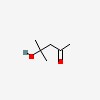 3D/inchi