|
Category: herbicides / pesticides
US / EU / FDA / JECFA / FEMA / FLAVIS / Scholar / Patent Information:
Physical Properties:
| Appearance: | white solid (est) |
| Assay: | 95.00 to 100.00 %
|
| Food Chemicals Codex Listed: | No |
| Melting Point: | 144.50 °C. @ 760.00 mm Hg
|
| Boiling Point: | 270.00 °C. @ 760.00 mm Hg
|
| Vapor Pressure: | 0.001010 mmHg @ 25.00 °C. (est) |
| Flash Point: | 260.00 °F. TCC ( 126.80 °C. ) (est)
|
| logP (o/w): | 2.740 |
| Soluble in: |
| | water, 21.2 mg/L @ 25 °C (exp) | | | water, 149.4 mg/L @ 25 °C (est) |
Organoleptic Properties:
| |
| Odor and/or flavor descriptions from others (if found). |
| |
| |
Cosmetic Information:
Suppliers:
Safety Information:
| Preferred SDS: View |
| |
| Hazards identification |
| |
| Classification of the substance or mixture |
| GHS Classification in accordance with 29 CFR 1910 (OSHA HCS) |
| None found. |
| GHS Label elements, including precautionary statements |
| |
| Pictogram | |
| |
| Hazard statement(s) |
| None found. |
| Precautionary statement(s) |
| None found. |
| Oral/Parenteral Toxicity: |
oral-guinea pig LD50 681 mg/kg
Pesticide Chemicals Official Compendium, Association of the American Pesticide Control Officials, Inc., 1966. Vol. -, Pg. 337, 1966.
unreported-mammal (species unspecified) LD50 1000 mg/kg
"Chemistry of Pesticides," Melnikov, N.N., New York, Springer-Verlag New York, Inc., 1971Vol. -, Pg. 144, 1971.
intraperitoneal-mouse LD50 360 mg/kg
Farmaco, Edizione Scientifica. Vol. 41, Pg. 41, 1986.
oral-mouse LD50 2056 mg/kg
"Pesticide Index," Frear, E.H., ed., State College, PA, College Science Pub., 1969Vol. 5, Pg. 73, 1976.
oral-rabbit LD50 270 mg/kg
BEHAVIORAL: SOMNOLENCE (GENERAL DEPRESSED ACTIVITY)
LIVER: OTHER CHANGES
Food and Cosmetics Toxicology. Vol. 6, Pg. 261, 1968.
oral-rat LD50 2710 mg/kg
Residue Reviews. Vol. 10, Pg. 97, 1965.
unreported-rat LD50 500 mg/kg
"Chemistry of Pesticides," Melnikov, N.N., New York, Springer-Verlag New York, Inc., 1971Vol. -, Pg. 145, 1971.
|
| Dermal Toxicity: |
skin-mouse LD > 200 mg/kg
SENSE ORGANS AND SPECIAL SENSES: OTHER CHANGES: OLFACTION
SENSE ORGANS AND SPECIAL SENSES: DEVIATED NASAL SEPTUM: OLFACTION
Neurotoxicology. Vol. 15, Pg. 287, 1994.
skin-rabbit LD50 1350 mg/kg
Guide to the Chemicals Used in Crop Protection. Vol. 6, Pg. 177, 1973.
|
| Inhalation Toxicity: |
|
Not determined
|
Safety in Use Information:
| Category: | herbicides / pesticides |
| Recommendation for dichlobenil usage levels up to: | | | not for fragrance use.
|
| |
| Recommendation for dichlobenil flavor usage levels up to: |
| | not for flavor use.
|
Safety References:
| European Food Safety Authority (EFSA) reference(s): |
Reasoned opinion on the review of the existing maximum residue levels (MRLs) for dichlobenil according to Article 12 of Regulation (EC) No 396/2005
View page or View pdf |
Protocol for the evaluation of data concerning the necessity of the application of herbicide active substances to control a serious danger to plant health which cannot be contained by other available means, including non-chemical methods
View page or View pdf |
| EPI System: | View |
| NIOSH International Chemical Safety Cards: | search |
| Chemical Carcinogenesis Research Information System: | Search |
| Cancer Citations: | Search |
| Toxicology Citations: | Search |
| EPA GENetic TOXicology: | Search |
| EPA ACToR: | Toxicology Data |
| EPA Substance Registry Services (SRS): | Registry |
| Laboratory Chemical Safety Summary : | 3031 |
| National Institute of Allergy and Infectious Diseases: | Data |
| WGK Germany: | 2 |
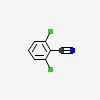
| | 2,6-dichlorobenzonitrile |
| Chemidplus: | 0001194656 |
| EPA/NOAA CAMEO: | hazardous materials |
| RTECS: | 1194-65-6 |
References:
Other Information:
| (IUPAC): | Atomic Weights of the Elements 2011 (pdf) |
| Videos: | The Periodic Table of Videos |
| tgsc: | Atomic Weights use for this web site |
| (IUPAC): | Periodic Table of the Elements |
| CHEBI: | View |
| CHEMBL: | View |
| KEGG (GenomeNet): | C11040 |
| HMDB (The Human Metabolome Database): | Search |
| Export Tariff Code: | 2926.90.0400 |
| ChemSpider: | View |
| Wikipedia: | View |
Formulations/Preparations:
•usepaopp pesticide code 027401; trade names: casoron, prefix d, nia 5996, h 133, du-sprex, norosac.
•59% wettable powder; 75% granules.
•available formulations are 'casoron' wp, 'casoron g', containing 45% & 6.75% dichlobenil respectively.
•technical grade dichlobenil is > or =98% pure.
•discontinued trade names: barrier; decabane; du-sprex; dyclomec; prefix d; sartax d; super granusol d.
•fydulan (granules; combination of dichlobenil and dalapon); fydulex; cyclanit (dispersible powder; a combination of dichlobenil and monolinuron).
•technical grade active ingredient: not identifiedsolid (98 to 99.5%); manufacturing product: not identifiedsolid (85%), wettable powder (85%); end use product: granular (1 to 10%), liquid-ready to use (0.5%), soluble concentratesolid (0.5%), wettable powder (0.55 to 85%)
•trade names: decabane, cyclomec, niagara 5006 ...
•dichlobenil is formulated as 85% ai wettable powder, 1-10% ai granular formulation, 0.5% ai soluble concentrate, and 0.5-85% ai wettable powder
|
Potential Blenders and core components notePotential Uses:
Occurrence (nature, food, other): noteSynonyms:
| | benzonitrile, 2,6-dichloro- | | | casoron G | | | casoron G-10 | | | decabane | | 1,3- | dichloro-2-cyanobenzene | | 2,6- | dichlorobenzenecarbonitrile | | 2,6- | dichlorobenzoic acid nitrile | | 2,6- | dichlorobenzonitrile | | 2,6- | dichlorocyanobenzene | | 2,6- | dichlorophenyl cyanide | | | dyclomec | | | niagara 5996 | | | norosac | | | surfassol |
Articles:
| PubMed: | Early cell-wall modifications of maize cell cultures during habituation to dichlobenil. |
| PubMed: | Sensitivity of Aspergillus nidulans to the cellulose synthase inhibitor dichlobenil: insights from wall-related genes' expression and ultrastructural hyphal morphologies. |
| PubMed: | Degradation of three benzonitrile herbicides by Aminobacter MSH1 versus soil microbial communities: pathways and kinetics. |
| PubMed: | Ensuring selectivity and sensitivity by timed- and ultra-selective reaction monitoring during gas chromatography-tandem mass spectrometric determination of pesticides. |
| PubMed: | Dichlobenil and 2,6-dichlorobenzamide (BAM) dissipation in topsoil and deposits from groundwater environment within the boreal region in southern Finland. |
| PubMed: | Mechanisms of permanent loss of olfactory receptor neurons induced by the herbicide 2,6-dichlorobenzonitrile: effects on stem cells and noninvolvement of acute induction of the inflammatory cytokine IL-6. |
| PubMed: | Emerging pesticide metabolites in groundwater and surface water as determined by the application of a multimethod for 150 pesticide metabolites. |
| PubMed: | Enhanced resistance to the cellulose biosynthetic inhibitors, thaxtomin A and isoxaben in Arabidopsis thaliana mutants, also provides specific co-resistance to the auxin transport inhibitor, 1-NPA. |
| PubMed: | Purification and characterization of a soluble β-1,4-glucan from bean (Phaseolus vulgaris L.)-cultured cells dehabituated to dichlobenil. |
| PubMed: | Optimization of an immunoassay of 2,6-dichlorobenzamide (BAM) and development of regenerative surfaces by immunosorbent modification with newly synthesised BAM hapten library. |
| PubMed: | Biotransformation of benzonitrile herbicides via the nitrile hydratase-amidase pathway in rhodococci. |
| PubMed: | Cellulose biosynthesis inhibitors: comparative effect on bean cell cultures. |
| PubMed: | Gas chromatography/isotope ratio mass spectrometry of recalcitrant target compounds: performance of different combustion reactors and strategies for standardization. |
| PubMed: | C and N isotope fractionation during biodegradation of the pesticide metabolite 2,6-dichlorobenzamide (BAM): potential for environmental assessments. |
| PubMed: | Simultaneous analysis of pesticides from different chemical classes by using a derivatisation step and gas chromatography-mass spectrometry. |
| PubMed: | Dichlobenil and 2,6-dichlorobenzamide (BAM) in the environment: what are the risks to humans and biota? |
| PubMed: | Inherent mineralization of 2,6-dichlorobenzamide (BAM) in unsaturated zone and aquifers--effect of initial concentrations and adaptation. |
| PubMed: | Changes in cinnamic acid derivatives associated with the habituation of maize cells to dichlobenil. |
| PubMed: | Before the curtain falls: endocrine-active pesticides--a German contamination legacy. |
| PubMed: | Analysis and environmental concentrations of the herbicide dichlobenil and its main metabolite 2,6-dichlorobenzamide (BAM): a review. |
| PubMed: | Adsorption of diuron and dichlobenil on multiwalled carbon nanotubes as affected by lead. |
| PubMed: | Deepening into the proteome of maize cells habituated to the cellulose biosynthesis inhibitor dichlobenil. |
| PubMed: | Habituation to thaxtomin A in hybrid poplar cell suspensions provides enhanced and durable resistance to inhibitors of cellulose synthesis. |
| PubMed: | The phenolic profile of maize primary cell wall changes in cellulose-deficient cell cultures. |
| PubMed: | Unraveling the biochemical and molecular networks involved in maize cell habituation to the cellulose biosynthesis inhibitor dichlobenil. |
| PubMed: | Plasticity of xyloglucan composition in bean (Phaseolus vulgaris)-cultured cells during habituation and dehabituation to lethal concentrations of dichlobenil. |
| PubMed: | Callose implication in stomatal opening and closure in the fern Asplenium nidus. |
| PubMed: | Hydrolysis of benzonitrile herbicides by soil actinobacteria and metabolite toxicity. |
| PubMed: | Development of a multiresidue method for the determination of multiclass pesticides in soil using GC. |
| PubMed: | Permeation of herbicidal dichlobenil from a Casoron formulation through nitrile gloves. |
| PubMed: | Habituation and dehabituation to dichlobenil: simply the equivalent of Penélope's weaving and unweaving process? |
| PubMed: | The role of callose in guard-cell wall differentiation and stomatal pore formation in the fern Asplenium nidus. |
| PubMed: | Competitive biodegradation of dichlobenil and atrazine coexisting in soil amended with a char and citrate. |
| PubMed: | Toxicological study of pesticides in air and precipitations of Paris by means of a bioluminescence method. |
| PubMed: | Microtubule involvement in the deposition of radial fibrillar callose arrays in stomata of the fern Asplenium nidus L. |
| PubMed: | Human cord blood CD133+ stem cells transplanted to nod-scid mice provide conditions for regeneration of olfactory neuroepithelium after permanent damage induced by dichlobenil. |
| PubMed: | High peroxidase activity and stable changes in the cell wall are related to dichlobenil tolerance. |
| PubMed: | The most-probable-number enumeration of dichlobenil and 2,6-dichlorobenzamide (BAM) degrading microbes in Finnish aquifers. |
| PubMed: | A methodology to determine pesticides pollution sources in water catchments: study case (Belgium). |
| PubMed: | Novel type II cell wall architecture in dichlobenil-habituated maize calluses. |
| PubMed: | GC-MS analysis of dichlobenil and its metabolites in groundwater. |
| PubMed: | Sorption of polar and nonpolar aromatic compounds to four surface soils of eastern China. |
| PubMed: | Sorption of aromatic compounds to clay mineral and model humic substance-clay complex: effects of solute structure and exchangeable cation. |
| PubMed: | Habituation of bean (Phaseolus vulgaris) cell cultures to Quinclorac and analysis of the subsequent cell wall modifications. |
| PubMed: | Microbial degradation of the benzonitrile herbicides dichlobenil, bromoxynil and ioxynil in soil and subsurface environments--insights into degradation pathways, persistent metabolites and involved degrader organisms. |
| PubMed: | [Toward a better knowledge of the pesticides used by municipality in rural society: example of Limousin Region (France)]. |
| PubMed: | Increase in XET activity in bean (Phaseolus vulgaris L.) cells habituated to dichlobenil. |
| PubMed: | Microbial degradation pathways of the herbicide dichlobenil in soils with different history of dichlobenil-exposure. |
| PubMed: | Demonstrating formation of potentially persistent transformation products from the herbicides bromoxynil and ioxynil using liquid chromatography-tandem mass spectrometry (LC-MS/MS). |
| PubMed: | Degradation of the herbicide dichlobenil and its metabolite BAM in soils and subsurface sediments. |
| PubMed: | Degradation and mineralization of nanomolar concentrations of the herbicide dichlobenil and its persistent metabolite 2,6-dichlorobenzamide by Aminobacter spp. isolated from dichlobenil-treated soils. |
| PubMed: | Mineralisation of 2,6-dichlorobenzamide (BAM) in dichlobenil-exposed soils and isolation of a BAM-mineralising Aminobacter sp. |
| PubMed: | Transformation of the herbicide 2,6-dichlorobenzonitrile to the persistent metabolite 2,6-dichlorobenzamide (BAM) by soil bacteria known to harbour nitrile hydratase or nitrilase. |
| PubMed: | CYP2A5-mediated activation and early ultrastructural changes in the olfactory mucosa: studies on 2,6-dichlorophenyl methylsulfone. |
| PubMed: | Identification and quantification of pesticides, industrial chemicals, and organobromine compounds of medium to high polarity in the North Sea. |
| PubMed: | Geochemical modulation of pesticide sorption on smectite clay. |
| PubMed: | Olfactory mucosal toxicity screening and multivariate QSAR modeling for chlorinated benzene derivatives. |
| PubMed: | Sorption of the herbicide dichlobenil and the metabolite 2,6-dichlorobenzamide on soils and aquifer sediments. |
| PubMed: | Zonal ablation of the olfactory sensory neuroepithelium of the mouse: effects on odorant detection. |
| PubMed: | Effects of beta-naphthoflavone, phenobarbital and dichlobenil on the drug-metabolizing system of liver and nasal mucosa of Italian water frogs. |
| PubMed: | Quantitative microarray pesticide analysis. |
| PubMed: | Axon mis-targeting in the olfactory bulb during regeneration of olfactory neuroepithelium. |
| PubMed: | Quantitative assessment of factors affecting the sensitivity of a competitive immunomicroarray for pesticide detection. |
| PubMed: | Cell-specific expression of CYP2A5 in the mouse respiratory tract: effects of olfactory toxicants. |
| PubMed: | Differential effects of olfactory toxicants on olfactory regeneration. |
| PubMed: | Laminar disorganisation of mitral cells in the olfactory bulb does not affect topographic targeting of primary olfactory axons. |
| PubMed: | Cell wall modifications of bean (Phaseolus vulgaris) cell suspensions during habituation and dehabituation to dichlobenil. |
| PubMed: | Ultrastructural effects of cellulose biosynthesis inhibitor herbicides on developing cotton fibers. |
| PubMed: | Degradation of herbicides in shallow Danish aquifers: an integrated laboratory and field study. |
| PubMed: | Potential contributions of smectite clays and organic matter to pesticide retention in soils. |
| PubMed: | Herbicidal properties of the thaxtomin group of phytotoxins. |
| PubMed: | Characterization of cell walls in bean (Phaseolus vulgaris L.) callus cultures tolerant to dichlobenil. |
| PubMed: | A quantitative enzyme-linked immunoassay for the detection of 2, 6-dichlorobenzamide (BAM), a degradation product of the herbicide dichlobenil. |
| PubMed: | Estimation of dioxin emission from fires in chemicals. |
| PubMed: | Degeneration and gliosis in rat retina and central nervous system following 3,3'-iminodipropionitrile exposure. |
| PubMed: | Abiotic degradation of halobenzonitriles: investigation of the photolysis in solution. |
| PubMed: | A cytokinesis-defective mutant of Arabidopsis (cyt1) characterized by embryonic lethality, incomplete cell walls, and excessive callose accumulation. |
| PubMed: | Metabolism-dependent activation and toxicity of chemicals in nasal glands. |
| PubMed: | Cell- and tissue-specific metabolic activation of chemicals as determined by autoradiography: in vitro-in vivo correlations. |
| PubMed: | Effects of dichlobenil on ultrastructural morphology and cell replication in the mouse olfactory mucosa. |
| PubMed: | G-protein(S), G alpha q/G alpha 11, in the olfactory neuroepithelium of the channel catfish (Ictalurus punctatus) is altered by the herbicide, dichlobenil. |
| PubMed: | High-performance liquid chromatographic study of the aromatic nitrile metabolism in soil bacteria. |
| PubMed: | 3-Aminobenzamide: effects on cytochrome P450-dependent metabolism of chemicals and on the toxicity of dichlobenil in the olfactory mucosa. |
| PubMed: | Characterization of olfactory deficits in the rat following administration of 2,6-dichlorobenzonitrile (dichlobenil), 3,3'-iminodipropionitrile, or methimazole. |
| PubMed: | Physiological and histological recovery of the olfactory mucosa of the frog after a dichlobenil injection. |
| PubMed: | Distribution of microsomal epoxide hydrolase and glutathione S-transferase in the rat olfactory mucosa: relevance to distribution of lesions caused by systemically-administered olfactory toxicants. |
| PubMed: | Olfactory toxicity of diethyldithiocarbamate (DDTC) and disulfiram and the protective effect of DDTC against the olfactory toxicity of dichlobenil. |
| PubMed: | Metabolic activation of the olfactory toxicant, dichlobenil, in rat olfactory microsomes: comparative studies with p-nitrophenol. |
| PubMed: | Dichlobenil in the fetal and neonatal mouse olfactory mucosa. |
| PubMed: | Taurine in the olfactory system: effects of the olfactory toxicant dichlobenil. |
| PubMed: | Olfactory toxicity resulting from dermal application of 2,6-dichlorobenzonitrile (dichlobenil) in the C57Bl mouse. |
| PubMed: | Olfactory cytochrome P-450 immunoreactivity in mice is altered by dichlobenil but preserved by metyrapone. |
| PubMed: | Pesticides in rainfall and air in Italy. |
| PubMed: | Tissue-binding and toxicity of compounds structurally related to the herbicide dichlobenil in the mouse olfactory mucosa. |
| PubMed: | Effects of glutathione-modulating agents on the covalent binding and toxicity of dichlobenil in the mouse olfactory mucosa. |
| PubMed: | Simultaneous separation and determination of hydrocarbons and organochlorine compounds by using a two-step microcolumn. |
| PubMed: | Toxicity of 2,6-dichlorothiobenzamide (chlorthiamid) and 2,6-dichlorobenzamide in the olfactory nasal mucosa of mice. |
| PubMed: | A one-year carcinogenicity study with 2,6-dichlorobenzonitrile (Dichlobenil) in male Swiss mice: preliminary note. |
| PubMed: | Metabolic activation of the herbicide dichlobenil in the olfactory mucosa of mice and rats. |
| PubMed: | Isoxaben Inhibits the Synthesis of Acid Insoluble Cell Wall Materials In Arabidopsis thaliana. |
| PubMed: | Irreversible binding and toxicity of the herbicide dichlobenil (2,6-dichlorobenzonitrile) in the olfactory mucosa of mice. |
| PubMed: | Intermediary metabolism of 2,6-dichlorobenzonitrile (dichlobenil) in chickens and growth of chickens fed dichlobenil. |
| PubMed: | The influence of two culturing techniques on toxicity of four chemicals in Arabidopsis. |
| PubMed: | Time Course of Induction of Cytochrome P-450, NADPH-Cytochrome c Reductase, and Cinnamic Acid Hydroxylase by Phenobarbital, Ethanol, Herbicides, and Manganese in Higher Plant Microsomes. |
| PubMed: | Metabolism of dichlobenil by microorganisms in the aquatic environment. |
| PubMed: | A multi-residue extraction procedure for the gas chromatographic determination of the herbicides dichlobenil, dinitramine, triallate and trifluralin in soils. |
| PubMed: | Persistence of dichlobenil in a farm pond. |
| PubMed: | Uptake and metabolsim of dichlobenil by emersed aquatic plants. |
| PubMed: | Residues in ponds treated with two formulations of dichlobenil. |
| PubMed: | Uptake and effects of dichlobenil in a small pond. |
| PubMed: | A side effect of chlorthiamid and dichlobenil herbicides. |
| PubMed: | Toxicology of the herbicide dichlobenil (2,6-dichlorobenzonitrile) and its main metabolites. |
| PubMed: | Considerations of the vapor pressure of dichlobenil affecting its use and procedure for residue analysis. |
|

 3D/inchi