Articles:
2,5-hexadione
Notes:
metabolite of methyl-n-butyl ketone. metabolite of methyl-n-butyl ketone.

-
Beijing Lys Chemicals Co, LTD. From Grams to Tons Fine chemical high-tech company which contains R&D, production, and sales. BEIJING LYS CHEMICALS CO, LTD, established in 2004, is a fine chemical high-tech company which contains R&D, production, and sales. We mainly engaged in export and technology development of flavor and fragrance materials and pharmaceutical intermediates. We have nearly 500 kinds of products, from grams to tons, exported to USA, Europe, South Asia and etc. And we custom manufacture new products according to customers’ needs, and serve good quality products and service. Our goal is to become a fine chemical enterprise which could provide special products and services. Email: Mr. Jia Email: Mr. Guo Voice: 86-10-68418738 Fax: 86-10-68418739 Mr. Guo 86-10-68483445 Mr. Guo 86-10-68418739 News Product(s): 30008 2,5-Hexanedione
-

-
BOC Sciences Best of Chemicals Supplier Quality supplier of research chemicals and biochemicals including inhibitors, building blocks, GMP Products, impurities and metabolites, APIs for Veterinary, Natural Compounds, ADCs, Stem Cell Molecule and chiral compounds. BOC Sciences provides a wide range of services to support the pharmaceutical industry through all stages of drug discovery including Custom Synthesis of those chemicals that are not in stock, Isotope Labeling Service, Chiral Synthesis and Resolution, Bioconjugation, PEGylation services, analytical services. BOC Sciences is a brand of BOCSCI Inc. We leverage our wide spectrum of business in the fields of development, manufacturing, marketing, and distribution to help you make best-informed decisions tailored to your evolving needs for premium chemicals. Our complete suite of CRO services spans the entire molecule development pipeline including contract research for target identification, building blocks, compound synthesis, biochemical and cellular analysis, preclinical animal tests, and clinical studies. Email: Marketing US Email: Marketing Email: Sales US Email: Sales Voice: 1-631-485-4226 Fax: 1-631-614-7828 US Voice: 1-631-485-4226 US Fax: 1-631-614-7828 Europe 44-203-286-1088 Facebook Twitter Linkedin Blog Get the App! Product(s): 110-13-4 2,5-Hexanedione 95%
-

-
Penta International Corporation Chemistry innovation At Penta, our products and services help businesses do business better. For over 30 years, Penta Manufacturing Company has played a growing role in worldwide chemistry innovations and applications. As an industry leader, Penta continues to pioneer chemistry-based solutions for practically every area of commerce. Our products and expertise have helped fuel technical advances in dozens of commercial applications including flavoring, coloring, fragrances and chemical processes. US Email: Technical Services US Email: Sales US Voice: (973) 740-2300 US Fax: (973) 740-1839 Product(s): 01-05900 ACETONYL ACETONE
-

-
TCI AMERICA Moving Your Chemistry Forward We continuously strive to advance our technology. With East & West Coast distribution centers, count on TCI to deliver products quickly and reliably. Over 30,000 Reagents available today in benchtop to bulk quantities. We also offer custom synthesis solutions. Sign up for a TCI account today for fast and free shipping! Tokyo Chemical Industry Co., Ltd. (TCI) is a leading worldwide manufacturer of specialty organic chemicals founded in 1946. TCI provides organic laboratory chemicals as well as pharmaceutical, cosmetic and functional materials. More than 70 years of synthesis experience and multi-purpose plants enable TCI to offer more than 30,000 products as well as custom synthesis. US Email: Sales Email: Technical Support Voice: 1-800-423-8616 Fax: 1- 888-520-1075 Facebook Twitter Instagram Linkedin Product(s): H0101 Acetonylacetone >97.0%(GC)
-

-
Tianjin Danjun International Trade Co., LTD. Quality Products We know the Chinese chemical market well. Tianjin danjun international trade co., LTD. is an organic chemicals trading company approved by the relevant state authorities to register. We have about 300 kinds of products (natural aroma chemicals, synthetic aroma chemicals and pharmaceutical intermediates). Most of the products are used in flavor and fragrance industry. We know the Chinese chemical market well and we have close relationship with many of the main manufacturers, and to provide our customers with quality goods together with comprehensive service. Email: Info Email: Sales Voice: +86-15822601686 Products List: View Product(s): A-006 2,5-Hexanedione
-

-
Qingdao Free Trade Zone United International Co Ltd Quality Products A partner in your supply chain solution. Qingdao Free Trade Zone United International Trade Co., Ltd.was founded in 1996, specializing in the production and import and export of food additives,flavor raw materials and pharmaceutical and chemical raw materials. The company has experienced R&D and business personnel,product quality, low price, efficient service and fast insight and grasp the latest market information. Email: Info Email: Sales Voice: +86-532-83893699 Fax: +86-532-83893695 Product(s): 8003 2,5-Hexanedione
-
| CAS Number: | 110-13-4 | 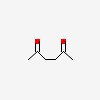 3D/inchi 3D/inchi
|
| ECHA EINECS - REACH Pre-Reg: | 203-738-3 | |
| FDA UNII: | C0Z8884J3P | |
| Nikkaji Web: | J5.518B | |
| Beilstein Number: | 0506525 | |
| MDL: | MFCD00008792 | |
| XlogP3: | -0.30 (est) | |
| Molecular Weight: | 114.14410000 | |
| Formula: | C6 H10 O2 | |
| BioActivity Summary: | listing | |
| NMR Predictor: | Predict (works with chrome or firefox) | |
Category: cosmetic fragrance agents and aromatic raw materials
US / EU / FDA / JECFA / FEMA / FLAVIS / Scholar / Patent Information:
| Google Scholar: | Search |
| Google Books: | Search |
| Google Scholar: with word "volatile" | Search |
| Google Scholar: with word "flavor" | Search |
| Google Scholar: with word "odor" | Search |
| Perfumer and Flavorist: | Search |
| Google Patents: | Search |
| US Patents: | Search |
| EU Patents: | Search |
| Pubchem Patents: | Search |
| PubMed: | Search |
| NCBI: | Search |
Physical Properties:
| Assay: | 97.00 to 100.00 % |
| Food Chemicals Codex Listed: | No |
| Melting Point: | -6.00 to -5.00 °C. @ 760.00 mm Hg |
| Boiling Point: | 193.00 to 194.00 °C. @ 760.00 mm Hg |
| Vapor Pressure: | 0.587000 mmHg @ 25.00 °C. (est) |
| Flash Point: | 174.00 °F. TCC ( 79.00 °C. ) |
| logP (o/w): | -0.270 |
| Soluble in: | |
| alcohol | |
| water, 1.791e+005 mg/L @ 25 °C (est) | |
Organoleptic Properties:
| Odor and/or flavor descriptions from others (if found). | |
Cosmetic Information:
| CosIng: | cosmetic data |
| Cosmetic Uses: |
perfuming agents |
Suppliers:
| Beijing Lys Chemicals |
| 2,5-Hexanedione |
| BOC Sciences |
| For experimental / research use only. |
| 2,5-Hexanedione 95% |
| DeLong Chemicals America |
| 2,5-Hexanedione |
| EMD Millipore |
| For experimental / research use only. |
| 2,5-Hexanedione |
| Penta International |
| ACETONYL ACETONE |
| Santa Cruz Biotechnology |
| For experimental / research use only. |
| 2,5-Hexanedione |
| Sigma-Aldrich: Aldrich |
| For experimental / research use only. |
| 2,5-Hexanedione ≥98% |
| TCI AMERICA |
| For experimental / research use only. |
| Acetonylacetone >97.0%(GC) |
| Tianjin Danjun International |
| 2,5-Hexanedione |
| United International |
| 2,5-Hexanedione |
Safety Information:
| Preferred SDS: View | |
| European information : | |
| Most important hazard(s): | |
| Xn - Harmful. | |
|
R 36/38 - Irritating to skin and eyes. R 20/21/22 - Harmful by inhalation, in contact with skin and if swallowed. R 48 - Danger of serious damage to health by prolonged exposure. S 01/02 - Keep locked up and out of the reach of children. S 20/21 - When using do not eat, drink or smoke. S 23 - Do not breath vapour. S 24/25 - Avoid contact with skin and eyes. S 26 - In case of contact with eyes, rinse immediately with plenty of water and seek medical advice. S 37/39 - Wear suitable gloves and eye/face protection. | |
| Hazards identification | |
| Classification of the substance or mixture | |
| GHS Classification in accordance with 29 CFR 1910 (OSHA HCS) | |
| None found. | |
| GHS Label elements, including precautionary statements | |
| Pictogram | |
| Hazard statement(s) | |
| None found. | |
| Precautionary statement(s) | |
| None found. | |
| Oral/Parenteral Toxicity: | |
|
oral-rat LD50 2076 mg/kg Indian Journal of Experimental Biology. Vol. 24, Pg. 371, 1986. oral-mouse LD50 2386 mg/kg Journal of the American Pharmaceutical Association, Scientific Edition. Vol. 45, Pg. 669, 1956. intraperitoneal-mouse LD50 1600 mg/kg "Patty's Industrial Hygiene and Toxicology," 3rd rev. ed., Clayton, G.D., and F.E. Clayton, eds., New York, John Wiley & Sons, Inc., 1978-82. Vol. 3 originally pub. in 1979; pub. as 2n rev. ed. in 1985.Vol. 2C, Pg. 4777, 1982. intraperitoneal-rat LD50 800 mg/kg "Patty's Industrial Hygiene and Toxicology," 3rd rev. ed., Clayton, G.D., and F.E. Clayton, eds., New York, John Wiley & Sons, Inc., 1978-82. Vol. 3 originally pub. in 1979; pub. as 2n rev. ed. in 1985.Vol. 2C, Pg. 4777, 1982. | |
| Dermal Toxicity: | |
|
skin-guinea pig LD50 6600 ul/kg Journal of Industrial Hygiene and Toxicology. Vol. 26, Pg. 269, 1944. | |
| Inhalation Toxicity: | |
|
inhalation-rat LCLo 2000 ppm/4H Journal of Industrial Hygiene and Toxicology. Vol. 31, Pg. 343, 1949. | |
Safety in Use Information:
| Category: | cosmetic fragrance agents and aromatic raw materials | ||
| RIFM Fragrance Material Safety Assessment: Search | |||
| IFRA Code of Practice Notification of the 49th Amendment to the IFRA Code of Practice | |||
| Recommendation for acetonyl acetone usage levels up to: | |||
| 0.0100 % in the fragrance concentrate. | |||
| Recommendation for acetonyl acetone flavor usage levels up to: | |||
| not for flavor use. | |||
Safety References:
| EPI System: | View |
| Chemical Carcinogenesis Research Information System: | Search |
| AIDS Citations: | Search |
| Cancer Citations: | Search |
| Toxicology Citations: | Search |
| EPA Substance Registry Services (TSCA): | 110-13-4 |
| EPA ACToR: | Toxicology Data |
| EPA Substance Registry Services (SRS): | Registry |
| Laboratory Chemical Safety Summary : | 8035 |
| National Institute of Allergy and Infectious Diseases: | Data |
| WGK Germany: | 2 |
| hexane-2,5-dione | |
| Chemidplus: | 0000110134 |
| EPA/NOAA CAMEO: | hazardous materials |
| RTECS: | MO3150000 for cas# 110-13-4 |
References:
| hexane-2,5-dione | |
| NIST Chemistry WebBook: | Search Inchi |
| Canada Domestic Sub. List: | 110-13-4 |
| Pubchem (cid): | 8035 |
| Pubchem (sid): | 134974023 |
| Pherobase: | View |
Other Information:
| (IUPAC): | Atomic Weights of the Elements 2011 (pdf) |
| Videos: | The Periodic Table of Videos |
| tgsc: | Atomic Weights use for this web site |
| (IUPAC): | Periodic Table of the Elements |
| CHEBI: | View |
| CHEMBL: | View |
| HMDB (The Human Metabolome Database): | Search |
| Export Tariff Code: | 2914.19.0000 |
| VCF-Online: | VCF Volatile Compounds in Food |
| ChemSpider: | View |
Potential Blenders and core components note
| None Found | ||
Potential Uses:
| None Found |
Occurrence (nature, food, other): note
| zygopetalum crinitum Search Trop Picture |
Synonyms:
| ACAN | |
| acetone, acetonyl | |
| acetonylacetone | |
| alpha,beta- | diacetyl ethane |
| .alpha.,.beta.- | diacetylethane |
| 1,2- | diacetylethane |
| a,b- | diacetylethane |
| alpha,beta- | diacetylethane |
| 2,5- | diketohexane |
| 2,5- | hexadione |
| 2,5- | hexandione |
| 2,5- | hexane dione |
| hexane-2,5-dione | |
| 2,5- | hexanedione |