Articles:
bromic acid, sodium salt
Notes:
None found
-
Charkit Chemical Corporation The Specialty Chemical Specialists Explore this website to discover the products and services that Charkit provides for your industry and please contact us directly to find out how we can be of service to you. about: Since 1982, Charkit has been committed to expanding the markets we serve as our roster of products and services continues to grow with us. Our substantial portfolio of personal care ingredients now include a wide array of luxury and exotic components to compliment the key products we have always offered. We have expanded our offerings to the nutraceutical, industrial, and resin markets with a growing roster of versatile and unique ingredients. We continue to lead the way in our traditional markets such as Metal and Water Treatment, Imaging, Flavor & Fragrance, Aroma and Food. Our Pharmaceutical offerings continue to expand, still anchored by the Boronic Derivatives that meet the demands of Suzuki coupling reactions. Please contact us to learn how we can help you reach your goals. Email: Sales Voice: 203-299-3220 Fax: 203-299-1355 Facebook Twitter Linkedin Latest News Events Blog Products List: View Product(s): SODIUM BROMATE
-

-
ECSA Chemicals Human Chemistry ECSA Chemicals has been active since 1913 in the trading and international commerce of raw materials. With an organisation divided into industrial segments managed by specialists, it has become one of the largest distributors worldwide. ECSA Chemicals is the largest Swiss-owned company in terms of warehouses for the distribution of chemical products. We have been distributing chemical products for over 100 years and we have a special interest in protecting the environment and in the safety of our facilities and collaborators. Established in 1913 as a small grocery store, in its over 100 years of activity ECSA Chemicals has become one of the most important Swiss-owned distributors of chemical products. The company, which is active in international distribution and trading, is organised into industrial segments that are managed by teams of specialists and experts. They guarantee professional and customised consultancy and services. With our experience, we can rapidly and safely connect you with the best suppliers on the market, providing you with a complete search, consulting and assistance service. The focus of our approach and operations is you, our customers. We strive every day to find the best products that satisfy your needs as quickly as possible. Your satisfaction is our greatest success. WHY CHOOSE ECSA? EXPERIENCE We have been working for 100 years. QUALITY We have obtained many certifications (ISO, SQAS, GDP, Responsible Care, Bio-Inspecta, RSPO, etc.). We guarantee full compliance with the current laws and continuous training for our staff. SAFETY We constantly carry out risk analyses for each infrastructure, defining safety levels and implementing corrective measures promptly wherever they are needed. WIDESPREAD DISTRIBUTION We have warehouses in strategic locations to supply goods to Switzerland and to the rest of the world. STORAGE CAPACITY The 3 ECSA-owned warehouses guarantee considerable storage area and capacity in each warehouse, with full availability of products (base chemicals and speciality chemicals). SPEED Presence all over the country, staff dedicated to sourcing raw materials and considerable storage capacity guarantee that goods are rapidly obtained and supplied. CONSULTANCY Our specialists - in-depth knowledge of the market and products allows us to provide full consulting services, from the purchase to the supply of raw materials. Email: Info Email: Sales Email: Trading Email: Maintenance Email: Energy Voice: +41 91 695 88 00 Fax: +41 91 695 88 01 Linkedin Youtube RSS Feed ECSA Trade ECSA TRADE THE MOST UPDATED FINANCIAL PUBLICATION ON THE WORLD OF CHEMISTRY Products List: View Product(s): MP-010330 SODIUM BROMAT
-
-
OQEMA With a focus on providing the highest level of service OQEMA has established itself at the forefront of the global chemical industry. The guiding principles of OQEMA have always been to establish long term relationships with customers and suppliers alike to build sustainable and profitable business for all parties. Through OQEMA’s business divisions the company tailors products and services to better support and service our customers requirements. This structure also allows the company to focus its marketing campaigns more effectively to certain industries. Over the last decade OQEMA has achieved strong growth as a result of the expansion of our business model. Going forward, the company will be expanding this business model into existing and new strategic territories. Email: Contact Us: US Email: Dean Matienzo Email: Sales US Email: Dean Matienzo - Sales Manager Voice: +44 1993 843081 Fax: +44 1993 841261 US Voice: +1 973 886 3778 US Fax: +1 973 346 1106 Linkedin Website Global Distribution Product(s): Sodium Bromate
-
-
Penta International Corporation Chemistry innovation At Penta, our products and services help businesses do business better. For over 30 years, Penta Manufacturing Company has played a growing role in worldwide chemistry innovations and applications. As an industry leader, Penta continues to pioneer chemistry-based solutions for practically every area of commerce. Our products and expertise have helped fuel technical advances in dozens of commercial applications including flavoring, coloring, fragrances and chemical processes. US Email: Technical Services US Email: Sales US Voice: (973) 740-2300 US Fax: (973) 740-1839 Product(s): 19-23500 SODIUM BROMATE REAGENT
-
| CAS Number: | 7789-38-0 | 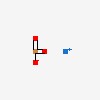 3D/inchi 3D/inchi
|
| Other(deleted CASRN): | 38869-75-9 | |
| ECHA EINECS - REACH Pre-Reg: | 232-160-4 | |
| FDA UNII: | U54JK6453O | |
| Nikkaji Web: | J44.033G | |
| MDL: | MFCD00003476 | |
| Molecular Weight: | 150.89136928 | |
| Formula: | Br Na O3 | |
| BioActivity Summary: | listing | |
| NMR Predictor: | Predict (works with chrome or firefox) | |
Category: oxidising agents
US / EU / FDA / JECFA / FEMA / FLAVIS / Scholar / Patent Information:
| Google Scholar: | Search |
| Google Books: | Search |
| Google Scholar: with word "volatile" | Search |
| Google Scholar: with word "flavor" | Search |
| Google Scholar: with word "odor" | Search |
| Google Patents: | Search |
| US Patents: | Search |
| EU Patents: | Search |
| Pubchem Patents: | Search |
| PubMed: | Search |
| NCBI: | Search |
Physical Properties:
| Appearance: | colorless crystals (est) |
| Assay: | 95.00 to 100.00 % |
| Food Chemicals Codex Listed: | No |
| Melting Point: | 381.00 °C. @ 760.00 mm Hg |
| Flash Point: | 32.00 °F. TCC ( 0.00 °C. ) (est) |
| Soluble in: | |
| water | |
Organoleptic Properties:
| Odor and/or flavor descriptions from others (if found). | |
Cosmetic Information:
| CosIng: | cosmetic data |
| Cosmetic Uses: |
oxidising agents |
Suppliers:
| American Elements |
| Sodium Bromate 99%
Odor: characteristic Use: Sodium Bromate is generally immediately available in most volumes. High purity, submicron and nanopowder forms may be considered. American Elements produces to many standard grades when applicable, including Mil Spec (military grade); ACS, Reagent and Technical Grade; Food, Agricultural and Pharmaceutical Grade; Optical Grade, USP and EP/BP (European Pharmacopoeia/British Pharmacopoeia) and follows applicable ASTM testing standards. |
| Charkit Chemical |
| SODIUM BROMATE |
| ECSA Chemicals |
| SODIUM BROMAT |
| ECSA TRADE THE MOST UPDATED FINANCIAL PUBLICATION ON THE WORLD OF CHEMISTRY |
| EMD Millipore |
| For experimental / research use only. |
| Sodium Bromate |
| OQEMA |
| Sodium Bromate |
| Penta International |
| SODIUM BROMATE REAGENT |
| Santa Cruz Biotechnology |
| For experimental / research use only. |
| Sodium Bromate |
| Shiva Chemicals and Pharmaceuticals |
| SODIUM BROMATE |
| Sigma-Aldrich |
| For experimental / research use only. |
| Sodium Bromate ≥99% |
| Zhong Ya Chemical |
| Sodium Bromate Tech Grade |
Safety Information:
| Preferred SDS: View | |
| Hazards identification | |
| Classification of the substance or mixture | |
| GHS Classification in accordance with 29 CFR 1910 (OSHA HCS) | |
| None found. | |
| GHS Label elements, including precautionary statements | |
| Pictogram | |
| Hazard statement(s) | |
| None found. | |
| Precautionary statement(s) | |
| None found. | |
| Oral/Parenteral Toxicity: | |
|
intraperitoneal-mouse LD50 140 mg/kg Comptes Rendus Hebdomadaires des Seances, Academie des Sciences. Vol. 257, Pg. 791, 1963. intravenous-rabbit LDLo 360 mg/kg BLOOD: OTHER CHANGES LUNGS, THORAX, OR RESPIRATION: DYSPNEA GASTROINTESTINAL: "HYPERMOTILITY, DIARRHEA" Skandinavisches Archiv fuer Physiologie. Vol. 30, Pg. 337, 1913. oral-rabbit LDLo 250 mg/kg BLOOD: OTHER CHANGES GASTROINTESTINAL: "HYPERMOTILITY, DIARRHEA" BEHAVIORAL: SOMNOLENCE (GENERAL DEPRESSED ACTIVITY) Skandinavisches Archiv fuer Physiologie. Vol. 30, Pg. 337, 1913. | |
| Dermal Toxicity: | |
|
subcutaneous-dog LDLo 120 mg/kg BEHAVIORAL: MUSCLE WEAKNESS BLOOD: OTHER CHANGES LUNGS, THORAX, OR RESPIRATION: RESPIRATORY DEPRESSION Skandinavisches Archiv fuer Physiologie. Vol. 30, Pg. 337, 1913. subcutaneous-guinea pig LDLo 100 mg/kg LUNGS, THORAX, OR RESPIRATION: RESPIRATORY DEPRESSION BLOOD: OTHER CHANGES KIDNEY, URETER, AND BLADDER: HEMATURIA Skandinavisches Archiv fuer Physiologie. Vol. 30, Pg. 337, 1913. | |
| Inhalation Toxicity: | |
| Not determined | |
Safety in Use Information:
| Category: | oxidising agents | ||
| Recommendation for sodium bromate usage levels up to: | |||
| not for fragrance use. | |||
| Recommendation for sodium bromate flavor usage levels up to: | |||
| not for flavor use. | |||
Safety References:
| EPI System: | View |
| NIOSH International Chemical Safety Cards: | search |
| Chemical Carcinogenesis Research Information System: | Search |
| AIDS Citations: | Search |
| Cancer Citations: | Search |
| Toxicology Citations: | Search |
| EPA Substance Registry Services (TSCA): | 7789-38-0 |
| EPA ACToR: | Toxicology Data |
| EPA Substance Registry Services (SRS): | Registry |
| Laboratory Chemical Safety Summary : | 23668195 |
| National Institute of Allergy and Infectious Diseases: | Data |
| WGK Germany: | 3 |
| sodium bromate | |
| Chemidplus: | 0007789380 |
| EPA/NOAA CAMEO: | hazardous materials |
| RTECS: | 7789-38-0 |
References:
| sodium bromate | |
| NIST Chemistry WebBook: | Search Inchi |
| Canada Domestic Sub. List: | 7789-38-0 |
| Pubchem (cid): | 23668195 |
| Pubchem (sid): | 134989027 |
Other Information:
| (IUPAC): | Atomic Weights of the Elements 2011 (pdf) |
| Videos: | The Periodic Table of Videos |
| tgsc: | Atomic Weights use for this web site |
| (IUPAC): | Periodic Table of the Elements |
| CHEBI: | View |
| CHEMBL: | View |
| HMDB (The Human Metabolome Database): | Search |
| ChemSpider: | View |
| Wikipedia: | View |
| Formulations/Preparations: •article of commerce contains about 99% sodium bromate.. •available as bp, cosmetic, aqueous solution, and technical grades •pure, min 99.5%, and reagent, min 99.7%, grades available •trade names: dyetone, neutralizer k-126, neutralizer k-140, neutralizer k-938[dhhsntp;toxicology studies of sodium bromate (cas no. 7789-38-0) in genetically modified (fvb tg.ac hemizygous) mice (dermal and drinking water studies) and carcinogenicity studies of sodium bromate in genetically modified •permanent hair wave neutralizing solutions usually contain either 2% potassium bromate or 10% sodium bromate. | |
Potential Blenders and core components note
| None Found | ||
Potential Uses:
| oxidising agents |
Occurrence (nature, food, other): note
| not found in nature |
Synonyms:
| bromic acid sodium salt | |
| bromic acid, sodium salt | |
| neutralizer K-126 | |
| sodium bromate reagent | |
| sodium bromate tech grade | |
| sodiumbromate |