Articles:
alpha-hydro-omega-hydroxypoly(oxy-1,2-ethanediyl)
Notes:
a tasteless laxative composed of peg3350; miralax is tradename. polymers of ethylene oxide and water and their ethers. they vary in consistency from liquid to solid, depending on the molecular weight, indicated by a number following the name. they are used as surfactants, dispersing agents, solvents, ointment and suppository bases, vehicles, and tablet excipients. some specific groups are lauromagrogols, nonoxynols, octoxynols and poloxamers. Diluent in colour additive mixts. for colouring shell eggs; coating, binder, plasticising agent and/or lubricant in tablets used for food; adjuvant to improve flavour and as a bodying agent in non-nutritive sweeteners; adjuvant in dispersing vitamin preparations; defoaming agent; boiler-water additive, etc.
Depending on the catalyst type, the mechanism of polymerization can be cationic or anionic. The anionic mechanism is preferable because it allows one to obtain PEG with a low polydispersity. Polymerization of ethylene oxide is an exothermic process. Overheating or contaminating ethylene oxide with catalysts such as alkalis or metal oxides can lead to runaway polymerization which can end with an explosion after few hours.; PEG is a popular precipitant for protein crystallization, X-ray diffraction of protein crystals can reveal the atomic structure of proteins.; PEG is traditionally also one of the main ingredients in Paintball fill because it is thick and flexible. However, as early as 2006, some Paintball manufacturers have been substituting PEG with cheaper alternatives.; PEGylation is the act of covalently coupling a PEG structure to another larger molecule, for example, a therapeutic protein (which is then referred to as PEGylated). PEGylated interferon alfa-2a or -2b is a commonly used injectable treatment for Hepatitis C infection.; Poly(ethylene glycol) (PEG), also known as poly(ethylene oxide) (PEO) or polyoxyethylene (POE), is the most commercially important type of polyether. PEG, PEO or POE refers to an oligomer or polymer of ethylene oxide. The three names are chemically synonymous, but historically PEG has tended to refer to oligomers and polymers with a molecular mass below 20,000 g/mol, PEO to polymers with a molecular mass above 20,000 g/mol, and POE to a polymer of any molecular mass. PEG and PEO are liquids or low-melting solids, depending on their molecular weights. PEGs are prepared by polymerization of ethylene oxide and are commercially available over a wide range of molecular weights from 300 g/mol to 10,000,000 g/mol. While PEG and PEO with different molecular weights find use in different applications and have different physical properties (e.g. viscosity) due to chain length effects, their chemical properties are nearly identical. Different forms of PEG are also available dependent on the initiator used for the polymerization process. The most common of which is a monofunctional methyl ether PEG (methoxypoly(ethylene glycol)), abbreviated mPEG. PEGs are also available with different geometries. Branched PEGs have 3 to 10 PEG chains emanating from a central core group. Star PEGs have 10 - 100 PEG chains emanating from a central core group. Comb PEGs have multiple PEG chains normally grafted to a polymer backbone.; Polyethylene glycol has a low toxicity and is used in a variety of products. It is the basis of a number of laxatives (e.g. macrogol-containing products such as Movicol and polyethylene glycol 3350, or SoftLax, MiraLax or GlycoLax). It is the basis of many skin creams, as cetomacrogol, and sexual lubricants, frequently combined with glycerin. Whole bowel irrigation (polyethylene glycol with added electrolytes) is used for bowel preparation before surgery or colonoscopy and drug overdoses. It is sold under the brand names GoLYTELY, NuLytely, GlycoLax, Fortrans, TriLyte, Colyte, Halflytely, MiraLAX, Softlax and MoviPrep. When attached to various protein medications, polyethylene glycol allows a slowed clearance of the carried protein from the blood. This makes for a longer acting medicinal effect and reduces toxicity, and it allows longer dosing intervals. Examples include PEG-interferon alpha, which is used to treat hepatitis C, and PEG-filgrastim (Neulasta), which is used to treat neutropenia. It has been shown that polyethylene glycol can improve healing of spinal injuries in dogs. One of the earlier findings that polyethylene glycol can aid in nerve repair came from the University of Texas (Krause and Bittner). Polyethylene glycol is commonly used to fuse B-cells with myeloma cells in monoclonal antibody production. PEG has recently been proved to give better results in constipation patients than tegaserod.; Since PEG is a flexible, water-soluble polymer, it can be used to create very high osmotic pressures (tens of atmospheres). It also is unlikely to have specific interactions with biological chemicals. These properties make PEG one of the most useful molecules for applying osmotic pressure in biochemistry experiments, particularly when using the osmotic stress technique.[citation needed]

-
BOC Sciences Best of Chemicals Supplier Quality supplier of research chemicals and biochemicals including inhibitors, building blocks, GMP Products, impurities and metabolites, APIs for Veterinary, Natural Compounds, ADCs, Stem Cell Molecule and chiral compounds. BOC Sciences provides a wide range of services to support the pharmaceutical industry through all stages of drug discovery including Custom Synthesis of those chemicals that are not in stock, Isotope Labeling Service, Chiral Synthesis and Resolution, Bioconjugation, PEGylation services, analytical services. BOC Sciences is a brand of BOCSCI Inc. We leverage our wide spectrum of business in the fields of development, manufacturing, marketing, and distribution to help you make best-informed decisions tailored to your evolving needs for premium chemicals. Our complete suite of CRO services spans the entire molecule development pipeline including contract research for target identification, building blocks, compound synthesis, biochemical and cellular analysis, preclinical animal tests, and clinical studies. Email: Marketing US Email: Marketing Email: Sales US Email: Sales Voice: 1-631-485-4226 Fax: 1-631-614-7828 US Voice: 1-631-485-4226 US Fax: 1-631-614-7828 Europe 44-203-286-1088 Facebook Twitter Linkedin Blog Get the App! Product(s): 25322-68-3 Poly(ethylene glycol) 99%
-

-
ECSA Chemicals Human Chemistry ECSA Chemicals has been active since 1913 in the trading and international commerce of raw materials. With an organisation divided into industrial segments managed by specialists, it has become one of the largest distributors worldwide. ECSA Chemicals is the largest Swiss-owned company in terms of warehouses for the distribution of chemical products. We have been distributing chemical products for over 100 years and we have a special interest in protecting the environment and in the safety of our facilities and collaborators. Established in 1913 as a small grocery store, in its over 100 years of activity ECSA Chemicals has become one of the most important Swiss-owned distributors of chemical products. The company, which is active in international distribution and trading, is organised into industrial segments that are managed by teams of specialists and experts. They guarantee professional and customised consultancy and services. With our experience, we can rapidly and safely connect you with the best suppliers on the market, providing you with a complete search, consulting and assistance service. The focus of our approach and operations is you, our customers. We strive every day to find the best products that satisfy your needs as quickly as possible. Your satisfaction is our greatest success. WHY CHOOSE ECSA? EXPERIENCE We have been working for 100 years. QUALITY We have obtained many certifications (ISO, SQAS, GDP, Responsible Care, Bio-Inspecta, RSPO, etc.). We guarantee full compliance with the current laws and continuous training for our staff. SAFETY We constantly carry out risk analyses for each infrastructure, defining safety levels and implementing corrective measures promptly wherever they are needed. WIDESPREAD DISTRIBUTION We have warehouses in strategic locations to supply goods to Switzerland and to the rest of the world. STORAGE CAPACITY The 3 ECSA-owned warehouses guarantee considerable storage area and capacity in each warehouse, with full availability of products (base chemicals and speciality chemicals). SPEED Presence all over the country, staff dedicated to sourcing raw materials and considerable storage capacity guarantee that goods are rapidly obtained and supplied. CONSULTANCY Our specialists - in-depth knowledge of the market and products allows us to provide full consulting services, from the purchase to the supply of raw materials. Email: Info Email: Sales Email: Trading Email: Maintenance Email: Energy Voice: +41 91 695 88 00 Fax: +41 91 695 88 01 Linkedin Youtube RSS Feed ECSA Trade ECSA TRADE THE MOST UPDATED FINANCIAL PUBLICATION ON THE WORLD OF CHEMISTRY Products List: View Product(s): MP-001691 POLYETHYLENEGLYCOL 9000 FLAKES MP-018572 POLYETHYLENEGLYCOL 400 TEC.
-

-
Penta International Corporation Chemistry innovation At Penta, our products and services help businesses do business better. For over 30 years, Penta Manufacturing Company has played a growing role in worldwide chemistry innovations and applications. As an industry leader, Penta continues to pioneer chemistry-based solutions for practically every area of commerce. Our products and expertise have helped fuel technical advances in dozens of commercial applications including flavoring, coloring, fragrances and chemical processes. US Email: Technical Services US Email: Sales US Voice: (973) 740-2300 US Fax: (973) 740-1839 Product(s): 16-60005 POLYETHYLENE GLYCOL 200 16-60015 POLYETHYLENE GLYCOL 400 NF 16-60020 POLYETHYLENE GLYCOL 8000 FLAKES NF 16-60000 POLYETHYLENE GLYCOL 1000 NF 16-60007 POLYETHYLENE GLYCOL 300 NF 16-60016 POLYETHYLENE GLYCOL 600 USP/NF/FCC
-
| CAS Number: | 25322-68-3 | 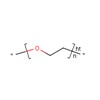 3D/inchi 3D/inchi
|
| Other(deleted CASRN): | 101677-86-5 | |
| ECHA ELINCS - REACH Pre-Reg: | 500-038-2 | |
| FDA UNII: | 16P9295IIL | |
| MDL: | MFCD00081839 | |
| Formula: | (C2 H4 O)mult-H2 O | |
Category: multipurpose additives
US / EU / FDA / JECFA / FEMA / FLAVIS / Scholar / Patent Information:
Physical Properties:
| Appearance: | colorless to white clear viscous liquid to waxy solid (est) |
| Food Chemicals Codex Listed: | No |
| Boiling Point: | 211.00 to 212.00 °C. @ 760.00 mm Hg (est) |
| Vapor Pressure: | 0.042000 mmHg @ 25.00 °C. (est) |
| Flash Point: | 227.00 °F. TCC ( 108.20 °C. ) (est) |
| logP (o/w): | -1.362 (est) |
| Soluble in: | |
| water, 1e+006 mg/L @ 25 °C (est) | |
Organoleptic Properties:
| Odor and/or flavor descriptions from others (if found). | |
Cosmetic Information:
| None found |
Suppliers:
Safety Information:
| Preferred SDS: View | |
| Hazards identification | |
| Classification of the substance or mixture | |
| GHS Classification in accordance with 29 CFR 1910 (OSHA HCS) | |
| None found. | |
| GHS Label elements, including precautionary statements | |
| Pictogram | |
| Hazard statement(s) | |
| None found. | |
| Precautionary statement(s) | |
| None found. | |
| Oral/Parenteral Toxicity: | |
|
oral-rat LD50 51310 mg/kg KIDNEY, URETER, AND BLADDER: OTHER CHANGES Arzneimittel-Forschung. Drug Research. Vol. 3, Pg. 451, 1953. oral-rat LD50 51200 mg/kg KIDNEY, URETER, AND BLADDER: OTHER CHANGES Arzneimittel-Forschung. Drug Research. Vol. 3, Pg. 451, 1953. oral-rat LD50 50000 mg/kg KIDNEY, URETER, AND BLADDER: OTHER CHANGES Arzneimittel-Forschung. Drug Research. Vol. 3, Pg. 451, 1953. oral-rat LD50 > 5000 mg/kg Dow Chemical Company Reports. Vol. MSD-940 oral-rat LD50 50000 mg/kg "Toxicology of Drugs and Chemicals," Deichmann, W.B., New York, Academic Press, Inc., 1969Vol. -, Pg. 747, 1969. oral-rat LD50 > 5000 mg/kg Dow Chemical Company Reports. Vol. MSD-935 oral-rat LD50 50000 mg/kg "Toxicology of Drugs and Chemicals," Deichmann, W.B., New York, Academic Press, Inc., 1969Vol. -, Pg. 747, 1969. oral-rat LD50 45000 mg/kg "Patty's Industrial Hygiene and Toxicology," 3rd rev. ed., Clayton, G.D., and F.E. Clayton, eds., New York, John Wiley & Sons, Inc., 1978-82. Vol. 3 originally pub. in 1979; pub. as 2n rev. ed. in 1985.Vol. 2C, Pg. 3847, 1982. oral-rat LD50 44200 mg/kg KIDNEY, URETER, AND BLADDER: OTHER CHANGES Arzneimittel-Forschung. Drug Research. Vol. 3, Pg. 451, 1953. oral-rat LD50 32000 mg/kg Dow Chemical Company Reports. Vol. MSD-937 oral-rat LD50 31640 mg/kg KIDNEY, URETER, AND BLADDER: OTHER CHANGES Arzneimittel-Forschung. Drug Research. Vol. 3, Pg. 451, 1953. oral-rat LD50 31600 mg/kg "Toxicology of Drugs and Chemicals," Deichmann, W.B., New York, Academic Press, Inc., 1969Vol. -, Pg. 747, 1969. oral-rat LD50 30200 mg/kg Journal of the American Pharmaceutical Association, Scientific Edition. Vol. 39, Pg. 349, 1950. oral-rat LD50 30000 mg/kg Dow Chemical Company Reports. Vol. MSD-2203 oral-rat LD50 28000 mg/kg Dow Chemical Company Reports. Vol. MSD-1112 oral-rat LD50 27500 mg/kg KIDNEY, URETER, AND BLADDER: OTHER CHANGES Arzneimittel-Forschung. Drug Research. Vol. 3, Pg. 451, 1953. oral-rat LD50 22000 mg/kg "Toxicology of Drugs and Chemicals," Deichmann, W.B., New York, Academic Press, Inc., 1969Vol. -, Pg. 747, 1969. oral-rat LD50 > 4000 mg/kg Dow Chemical Company Reports. Vol. MSD-938 oral-rat LD50 1054 mg/kg Dow Chemical Company Reports. Vol. MSD-95 oral-rat LD50 600 mg/kg Dow Chemical Company Reports. Vol. MSD-94 intravenous-rat LD50 13000 mg/kg KIDNEY, URETER, AND BLADDER: OTHER CHANGES Arzneimittel-Forschung. Drug Research. Vol. 3, Pg. 451, 1953. intravenous-rat LD50 7500 mg/kg "Patty's Industrial Hygiene and Toxicology," 3rd rev. ed., Clayton, G.D., and F.E. Clayton, eds., New York, John Wiley & Sons, Inc., 1978-82. Vol. 3 originally pub. in 1979; pub. as 2n rev. ed. in 1985.Vol. 2C, Pg. 3849, 1982. intravenous-rat LD50 7312 mg/kg Arzneimittel-Forschung. Drug Research. Vol. 26, Pg. 1581, 1976. intravenous-rat LD50 7130 mg/kg "Patty's Industrial Hygiene and Toxicology," 3rd rev. ed., Clayton, G.D., and F.E. Clayton, eds., New York, John Wiley & Sons, Inc., 1978-82. Vol. 3 originally pub. in 1979; pub. as 2n rev. ed. in 1985.Vol. 2C, Pg. 3849, 1982. intraperitoneal-rat LD50 17700 mg/kg KIDNEY, URETER, AND BLADDER: OTHER CHANGES Arzneimittel-Forschung. Drug Research. Vol. 3, Pg. 451, 1953. intraperitoneal-rat LD50 17000 mg/kg Journal of the American Pharmaceutical Association, Scientific Edition. Vol. 39, Pg. 349, 1950. intraperitoneal-rat LD50 16000 mg/kg KIDNEY, URETER, AND BLADDER: OTHER CHANGES Arzneimittel-Forschung. Drug Research. Vol. 3, Pg. 451, 1953. intraperitoneal-rat LD50 15570 mg/kg KIDNEY, URETER, AND BLADDER: OTHER CHANGES Arzneimittel-Forschung. Drug Research. Vol. 3, Pg. 451, 1953. intraperitoneal-rat LD50 15390 mg/kg KIDNEY, URETER, AND BLADDER: OTHER CHANGES Arzneimittel-Forschung. Drug Research. Vol. 3, Pg. 451, 1953. intraperitoneal-rat LD50 14100 mg/kg "Patty's Industrial Hygiene and Toxicology," 3rd rev. ed., Clayton, G.D., and F.E. Clayton, eds., New York, John Wiley & Sons, Inc., 1978-82. Vol. 3 originally pub. in 1979; pub. as 2n rev. ed. in 1985.Vol. 2C, Pg. 3849, 1982. intraperitoneal-rat LD50 12600 mg/kg KIDNEY, URETER, AND BLADDER: OTHER CHANGES Arzneimittel-Forschung. Drug Research. Vol. 3, Pg. 451, 1953. intraperitoneal-rat LD50 9708 mg/kg Proceedings of the European Society of Toxicology. Vol. 17, Pg. 351, 1976. intraperitoneal-rat LD50 9700 mg/kg "Patty's Industrial Hygiene and Toxicology," 3rd rev. ed., Clayton, G.D., and F.E. Clayton, eds., New York, John Wiley & Sons, Inc., 1978-82. Vol. 3 originally pub. in 1979; pub. as 2n rev. ed. in 1985.Vol. 2C, Pg. 3849, 1982. intraperitoneal-rat LD50 9000 mg/kg KIDNEY, URETER, AND BLADDER: OTHER CHANGES Arzneimittel-Forschung. Drug Research. Vol. 3, Pg. 451, 1953. intraperitoneal-rat LD50 6790 mg/kg KIDNEY, URETER, AND BLADDER: OTHER CHANGES Arzneimittel-Forschung. Drug Research. Vol. 3, Pg. 451, 1953. oral-rabbit LD50 76000 mg/kg KIDNEY, URETER, AND BLADDER: OTHER CHANGES Arzneimittel-Forschung. Drug Research. Vol. 3, Pg. 451, 1953. oral-rabbit LD50 28900 mg/kg KIDNEY, URETER, AND BLADDER: OTHER CHANGES Arzneimittel-Forschung. Drug Research. Vol. 3, Pg. 451, 1953. oral-rabbit LD50 26800 mg/kg KIDNEY, URETER, AND BLADDER: OTHER CHANGES Arzneimittel-Forschung. Drug Research. Vol. 3, Pg. 451, 1953. oral-rabbit LD50 19000 mg/kg "Patty's Industrial Hygiene and Toxicology," 3rd rev. ed., Clayton, G.D., and F.E. Clayton, eds., New York, John Wiley & Sons, Inc., 1978-82. Vol. 3 originally pub. in 1979; pub. as 2n rev. ed. in 1985.Vol. 2C, Pg. 3847, 1982. oral-rabbit LD50 17300 mg/kg KIDNEY, URETER, AND BLADDER: OTHER CHANGES Arzneimittel-Forschung. Drug Research. Vol. 3, Pg. 451, 1953. oral-rabbit LD50 14000 mg/kg "Patty's Industrial Hygiene and Toxicology," 3rd rev. ed., Clayton, G.D., and F.E. Clayton, eds., New York, John Wiley & Sons, Inc., 1978-82. Vol. 3 originally pub. in 1979; pub. as 2n rev. ed. in 1985.Vol. 2C, Pg. 3847, 1982. intravenous-rabbit LD50 8000 mg/kg BLOOD: CHANGE IN CLOTTING FACTORS Kriobiologiya i Kriomeditsina. Cryobiology and Cryomedicine. Vol. 4, Pg. 71, 1978. oral-mouse LD50 36000 mg/kg "Patty's Industrial Hygiene and Toxicology," 3rd rev. ed., Clayton, G.D., and F.E. Clayton, eds., New York, John Wiley & Sons, Inc., 1978-82. Vol. 3 originally pub. in 1979; pub. as 2n rev. ed. in 1985.Vol. 2C, Pg. 3847, 1982. oral-mouse LD50 34000 mg/kg "Patty's Industrial Hygiene and Toxicology," 3rd rev. ed., Clayton, G.D., and F.E. Clayton, eds., New York, John Wiley & Sons, Inc., 1978-82. Vol. 3 originally pub. in 1979; pub. as 2n rev. ed. in 1985.Vol. 2C, Pg. 3847, 1982. oral-mouse LD50 31000 mg/kg "Patty's Industrial Hygiene and Toxicology," 3rd rev. ed., Clayton, G.D., and F.E. Clayton, eds., New York, John Wiley & Sons, Inc., 1978-82. Vol. 3 originally pub. in 1979; pub. as 2n rev. ed. in 1985.Vol. 2C, Pg. 3847, 1982. oral-mouse LD50 28915 mg/kg Proceedings of the European Society of Toxicology. Vol. 17, Pg. 351, 1976. intravenous-mouse LD50 16000 mg/kg KIDNEY, URETER, AND BLADDER: OTHER CHANGES Arzneimittel-Forschung. Drug Research. Vol. 3, Pg. 451, 1953. intravenous-mouse LD50 8550 mg/kg Arzneimittel-Forschung. Drug Research. Vol. 26, Pg. 1581, 1976. intravenous-mouse LD50 7.90 mg/kg Research Progress in Organic-Biological and Medicinal Chemistry. Vol. 2, Pg. 316, 1970. intraperitoneal-mouse LD50 8000 mg/kg LUNGS, THORAX, OR RESPIRATION: RESPIRATORY DEPRESSION Journal of Pharmacology and Experimental Therapeutics. Vol. 103, Pg. 293, 1951. intraperitoneal-mouse LD50 7500 mg/kg National Technical Information Service. Vol. AD628-313 intraperitoneal-mouse LD50 2000 mg/kg LUNGS, THORAX, OR RESPIRATION: RESPIRATORY DEPRESSION Journal of Pharmacology and Experimental Therapeutics. Vol. 103, Pg. 293, 1951. intraperitoneal-mouse LD50 473 mg/kg Yaoxue Tongbao. Bulletin of Pharmacology. Vol. 21, Pg. 387, 1986. oral-guinea pig LD50 50900 mg/kg KIDNEY, URETER, AND BLADDER: OTHER CHANGES Arzneimittel-Forschung. Drug Research. Vol. 3, Pg. 451, 1953. oral-guinea pig LD50 50000 mg/kg KIDNEY, URETER, AND BLADDER: OTHER CHANGES Arzneimittel-Forschung. Drug Research. Vol. 3, Pg. 451, 1953. oral-guinea pig LD50 28900 mg/kg KIDNEY, URETER, AND BLADDER: OTHER CHANGES Arzneimittel-Forschung. Drug Research. Vol. 3, Pg. 451, 1953. oral-guinea pig LD50 28000 mg/kg "Patty's Industrial Hygiene and Toxicology," 3rd rev. ed., Clayton, G.D., and F.E. Clayton, eds., New York, John Wiley & Sons, Inc., 1978-82. Vol. 3 originally pub. in 1979; pub. as 2n rev. ed. in 1985.Vol. 2C, Pg. 3847, 1982. oral-guinea pig LD50 22500 mg/kg Journal of the American Pharmaceutical Association, Scientific Edition. Vol. 39, Pg. 349, 1950. oral-guinea pig LD50 19600 mg/kg KIDNEY, URETER, AND BLADDER: OTHER CHANGES Arzneimittel-Forschung. Drug Research. Vol. 3, Pg. 451, 1953. oral-guinea pig LD50 17000 mg/kg "Patty's Industrial Hygiene and Toxicology," 3rd rev. ed., Clayton, G.D., and F.E. Clayton, eds., New York, John Wiley & Sons, Inc., 1978-82. Vol. 3 originally pub. in 1979; pub. as 2n rev. ed. in 1985.Vol. 2C, Pg. 3847, 1982. oral-guinea pig LD50 15700 mg/kg KIDNEY, URETER, AND BLADDER: OTHER CHANGES Arzneimittel-Forschung. Drug Research. Vol. 3, Pg. 451, 1953. intravenous-dog LDLo 3000 mg/kg Journal of Pharmacology and Experimental Therapeutics. Vol. 103, Pg. 293, 1951. intravenous-mouse LD50 7900 ug/kg Research Progress in Organic-Biological and Medicinal Chemistry. Vol. 2, Pg. 316, 1970. oral-rabbit LD50 17300 mg/kg International Journal of Toxicology. Vol. 18(Suppl oral-rabbit LD50 76000 mg/kg International Journal of Toxicology. Vol. 18(Suppl oral-rat LD > 4000 mg/kg Union Carbide Data Sheet. Vol. 9/25/1969 oral-rat LD50 > 50000 mg/kg Dow Chemical Company Reports. Vol. MSD-935 oral-rat LD50 > 50000 mg/kg Dow Chemical Company Reports. Vol. MSD-940 unreported-rat LD50 7800 mg/kg United States Patent Document. Vol. #4767763 intravenous-rat LDLo 3 mg/kg Toxicology and Applied Pharmacology. Vol. 16, Pg. 442, 1970. intravenous-rat LDLo 22000 mg/kg KIDNEY, URETER, AND BLADDER: HEMATURIA VASCULAR: BP LOWERING NOT CHARACTERIZED IN AUTONOMIC SECTION CARDIAC: ARRHYTHMIAS (INCLUDING CHANGES IN CONDUCTION) Arzneimittel-Forschung. Drug Research. Vol. 23, Pg. 1087, 1973. | |
| Dermal Toxicity: | |
|
skin-rabbit LD50 > 20000 mg/kg Dow Chemical Company Reports. Vol. MSD-940 subcutaneous-rat LD50 16000 mg/kg KIDNEY, URETER, AND BLADDER: OTHER CHANGES Arzneimittel-Forschung. Drug Research. Vol. 3, Pg. 451, 1953. skin-rabbit LD50 > 20000 mg/kg Dow Chemical Company Reports. Vol. MSD-935 skin-rabbit LD50 > 20000 mg/kg Dow Chemical Company Reports. Vol. MSD-939 skin-rabbit LD50 > 20000 mg/kg Dow Chemical Company Reports. Vol. MSD-937 skin-rabbit LD50 > 20000 mg/kg Dow Chemical Company Reports. Vol. MSD-2203 skin-rabbit LD50 > 20000 mg/kg Dow Chemical Company Reports. Vol. MSD-96 skin-rabbit LD50 > 20000 mg/kg Dow Chemical Company Reports. Vol. MSD-2202 skin-rabbit LD50 > 20000 mg/kg Dow Chemical Company Reports. Vol. MSD-1112 skin-rabbit LD50 > 20 ml/kg International Journal of Toxicology. Vol. 18(Suppl subcutaneous-mouse LD50 18000 mg/kg KIDNEY, URETER, AND BLADDER: OTHER CHANGES Arzneimittel-Forschung. Drug Research. Vol. 3, Pg. 451, 1953. skin-rabbit LD > 1000 mg/kg Union Carbide Data Sheet. Vol. 9/25/1969 | |
| Inhalation Toxicity: | |
| Not determined | |
Safety in Use Information:
| Category: | multipurpose additives | ||
| Recommendation for polyethylene glycol usage levels up to: | |||
| not for fragrance use. | |||
| Recommendation for polyethylene glycol flavor usage levels up to: | |||
| not for flavor use. | |||
Safety References:
| European Food Safety Authority (EFSA) reference(s): | |
| Opinion of the Scientific Panel on food additives, flavourings, processing aids and materials in contact with food (AFC) related to an application on the use of polyethylene glycol (PEG) as a film coating agent for use in food supplement products View page or View pdf | |
| Scientific Opinion on the safety evaluation of the active substances, iron, polyethyleneglycol, disodium pyrophosphate, monosodium phosphate and sodium chloride for use in food contact materials View page or View pdf | |
| Refined exposure assessment of polyethylene glycol (E 1521) from its use as a food additive View page or View pdf | |
| EPI System: | View |
| ClinicalTrials.gov: | search |
| Daily Med: | search |
| NIOSH International Chemical Safety Cards: | search |
| Chemical Carcinogenesis Research Information System: | Search |
| AIDS Citations: | Search |
| Cancer Citations: | Search |
| Toxicology Citations: | Search |
| EPA GENetic TOXicology: | Search |
| EPA Substance Registry Services (TSCA): | 25322-68-3 |
| EPA ACToR: | Toxicology Data |
| EPA Substance Registry Services (SRS): | Registry |
| National Institute of Allergy and Infectious Diseases: | Data |
| WGK Germany: | 1 |
| Chemidplus: | 0025322683 |
| EPA/NOAA CAMEO: | hazardous materials |
References:
| Canada Domestic Sub. List: | 25322-68-3 |
| Pubchem (sid): | 134996364 |
Other Information:
| (IUPAC): | Atomic Weights of the Elements 2011 (pdf) |
| Videos: | The Periodic Table of Videos |
| tgsc: | Atomic Weights use for this web site |
| (IUPAC): | Periodic Table of the Elements |
| FDA Substances Added to Food (formerly EAFUS): | View |
| FDA Indirect Additives used in Food Contact Substances: | View |
| CHEBI: | View |
| CHEMBL: | View |
| Golm Metabolome Database: | Search |
| KEGG (GenomeNet): | C01092 |
| HMDB (The Human Metabolome Database): | HMDB37790 |
| FooDB: | FDB016934 |
| FDA Listing of Food Additive Status: | View |
| MedlinePlusSupp: | View |
| Wikipedia: | View |
Potential Blenders and core components note
| None Found | ||
Potential Uses:
| binding agents | ||
| emulsion stabilisers | ||
| humectants | ||
| solvents | ||
| viscosity controlling agents |
Occurrence (nature, food, other): note
| not found in nature |
Synonyms:
| alpha- | hydro-omega-hydroxypoly(oxy-1,2-ethanediyl) |
| polyethylene glycol 1000 NF | |
| polyethylene glycol 200 | |
| polyethylene glycol 300 | |
| polyethylene glycol 400 USP/NF/FCC | |
| polyethylene glycol 600 | |
| polyethylene glycol 8000 flakes NF | |
| polyethyleneglycol |