|
Category: cosmetic agents
US / EU / FDA / JECFA / FEMA / FLAVIS / Scholar / Patent Information:
Physical Properties:
| Assay: | 95.00 to 100.00 %
|
| Food Chemicals Codex Listed: | No |
| Boiling Point: | 560.19 °C. @ 760.00 mm Hg (est)
|
| Flash Point: | 438.00 °F. TCC ( 225.80 °C. ) (est)
|
| logP (o/w): | 10.873 (est) |
| Soluble in: |
| | water, 7.804e-007 mg/L @ 25 °C (est) |
Organoleptic Properties:
| |
| Odor and/or flavor descriptions from others (if found). |
| |
| |
Cosmetic Information:
Suppliers:
| BOC Sciences |
| For experimental / research use only. |
| tris-(2-Ethylhexyl) 2-(acetyloxy)propane-1,2,3-tricarboxylate
|
| Covalent Chemical |
| Acetyl Trioctyl Citrate
|
| Jungbunzlauer Suisse |
| CITROFOL® AHII
Odor: bland Use: Extensive tests of citrates demonstrate the low level of toxicity; none have demonstrated chronic toxicity when incorporated into the diet for extended time periods. Citrates as non-hazardous materials are included in many global inventories; they are approved by FDA, BGVV and other Health Authorities. Tests on biodegradability passed standard according OECD. In all cases, biodegradation index indicated that citrates were superior to other types of plasticiser.
Citrate esters are compatible with a wide range of hydrophilic and lipophilic polymer blends as well as most extenders. Due to these properties, CITROFOL® represents a preferred alternative replacing existing plasticiser that may have toxicity or non-biodegradable issues. Citrate esters demonstrate in many applications equal plasticiser performance to replace phthalates and adipates in many applications such as cosmetics, pharmaceutical coatings, food contact films and in plastic articles.
Due to their high boiling point plasticiser are hardly volatile, thus the losses from the polymers are insignificant. Their solvent power ensures compatibility with the resin. One of these plasticiser is CITROFOL® AHII. |
Safety Information:
| |
| Hazards identification |
| |
| Classification of the substance or mixture |
| GHS Classification in accordance with 29 CFR 1910 (OSHA HCS) |
| None found. |
| GHS Label elements, including precautionary statements |
| |
| Pictogram | |
| |
| Hazard statement(s) |
| None found. |
| Precautionary statement(s) |
| None found. |
| Oral/Parenteral Toxicity: |
|
Not determined
|
| Dermal Toxicity: |
|
Not determined
|
| Inhalation Toxicity: |
|
Not determined
|
Safety in Use Information:
| Category: | cosmetic agents |
| Recommendation for acetyl triethylhexyl citrate usage levels up to: | | | not for fragrance use.
|
| |
| Recommendation for acetyl triethylhexyl citrate flavor usage levels up to: |
| | not for flavor use.
|
Safety References:
References:
| | tris(2-ethylhexyl) 2-acetyloxypropane-1,2,3-tricarboxylate |
| NIST Chemistry WebBook: | Search Inchi |
| Pubchem (cid): | 101632 |
| Pubchem (sid): | 135057728 |
Other Information:
Potential Blenders and core components notePotential Uses:
Occurrence (nature, food, other): noteSynonyms:
| | acetyl trioctyl citrate | | 2-( | acetyloxy)-1,2,3-propanetricarboxylic acid, tris(2-ethylhexyl) ester | | | citrofol AHII - acetyltri-2-ethylhexyl citrate | | tris(2- | ethyl hexyl) 2-(acetyl oxy) propane-1,2,3-tricarboxylate | | tris(2- | ethylhexyl) 2-(acetyloxy)propane-1,2,3-tricarboxylate | | tris(2- | ethylhexyl) 2-acetoxypropane-1,2,3-tricarboxylate | | 1,2,3- | propanetricarboxylic acid, 2-(acetyloxy)-, tris(2-ethylhexyl) ester |
Articles:
|

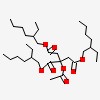 3D/inchi