Articles:
acetic acid, potassium salt
Notes:
a potassium salt used to replenish electrolytes, for restoration of water-electrolyte balance, as well as a urinary and systemic alkalizer, which can be administered orally or by intravenous infusion. formerly, it was used in diuretics and expectorants. Flavouring ingredient. Used to modify the flavour of products acidified/preserved with acetic acid. Used in preference to Sodium acetate KBX76-W for low-Na foods
Potassium acetate (CH3COOK) is a chemical compound.

-
American International Chemical, Inc. Consistent sources North American supplier for globally sourced ingredients. AIC is a Westborough, MA based ISO Certified sales and marketing company serving the food, pharmaceutical, nutritional, personal care, biotech, and industrial markets of North America since 1972. Our success is a result of a company culture built on customer needs, along with partnerships with global manufacturers committed to the rigors and demands of the North American market. Our team of Sales Representatives, along with our network of strategically located warehouses are ready to supply product when and where you need it. Email: Info Voice: (800) 238-0001 Facebook Twitter Linkedin Products List: View Product(s): PACMEP Potassium Acetate EEC Agglomerate
-

-
Charkit Chemical Corporation The Specialty Chemical Specialists Explore this website to discover the products and services that Charkit provides for your industry and please contact us directly to find out how we can be of service to you. about: Since 1982, Charkit has been committed to expanding the markets we serve as our roster of products and services continues to grow with us. Our substantial portfolio of personal care ingredients now include a wide array of luxury and exotic components to compliment the key products we have always offered. We have expanded our offerings to the nutraceutical, industrial, and resin markets with a growing roster of versatile and unique ingredients. We continue to lead the way in our traditional markets such as Metal and Water Treatment, Imaging, Flavor & Fragrance, Aroma and Food. Our Pharmaceutical offerings continue to expand, still anchored by the Boronic Derivatives that meet the demands of Suzuki coupling reactions. Please contact us to learn how we can help you reach your goals. Email: Sales Voice: 203-299-3220 Fax: 203-299-1355 Facebook Twitter Linkedin Latest News Events Blog Products List: View Product(s): POTASSIUM ACETATE, ACS
-

-
ECSA Chemicals Human Chemistry ECSA Chemicals has been active since 1913 in the trading and international commerce of raw materials. With an organisation divided into industrial segments managed by specialists, it has become one of the largest distributors worldwide. ECSA Chemicals is the largest Swiss-owned company in terms of warehouses for the distribution of chemical products. We have been distributing chemical products for over 100 years and we have a special interest in protecting the environment and in the safety of our facilities and collaborators. Established in 1913 as a small grocery store, in its over 100 years of activity ECSA Chemicals has become one of the most important Swiss-owned distributors of chemical products. The company, which is active in international distribution and trading, is organised into industrial segments that are managed by teams of specialists and experts. They guarantee professional and customised consultancy and services. With our experience, we can rapidly and safely connect you with the best suppliers on the market, providing you with a complete search, consulting and assistance service. The focus of our approach and operations is you, our customers. We strive every day to find the best products that satisfy your needs as quickly as possible. Your satisfaction is our greatest success. WHY CHOOSE ECSA? EXPERIENCE We have been working for 100 years. QUALITY We have obtained many certifications (ISO, SQAS, GDP, Responsible Care, Bio-Inspecta, RSPO, etc.). We guarantee full compliance with the current laws and continuous training for our staff. SAFETY We constantly carry out risk analyses for each infrastructure, defining safety levels and implementing corrective measures promptly wherever they are needed. WIDESPREAD DISTRIBUTION We have warehouses in strategic locations to supply goods to Switzerland and to the rest of the world. STORAGE CAPACITY The 3 ECSA-owned warehouses guarantee considerable storage area and capacity in each warehouse, with full availability of products (base chemicals and speciality chemicals). SPEED Presence all over the country, staff dedicated to sourcing raw materials and considerable storage capacity guarantee that goods are rapidly obtained and supplied. CONSULTANCY Our specialists - in-depth knowledge of the market and products allows us to provide full consulting services, from the purchase to the supply of raw materials. Email: Info Email: Sales Email: Trading Email: Maintenance Email: Energy Voice: +41 91 695 88 00 Fax: +41 91 695 88 01 Linkedin Youtube RSS Feed ECSA Trade ECSA TRADE THE MOST UPDATED FINANCIAL PUBLICATION ON THE WORLD OF CHEMISTRY Products List: View Product(s): MP-019265 POTASSIUM ACETATE RE-470147 POTASSIUM ACETATE RPE-FOR ANALYSIS, KG 1
-

-
Glentham Life Sciences Ltd The Chemical, Biochemical & Research Essentials Supplier Glentham Life Sciences is a supplier of fine chemicals and raw materials with warehousing, laboratories and packaging facilities in the UK. With a Glentham Life Sciences account you can view more product details, request quotes and order products online. Email: Info Email: Sales Email: Tech Support Voice: +44 (0) 1225 667798 Fax: +44 (0) 2033 978909 Facebook Twitter Linkedin Google+ News Distribution Products List: View Product(s): GX7641 Potassium acetate, 98%
-

-
Penta International Corporation Chemistry innovation At Penta, our products and services help businesses do business better. For over 30 years, Penta Manufacturing Company has played a growing role in worldwide chemistry innovations and applications. As an industry leader, Penta continues to pioneer chemistry-based solutions for practically every area of commerce. Our products and expertise have helped fuel technical advances in dozens of commercial applications including flavoring, coloring, fragrances and chemical processes. US Email: Technical Services US Email: Sales US Voice: (973) 740-2300 US Fax: (973) 740-1839 Product(s): 16-61450 POTASSIUM ACETATE
-

-
Sigma-Aldrich Complete Supply Chain The perfect blend of products and services that bring your creativity to life. Sigma-Aldrich is a leading Life Science and High Technology company dedicated to providing high-quality, safe and certified flavor ingredients with transparent and easily accessible documentation to customers around the globe. Sigma-Aldrich also provides a suite of analytical tools that allow food analysts to simplify sample preparation, cleanup and analysis steps, while increasing sensitivity to trace ingredients and harmful substances to meet regulations and quality standards. Email: Information US Email: Sales US Voice: 800-244-1173 US Fax: 800-368-4661 Facebook Twitter Instagram Linkedin Flavors and Fragrances Analysis FandF Newsletter Subscription Flavors and Fragrances Learning Center Certified Food Grade Products Product(s): W292001 Potassium acetate, ≥98% SDS
-
| CAS Number: | 127-08-2 | 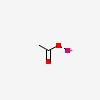 3D/inchi 3D/inchi
|
| ECHA EINECS - REACH Pre-Reg: | 204-822-2 | |
| FDA UNII: | M911911U02 | |
| Nikkaji Web: | J2.516J | |
| MDL: | MFCD00012458 | |
| Molecular Weight: | 98.14261000 | |
| Formula: | C2 H3 K O2 | |
| NMR Predictor: | Predict (works with chrome or firefox) | |
Category: buffering agents, antimicrobial preservatives, acidity regulators
US / EU / FDA / JECFA / FEMA / FLAVIS / Scholar / Patent Information:
| Google Scholar: | Search |
| Google Books: | Search |
| Google Scholar: with word "volatile" | Search |
| Google Scholar: with word "flavor" | Search |
| Google Scholar: with word "odor" | Search |
| Perfumer and Flavorist: | Search |
| Google Patents: | Search |
| US Patents: | Search |
| EU Patents: | Search |
| Pubchem Patents: | Search |
| PubMed: | Search |
| NCBI: | Search |
| FDA/DG SANTE Petitions, Reviews, Notices: | |
| EU SANCO | Potassium acetates View - review |
| JECFA Food Additive: | Potassium Acetate |
| GSFA Codex: | Potassium acetates (261) |
| DG SANTE Food Additives: | potassium acetate |
| FEMA Number: | 2920 potassium acetate |
| FDA: | No longer provide for the use of these seven synthetic flavoring substances |
| FDA Mainterm (SATF): | 127-08-2 ; POTASSIUM ACETATE |
| FDA Regulation: | |
| FDA PART 172 -- FOOD ADDITIVES PERMITTED FOR DIRECT ADDITION TO FOOD FOR HUMAN CONSUMPTION Subpart F--Flavoring Agents and Related Substances Sec. 172.515 Synthetic flavoring substances and adjuvants. | |
Physical Properties:
| Appearance: | white crystalline powder (est) |
| Assay: | 99.00 to 100.00 % |
| Food Chemicals Codex Listed: | No |
| Melting Point: | 303.00 to 307.00 °C. @ 760.00 mm Hg |
| Flash Point: | 32.00 °F. TCC ( 0.00 °C. ) (est) |
| logP (o/w): | -3.720 |
| Shelf Life: | 12.00 month(s) or longer if stored properly. |
| Storage: | store in cool, dry place in tightly sealed containers, protected from heat and light. |
| Soluble in: | |
| water, 1e+006 mg/L @ 25 °C (est) | |
| alcohol | |
Organoleptic Properties:
| Odor Strength: | none |
| Odor Description: at 100.00 %. | odorless |
| Odor and/or flavor descriptions from others (if found). | |
Cosmetic Information:
| CosIng: | cosmetic data |
| Cosmetic Uses: |
film formers |
Suppliers:
| Allan Chemical |
| Potassium Acetate |
| Amecan |
| Potassium Acetate |
| American Elements |
| Potassium Acetate 99%
Odor: characteristic Use: Potassium Acetate is a moderately water soluble crystalline Potassium source that decomposes to Potassium oxide on heating. It is generally immediately available in most volumes. All metallic acetates are inorganic salts of a metal cation and the acetate anion, a univalent (-1 charge) polyatomic ion composed of two carbon atoms ionically bound to three hydrogen and two oxygen atoms (Symbol: CH3COO) for a total formula weight of 59.05. Acetates are excellent precursors for production of ultra high purity compounds, catalysts, and nanoscale materials.We also produce Potassium Acetate Solution. American Elements produces to many standard grades when applicable, including Mil Spec (military grade); ACS, Reagent and Technical Grade; Food, Agricultural and Pharmaceutical Grade; Optical Grade, USP and EP/BP (European Pharmacopoeia/British Pharmacopoeia)and follows applicable ASTM testing standards. |
| American International Chemical, LLC. |
| Potassium Acetate EEC Agglomerate |
| Charkit Chemical |
| POTASSIUM ACETATE, ACS |
| ECSA Chemicals |
| POTASSIUM ACETATE RPE-FOR ANALYSIS, KG 1 |
| ECSA TRADE THE MOST UPDATED FINANCIAL PUBLICATION ON THE WORLD OF CHEMISTRY |
| ECSA Chemicals |
| POTASSIUM ACETATE |
| Foodchem International |
| Potassium Acetate |
| Glentham Life Sciences |
| Potassium acetate, 98% |
| Jarchem Industries |
| Jarace™ PA-50
Odor: characteristic Use: Easy to use form of potassium acetate. Used as a catalyst for polymerization and other reaction chemistries. Source of potassium for fertilizers. Used as an Eco friendly deicer. |
| Jarchem Industries |
| Jarace™ PA-ACS
Odor: characteristic Use: Purified form of potassium acetate. Used as a catalyst for polymerization and other reaction chemistries. Is used in the manufacture of penicillin as a nutrient for fermentation process. |
| Jarchem Industries |
| Jarace™ PA-CP
Odor: characteristic Use: Purified form of potassium acetate. Is used in the manufacture of penicillin as a nutrient for fermentation process. Used as a catalyst for polymerization and other reaction chemistries. |
| Jarchem Industries |
| Jarace™ PA
Odor: characteristic Use: Helps condition fabrics. Can be utilized for primary oil recovery muds. Used as an Eco friendly deicer. Widely used in fire suppression systems and extinguishers. |
| Penta International |
| POTASSIUM ACETATE |
| Sigma-Aldrich |
| Potassium acetate, ≥98% |
| Certified Food Grade Products |
| Sinofi Food Ingredients |
| Potassium Acetate
Odor: characteristic Use: Preservative, Deicer, Penicillin G Potassium Salt, PH Control Agent, Buffer, Neutralizer, Color Fixing Agent, Acidity Regulator, Oilfield Drilling Fluids. |
Safety Information:
| Preferred SDS: View | |
| European information : | |
| Most important hazard(s): | |
| None - None found. | |
|
S 02 - Keep out of the reach of children. S 22 - Do not breath dust. S 24/25 - Avoid contact with skin and eyes. | |
| Hazards identification | |
| Classification of the substance or mixture | |
| GHS Classification in accordance with 29 CFR 1910 (OSHA HCS) | |
| None found. | |
| GHS Label elements, including precautionary statements | |
| Pictogram | |
| Hazard statement(s) | |
| None found. | |
| Precautionary statement(s) | |
| None found. | |
| Oral/Parenteral Toxicity: | |
|
oral-rat LD50 3250 mg/kg American Industrial Hygiene Association Journal. Vol. 30, Pg. 470, 1969. | |
| Dermal Toxicity: | |
| Not determined | |
| Inhalation Toxicity: | |
| Not determined | |
Safety in Use Information:
| Category: | buffering agents, antimicrobial preservatives, acidity regulators | ||
| Recommendation for potassium acetate usage levels up to: | |||
| not for fragrance use. | |||
| Use levels for FEMA GRAS flavoring substances on which the FEMA Expert Panel based its judgments that the substances are generally recognized as safe (GRAS). | |||
| The Expert Panel also publishes separate extensive reviews of scientific information on all FEMA GRAS flavoring substances and can be found at FEMA Flavor Ingredient Library | |||
| publication number: 3. Update in publication number(s): 29 | |||
| Click here to view publication 3 | |||
| average usual ppm | average maximum ppm | ||
| baked goods: | - | - | |
| beverages(nonalcoholic): | 0.30000 | 2.00000 | |
| beverages(alcoholic): | 350.00000 | 3000.00000 | |
| breakfast cereal: | - | - | |
| cheese: | - | - | |
| chewing gum: | - | - | |
| condiments / relishes: | - | - | |
| confectionery froastings: | - | - | |
| egg products: | - | - | |
| fats / oils: | - | - | |
| fish products: | - | - | |
| frozen dairy: | - | - | |
| fruit ices: | - | - | |
| gelatins / puddings: | - | - | |
| granulated sugar: | - | - | |
| gravies: | - | - | |
| hard candy: | - | - | |
| imitation dairy: | - | - | |
| instant coffee / tea: | - | - | |
| jams / jellies: | - | - | |
| meat products: | - | - | |
| milk products: | - | - | |
| nut products: | - | - | |
| other grains: | - | - | |
| poultry: | - | - | |
| processed fruits: | - | - | |
| processed vegetables: | - | - | |
| reconstituted vegetables: | - | - | |
| seasonings / flavors: | - | - | |
| snack foods: | - | - | |
| soft candy: | - | - | |
| soups: | - | - | |
| sugar substitutes: | - | - | |
| sweet sauces: | - | - | |
Safety References:
| EPI System: | View |
| ClinicalTrials.gov: | search |
| Daily Med: | search |
| NIOSH International Chemical Safety Cards: | search |
| AIDS Citations: | Search |
| Cancer Citations: | Search |
| Toxicology Citations: | Search |
| EPA Substance Registry Services (TSCA): | 127-08-2 |
| EPA ACToR: | Toxicology Data |
| EPA Substance Registry Services (SRS): | Registry |
| Laboratory Chemical Safety Summary : | 517044 |
| National Institute of Allergy and Infectious Diseases: | Data |
| WGK Germany: | 1 |
| potassium acetate | |
| Chemidplus: | 0000127082 |
| RTECS: | 127-08-2 |
References:
| potassium acetate | |
| NIST Chemistry WebBook: | Search Inchi |
| Canada Domestic Sub. List: | 127-08-2 |
| Pubchem (cid): | 517044 |
| Pubchem (sid): | 134973903 |
Other Information:
| (IUPAC): | Atomic Weights of the Elements 2011 (pdf) |
| Videos: | The Periodic Table of Videos |
| tgsc: | Atomic Weights use for this web site |
| (IUPAC): | Periodic Table of the Elements |
| FDA Substances Added to Food (formerly EAFUS): | View |
| CHEBI: | View |
| CHEMBL: | View |
| KEGG (GenomeNet): | C12554 |
| HMDB (The Human Metabolome Database): | Search |
| FooDB: | FDB015417 |
| Export Tariff Code: | 2915.39.9050 |
| ChemSpider: | View |
| Wikipedia: | View |
Potential Blenders and core components note
| None Found | ||
Potential Uses:
| film formers |
Occurrence (nature, food, other): note
| not found in nature |
Synonyms:
| acetic acid potassium salt | |
| acetic acid, potassium salt | |
| acetic acid, potassium salt (1:1) | |
| catacyst LB | |
| dabco K 2008 | |
| dabco K 2097 | |
| dabco P 15 | |
| diuretic salt | |
| ethanoic acid potassium salt | |
| kaliumazetat | |
| polycat 46 | |
| potassium acetate EEC agglomerate | |
| potassium ethanoate | |
| potassiumacetate |